
Manitoba Roadside Attractions: A Sampling
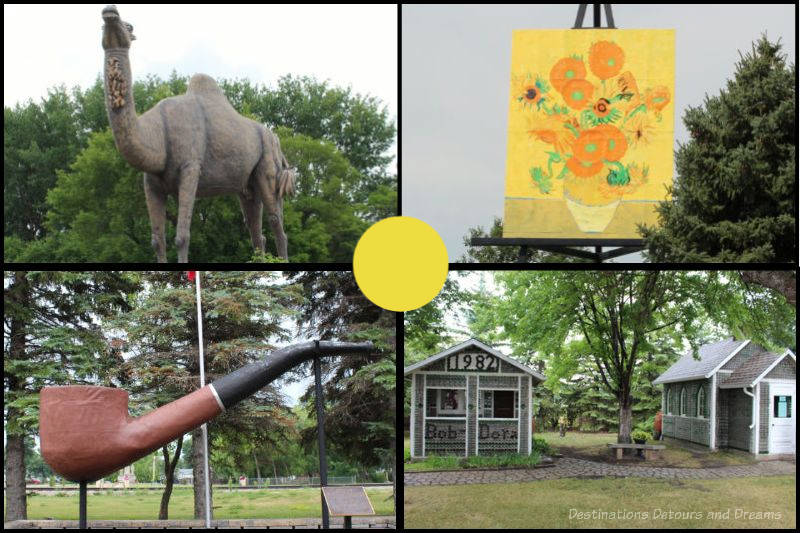
A selection of unusual and quirky roadside attractions to be found in southern Manitoba, Canada
A roadside attraction is something along the side of the road meant to attract tourists. Often, it is a novelty or whimsical structure. Sometimes it highlights or promotes something a town or area is known for. Although roadside attractions have existed in some form for a long time, the modern world of roadside attractions in North America grew alongside the growth of long-distance automobile travel.
Are you one of those who needs to stop to get a photo at every such attraction on a road trip? For some, roadside attractions are a place one may stop at on the way to somewhere else. Others make roadside attractions themselves the destination.
In this post, I highlight a few of the Manitoba roadside attractions I have come across over the last few years in my local travels, organized alphabetically by the towns they are located in.
There are 10 attractions listed in my post, but many more can be found across the province, including a giant curling rock in Arborg, a giant Coca Cola can in Portage la Prairie, crocuses in Arden, garter snakes in Inwood (located near the Narcisse Snake Dens, home to tens of thousands of red garter snakes), an elk in Onanole, and many more.
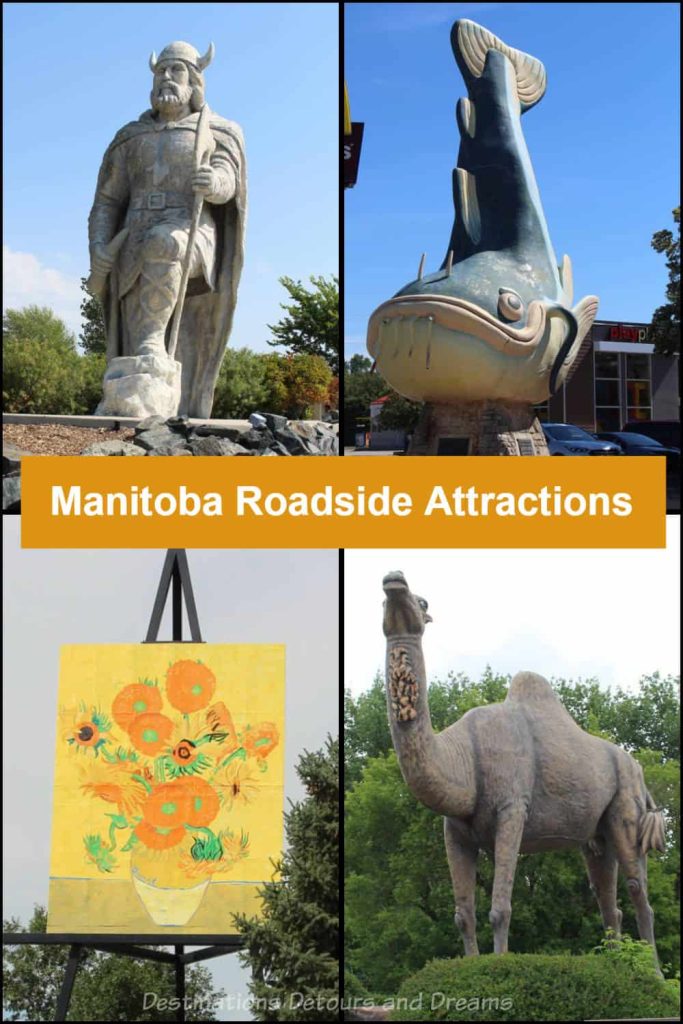
Altona: The Big Easel
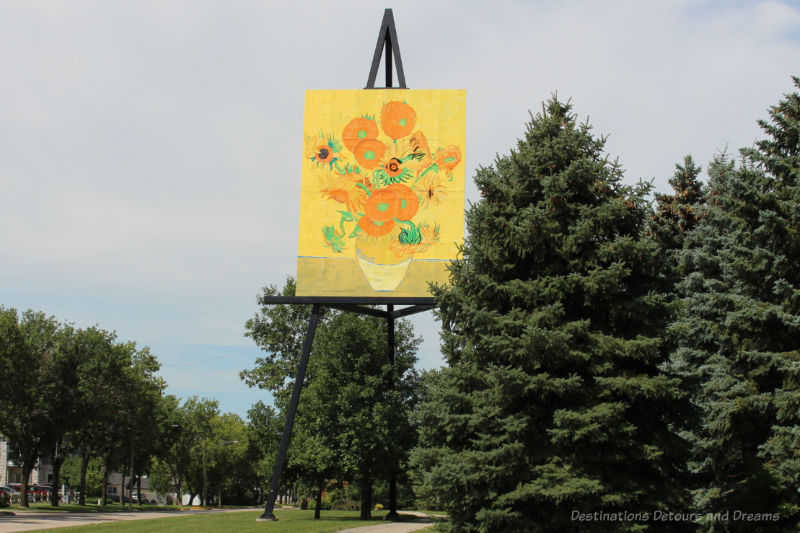
Altona, founded in 1880, is known as the “Sunflower Capital of Canada.” It has hosted the Manitoba Sunflower Festival every summer since 1964. Along 10th Avenue, you’ll The Big Easel. Touted as the “world’s largest painting on an easel,” it is a reproduction of Van Gogh’s Sunflowers painted by artist Cameron Cross. Van Gogh considered sunflowers symbols of life and hope.
Note: You will also find an ox-cart sculpture in a park along Highway 30 between 2nd and 3rd Avenues.
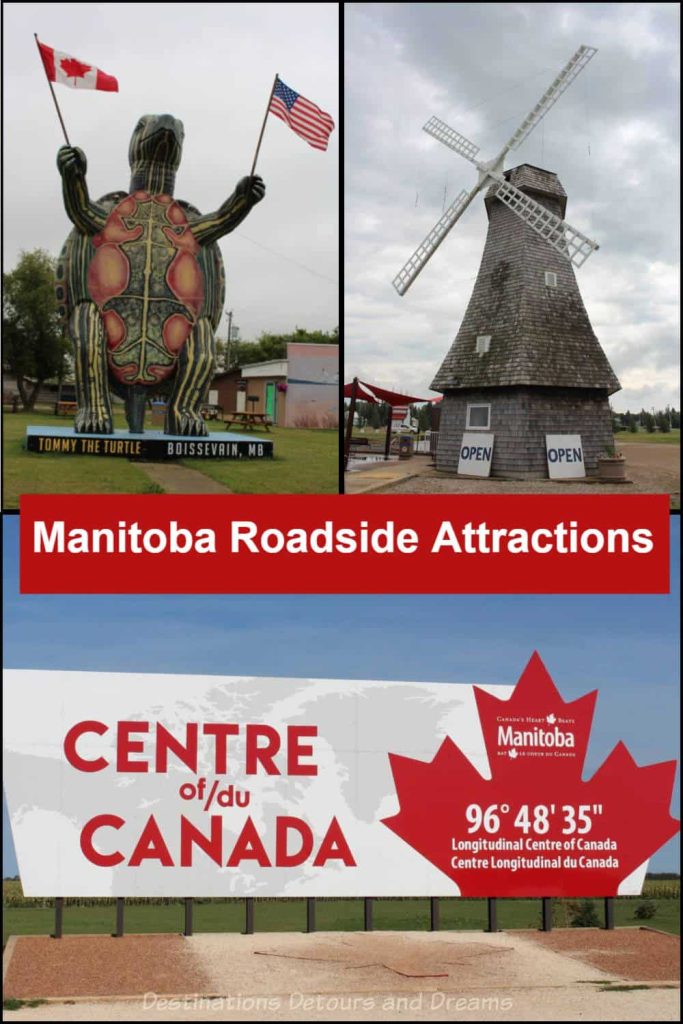
Boissevain: Tommy The Turtle
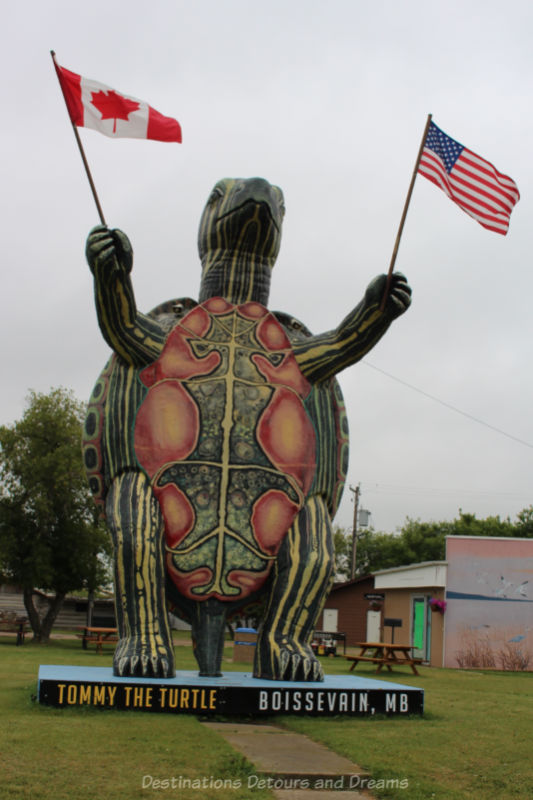
Tommy the Turtle, a nine-metre tall, nearly five-tonne fiberglass and resin turtle standing on its hind legs and waving flags, was erected in 1974 as a way to promote the town of Boissevain, located just north of the Turtle Mountains, and the town’s new summer event: turtle racing. The community ended its turtle derby in 2001, but Tommy the Turtle remains.
Boissevain is located just 20 Kilometres (16 miles) north of the U.S. border and the International Peace Garden, a garden and park straddling the border and created to celebrate the friendship between the two countries. Tommy waves a Canadian flag and a U.S. flag.
Centre of Canada Billboard
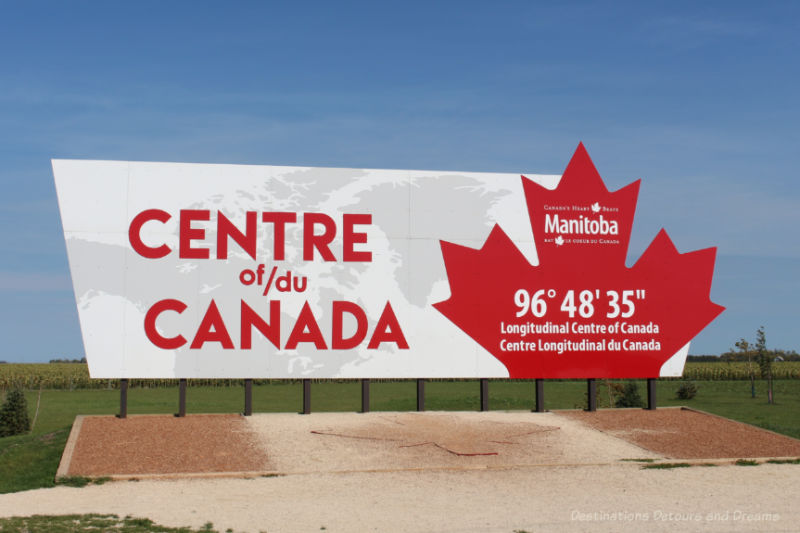
The Trans-Canada Highway (Highway Number 1) traverses Canada from the Atlantic Ocean to the Pacific Ocean. Alongside that highway where it is joined by Provincial Road 206 in Manitoba, you’ll see a large billboard proclaiming the longitudinal centre of Canada. There is a small park with picnic tables located around the sign.
Elm Creek: Fire Hydrant
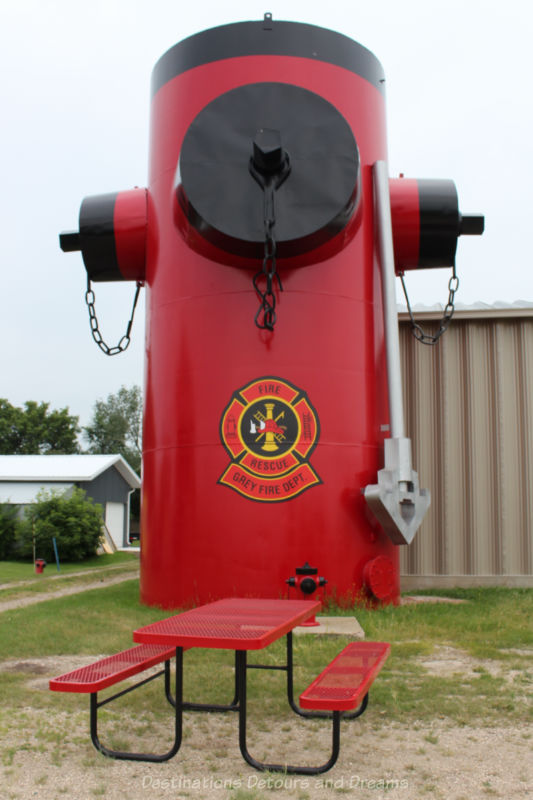
A 8.99-metre-tall (29.5 feet) fire hydrant, beside the fire department building in Elm Creek in the Rural Municipality of Grey, was built by volunteer firefighters over seven months and unveiled on Canada Day, 1 July 2001. It is the second largest hydrant in the world after the 11.88-metre-tall one at Columbia, South Carolina.
Gimli: Viking Statue
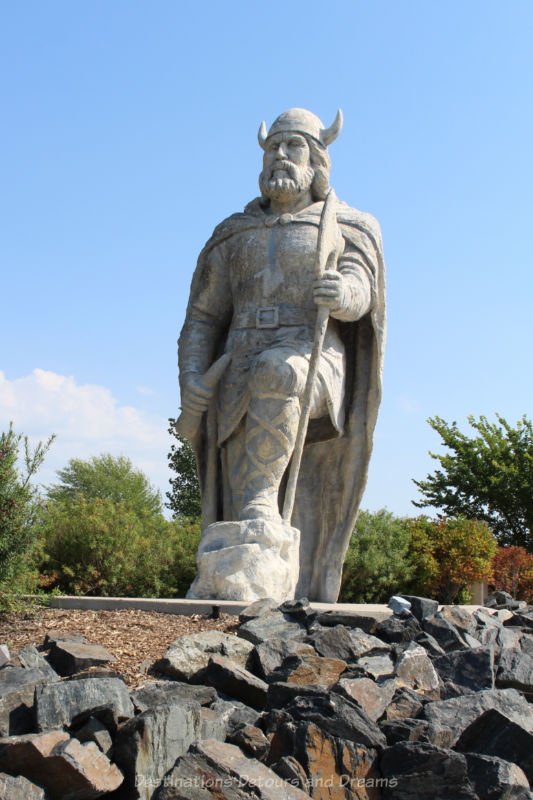
The beach resort town of Gimli on the western short of Lake Winnipeg, about an hour’s drive north of the city of Winnipeg, was the heart of New Iceland, a community created in the 1870s by Icelandic immigrants.
In 1967, a 15-foot-tall fiberglass Viking statue was unveiled to recognize the town’s Icelandic roots, the connection to which remains strong today. The statue was moved to its current location on Second Avenue overlooking the harbour in 1988. In 2017, Viking Park opened around the statue.
Note: You will find Icelandic elf houses in the park around the statue. I wrote about those houses in this post.
Glenboro: Sara the Camel
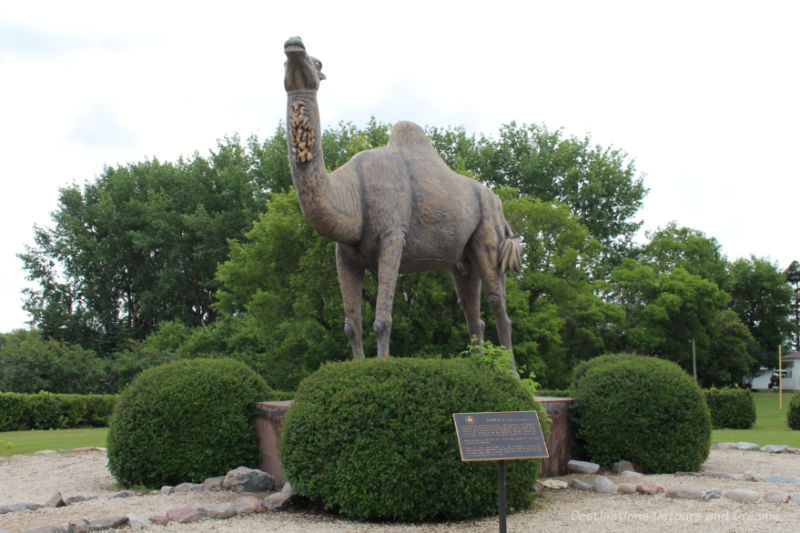
Alongside Highway 2 (Red Coat Trail) on the edge of the town of Glenboro, you’ll find Sara the Camel. The 17-foot-tall statue weighs over 2,000 pounds and was erected in 1978 to draw attention to the community and the Spirit Sands (known as Manitoba’s desert) located six miles north of the town in Spruce Woods Provincial Park. (You can read about my visit to Spirit Sands here.)
Holland: Windmill
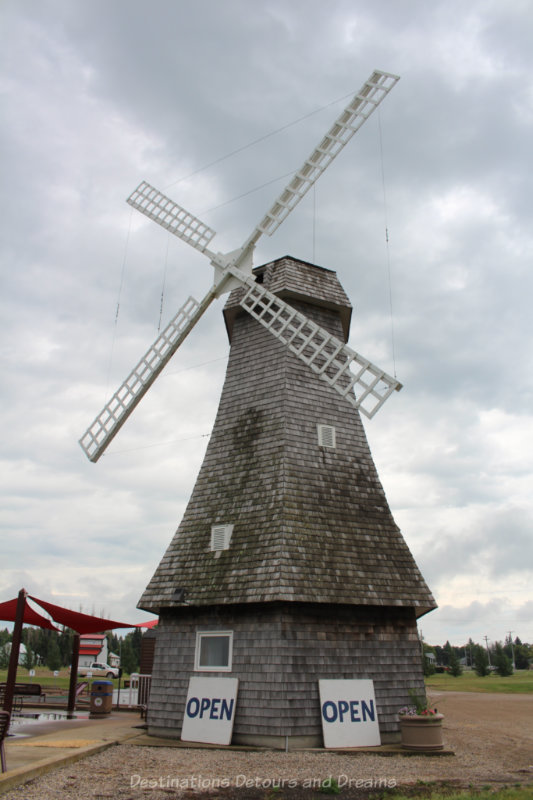
The community of Holland is also located alongside Highway 2. The Holland Windmill, situated on Railway Avenue North just south of the highway, pays tribute to the windmills of Holland, although the town got its name not from that country but from its first postmaster, Arthur Holland, who was of English descent.
Selkirk: Chuck The Chunnel Catfish
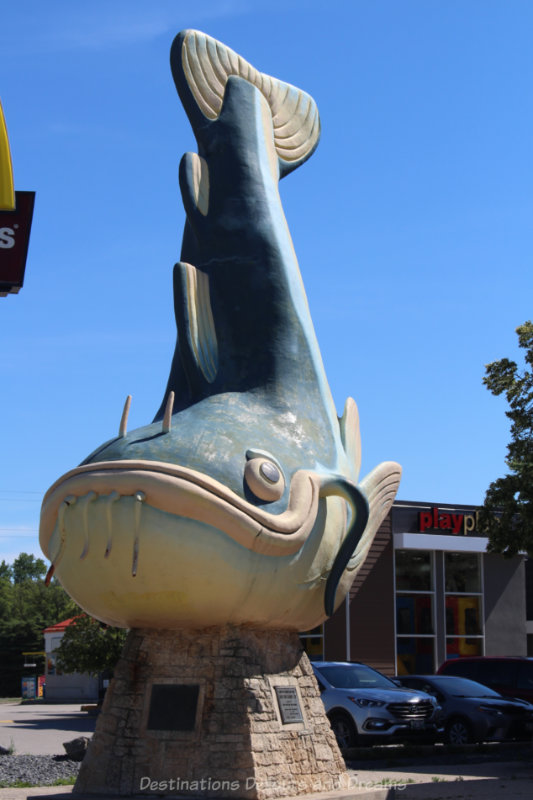
Chuck the Chunnel Catfish sits on Main Street in the city of Selkirk. The fiberglass fish stands 11 metres high and proudly proclaims Selkirk as the “Catfish Capital of North America.” Selkirk’s Red River is renowned for its large catfish. Built in 1986, the statue was named in memory of local sport fisherman Chuck Norquay, who drowned while fishing.
St. Claude: Giant Tobacco Pipe
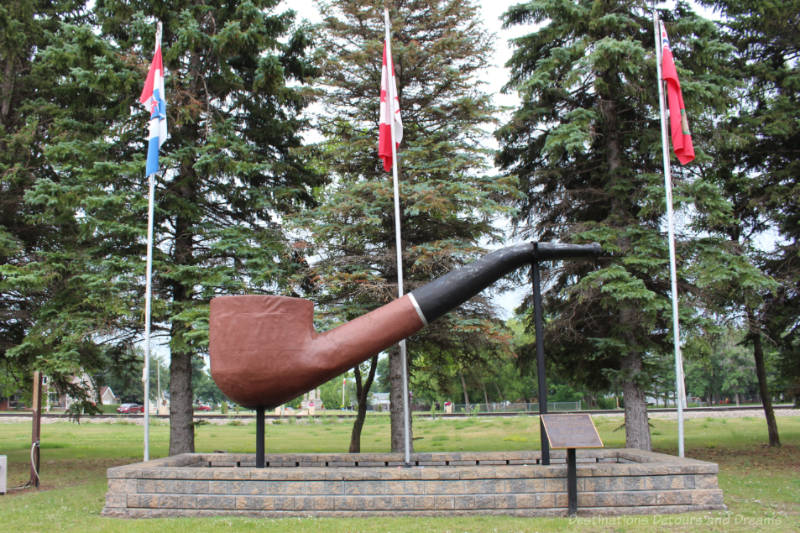
In the centre of St. Claude, alongside the railway tracks that bisect the town, you’ll find a giant tobacco pipe. The pipe is 19-feet long, 5-feet tall, and weighs just over 400 pounds. It remembers the town of St. Claude, Jura, France, from which many of the town’s settlers came in 1892. The manufacturing of smoking pipes was the main industry of St. Claude, France.
Treherne: Glass Bottle Buildings
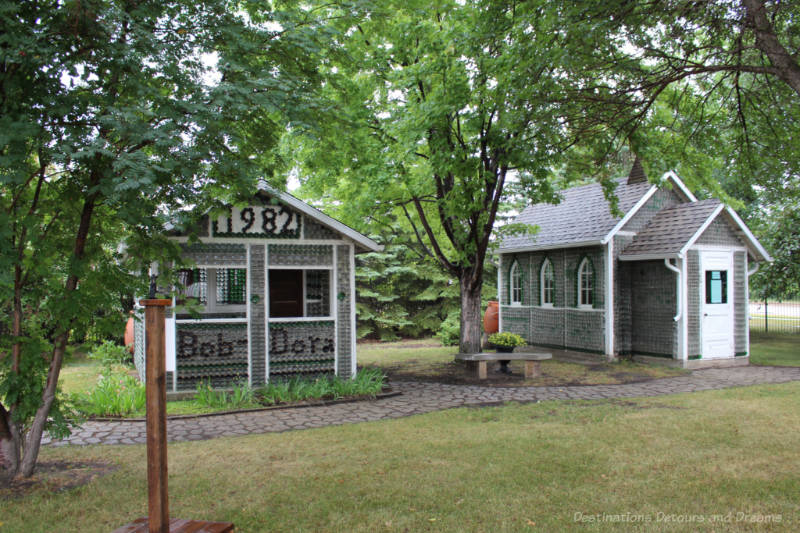
Several glass bottle buildings sit in a tree-lined park in the centre of Treherne. The wood-frame buildings feature walls of glass bottles encased in cement. Originally built by Bob and Dora Cain and their friend Fred Harp, the structures resided on the Cain farm before being moved into Treherne.
Read more in my post about the Treherne Glass Bottle Buildings.
Never miss a story. Sign up for Destinations Detours and Dreams free monthly e-newsletter and receive behind-the-scenes information and sneak peeks ahead.
PIN FOR LATER