
The Witness Blanket
A large scale art installation at the Canadian Museum for Human Rights recognizes the atrocities of the Canadian residential school system
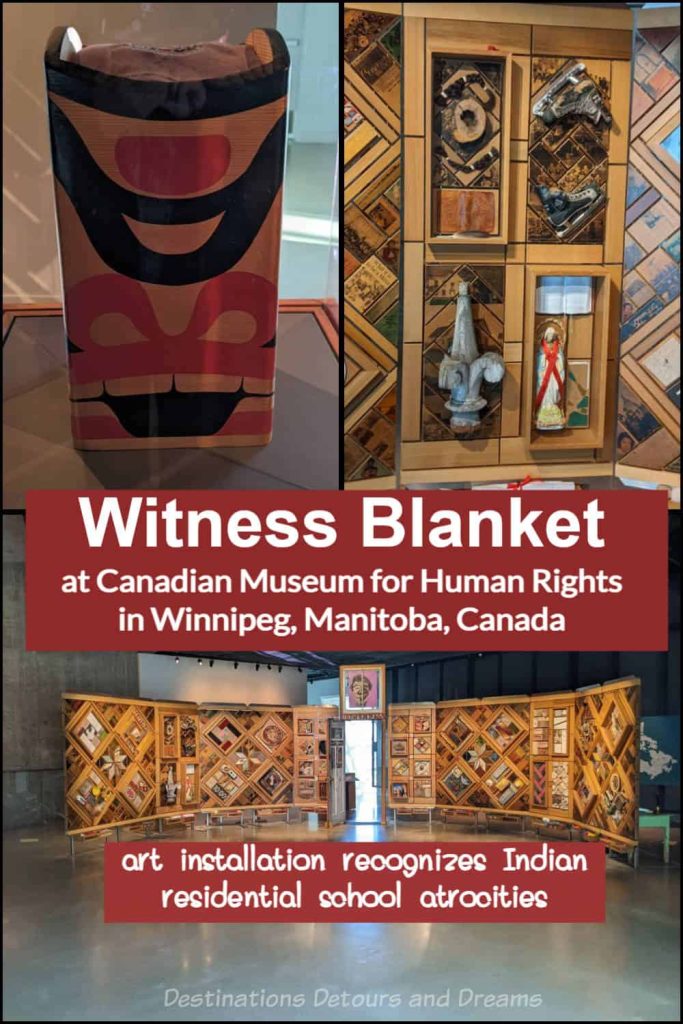
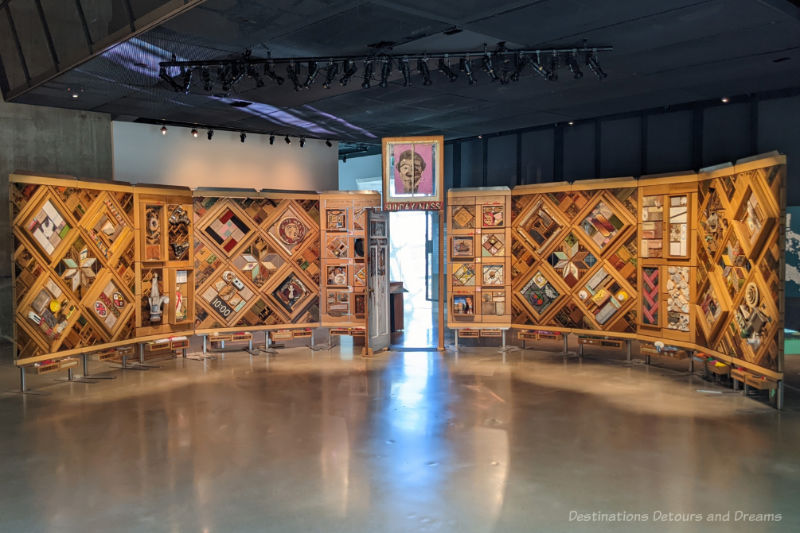
Inspired by a woven blanket, the Witness Blanket is a large-scale art installation by Carey Newman, whose traditional name is Ha̱yałka̱ng̱a̱me’. It stands as a national monument to recognize the atrocities of the Indian residential school era, to honour the children, and to symbolize ongoing reconciliation.
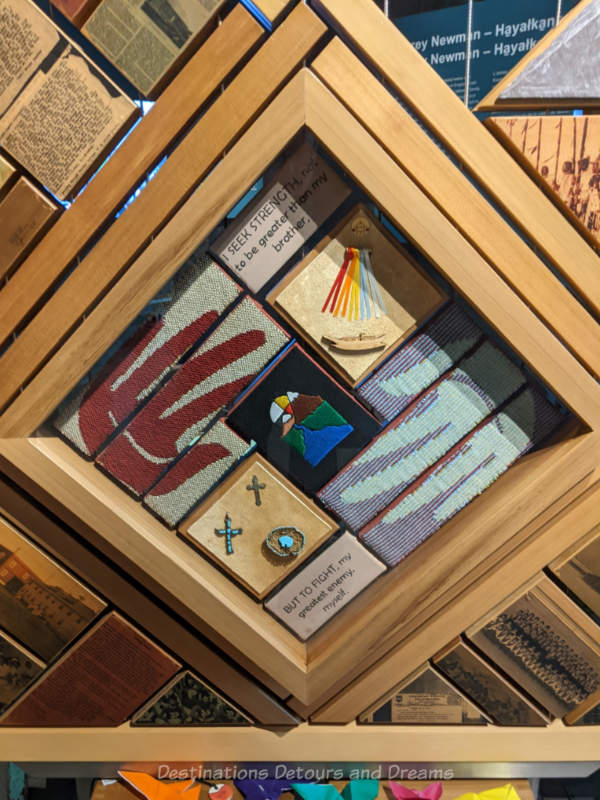
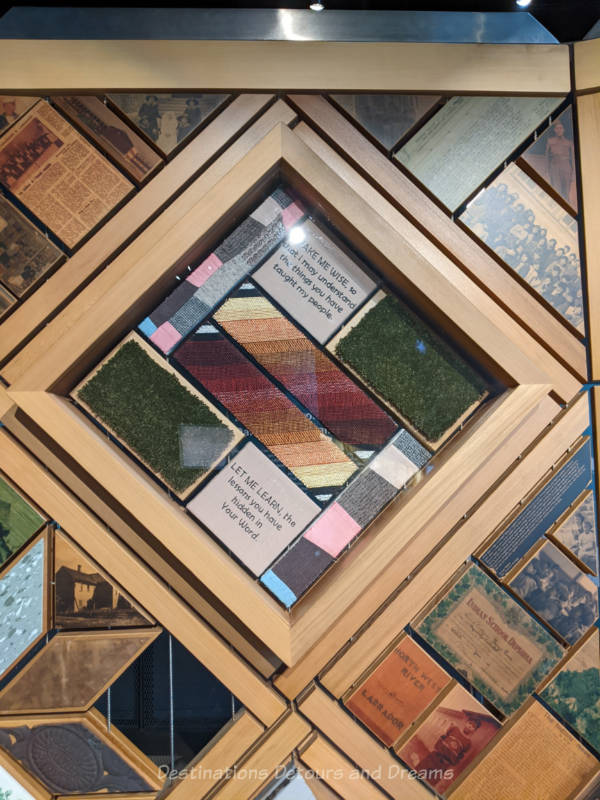
On exhibit at the Canadian Museum for Human Rights in Winnipeg, Manitoba, Canada, the Witness Blanket is impressive when one views it in its entirety from a bit of a distance, but it has an even more powerful effect when you view its pieces up close.
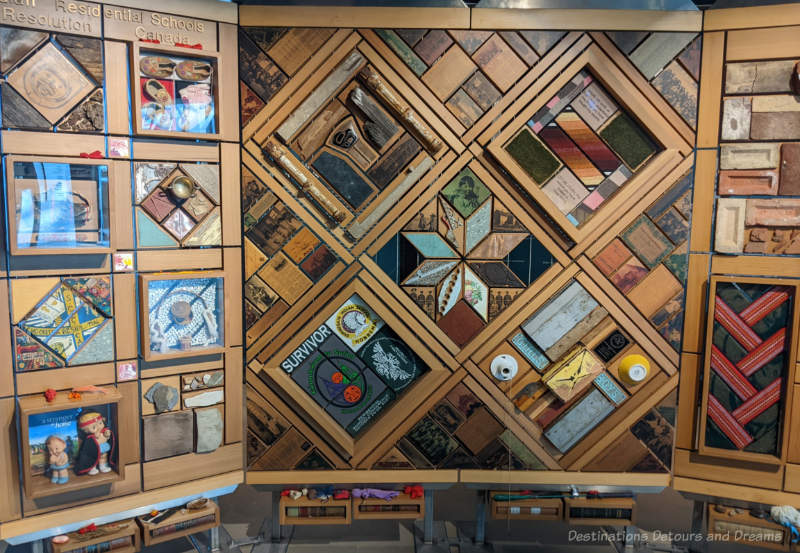
The cedar “blanket” is made from pieces of history—hundreds of items reclaimed from former residential school sites. Between 1870 and 1996, more than 150,000 Indigenous children were taken from their homes and sent to residential schools, part of a system designed to “take the Indian out of the child.” As mentioned in an abridged version of the documentary Picking Up the Pieces: The Making of the Witness Blanket, which plays on a screen in the exhibition gallery, the children had their identities stolen, cultures extinguished, and were undernourished, neglected, and often abused.
Those responsible for the school system—churches and the Canadian federal government—also donated pieces for the installation as a gesture towards reconciliation.
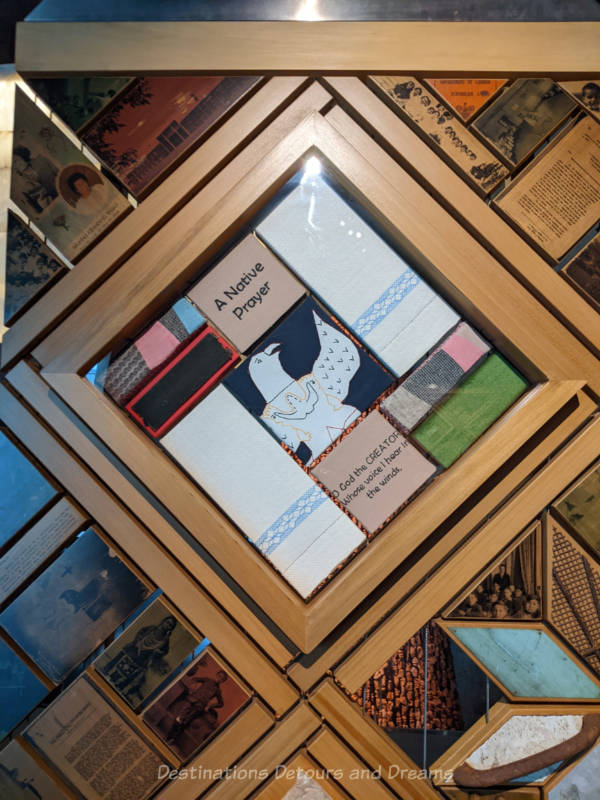
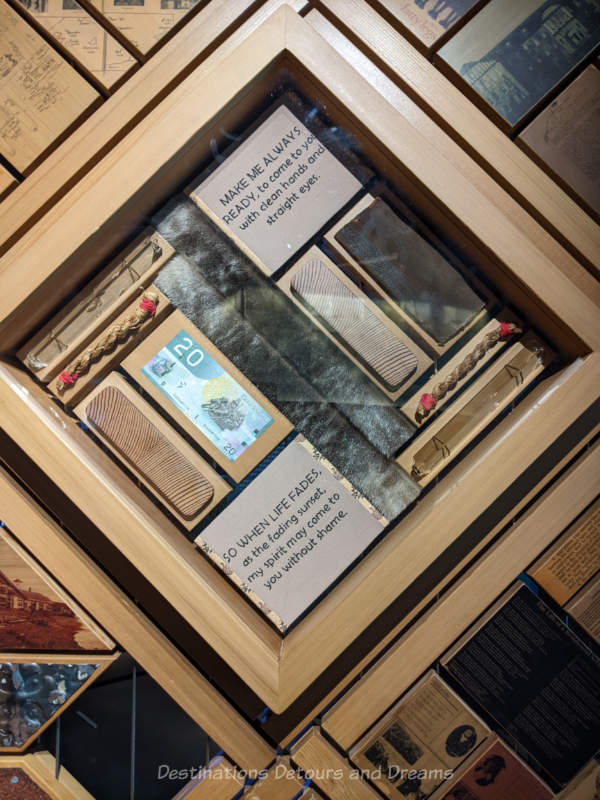
In total, more than 800 items from 77 communities were gathered for this artwork. They include letters, photos, stories, books, clothing, art, and fragments of buildings. As also mentioned in that documentary, “The story of each piece is as important to the story of its construction as the wood and screws that hold it together.”
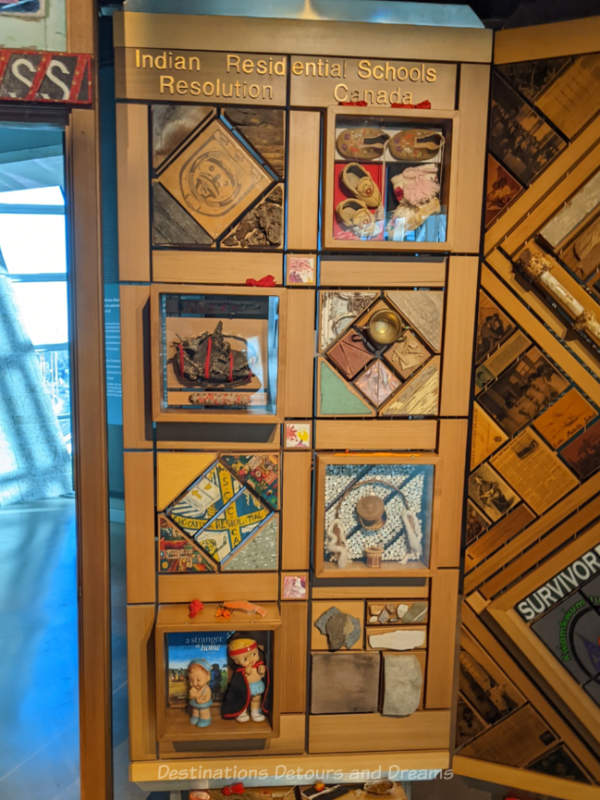
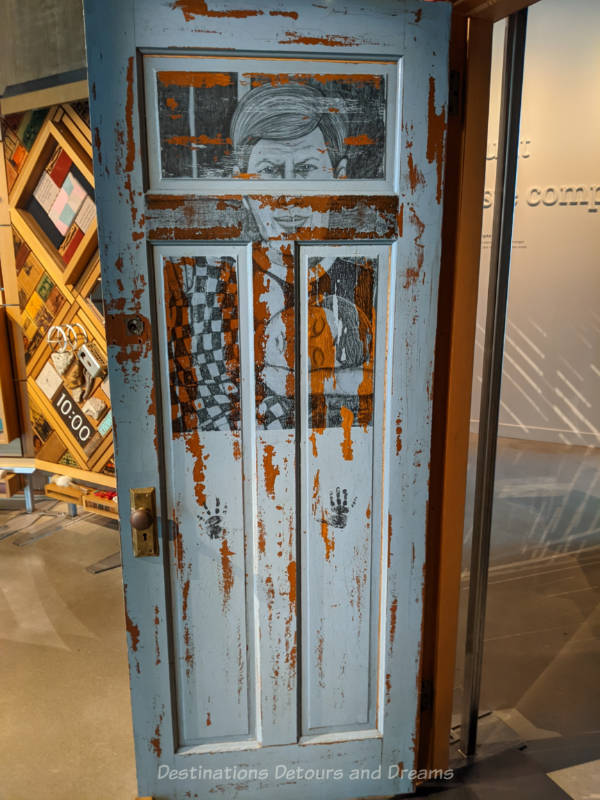
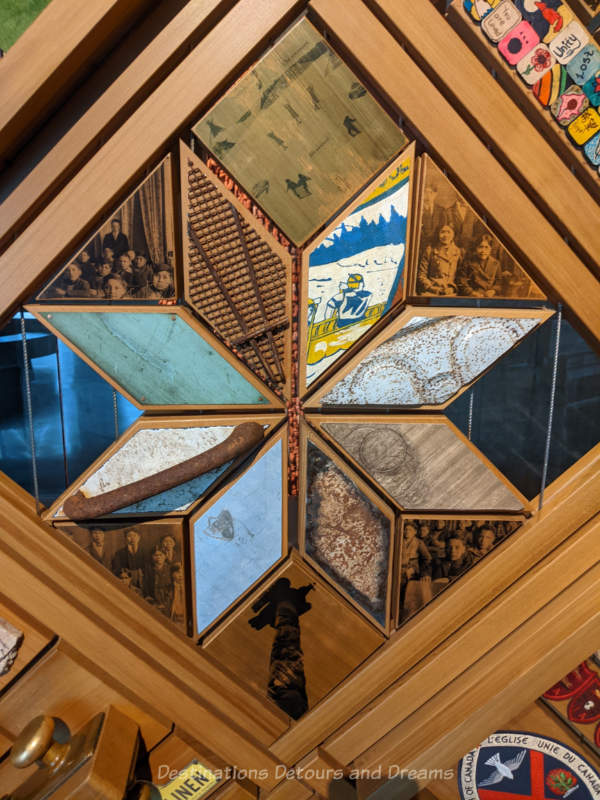
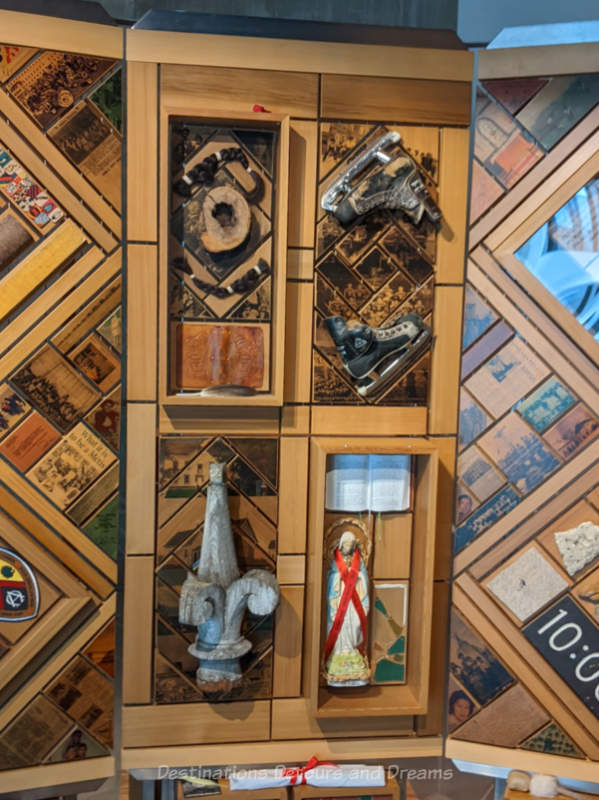
The 8-minute abridged version of the documentary that plays in the exhibit room is well worth watching. It begins with this statement “How would you feel if someone came and took your child?”
There were more the 4,100 confirmed deaths in the residential schools. The documentary asks the question, “Did your school have a graveyard?”
In a particularly moving part of the film, artist Carey Newman talks about the many people he made the blanket for. A comment near the end of the film states we need to speak openly about these stories to make sure this never happens again.
The Witness Blanket was first exhibited at the Canadian Museum for Human Rights (CMHR) in 2015-2016. After touring Canada over the past few years, it underwent conservation and is now on display in an exhibition in the Actions Count gallery on Level 4 of CMHR until September 2027. This exhibition marks the first phase of its eventual permanent placement at the CMHR.
In April 2019, Kwakwak’awakw legal traditions and Western legal principles were united in a historically unique agreement. The agreement, signed by artist Carey Newman and the Canadian Museum for Human Rights outlines mutual responsibilities for the ongoing care of the Witness Blanket.
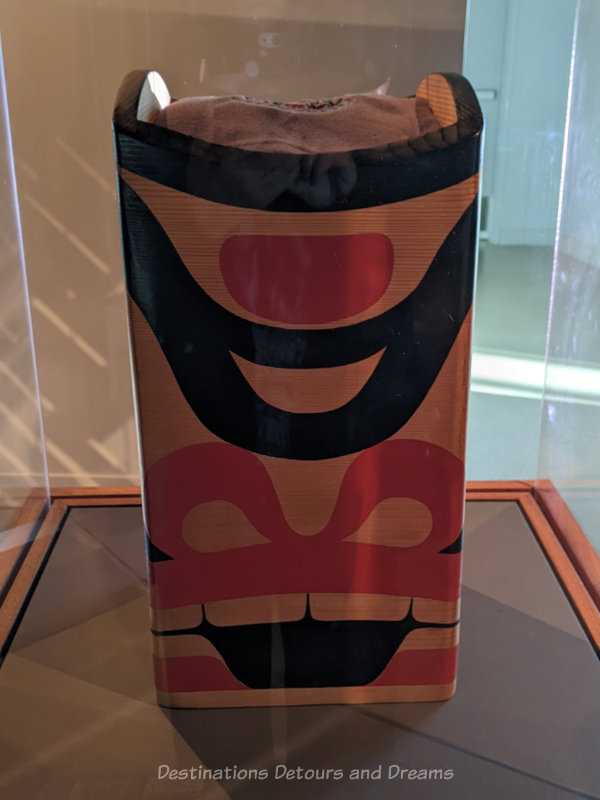
The Grizzly Bear Bentwood Box, made out of old growth red cedar, a sacred traditional medicine, was carved by Carey Newman for the purpose of carrying the stewardship agreement. It is on display in the exhibit.
One of the placards of information along the wall of the exhibit room is entitled Bearing Witness. The last sentences read as follows:
“Each contribution calls upon the viewer to bear witness and share what has been learned. By witnessing this installation, you are now a witness to its Stories and the history that they share. How will you work toward you own responsibility for reconciliation?”
For more information about the Canadian Museum for Human Rights, read my post Canadian Museum for Human Rights Guide.
For more information about the Witness Blanket, check out the exhibition information on the Canadian Museum for Human Rights website, where you can also view the abridged version of the documentary Picking Up the Pieces: The Making of the Witness Blanket or go to the Witness Blanket website, where you can find the full-length documentary.
Never miss a story. Sign up for Destinations Detours and Dreams free monthly e-newsletter and receive behind-the-scenes information and sneak peeks ahead.
PIN FOR LATER