

Hillcrest Museum In Souris — A Castle On The Prairies
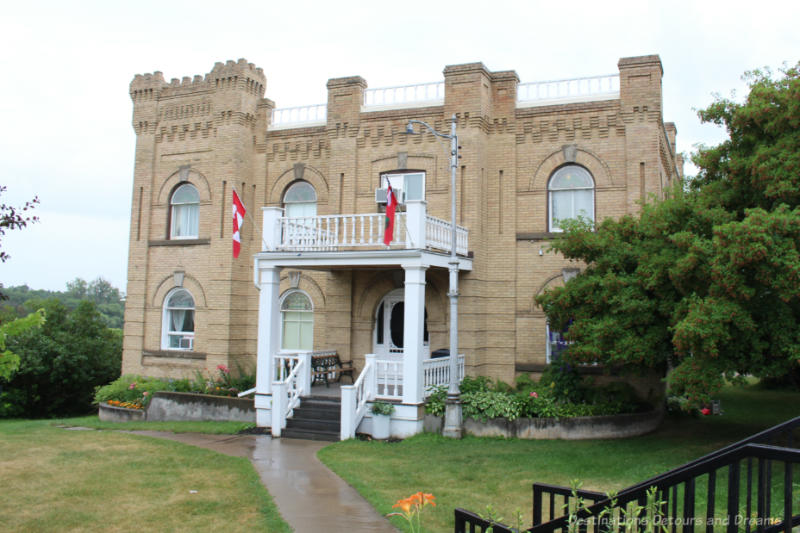
Grand house built in 1910 is now a museum in Souris, Manitoba, Canada showcasing life in the early 1900s
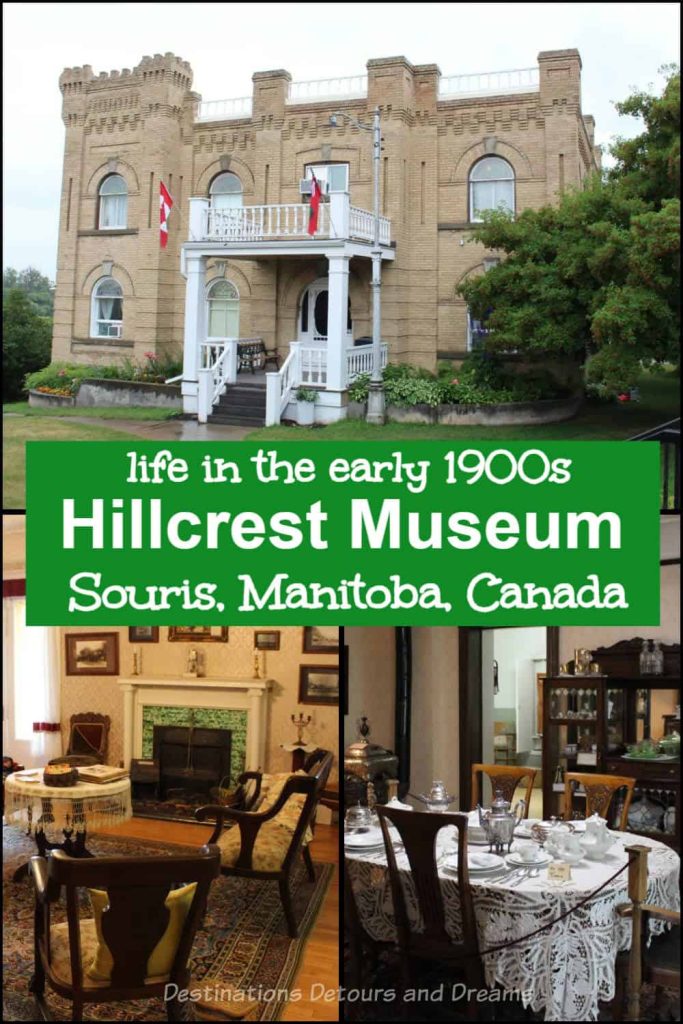
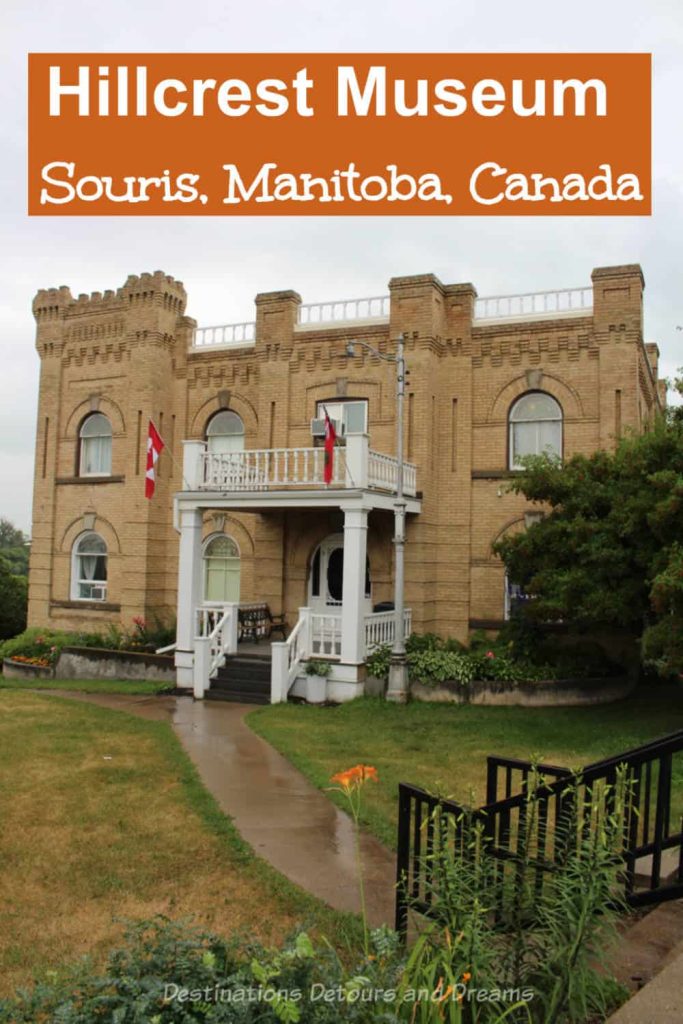
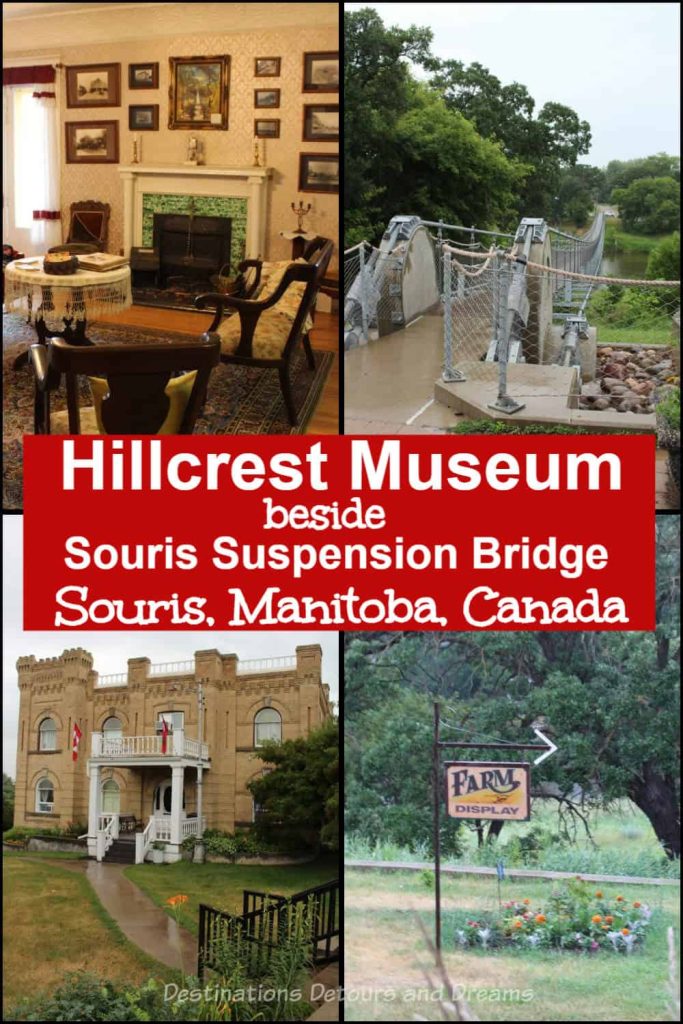
Housed in a former grand house, Hillcrest Museum in Souris, Manitoba, Canada provides a look into life in the early 1900s. It also contains many artifacts from the 1900s through the 1950s and other historical exhibits.
The building, described on the museum’s website as a “castle on the prairies,” was built in 1910 and known as “Squire Hall.” It was commissioned by Fred and Maud Sowden, son and daughter-in-law of Squire William Henry Sowden, a businessman and founder of the town of Souris.
Souris is located at the junction of Plum Creek and the Souris River. It is located 50 kilometres (31 miles) southwest of Brandon and approximately 250 kilometres (155 miles) west of Winnipeg. Population as of the 2021 census was 1,970.
Squire William Henry Sowden was not the first to settle in the region, but in 1881 he headed a colonization party of thirty-six people to start a community. He acquired property on Plum Creek near where it entered the Souris River because of its suitability for a mill site. He brought settlers in by trains, secured Souris as a site for CPR railway, offered free land to churches, and built log homes for workers.
He built his own home on the west bank of the Souris River. After his death in 1907 the house was torn down and his son built what is now Hillcrest Museum as a wedding present for his wife Maude. Conceived by local architect Carter Brindle, the house was meant to recall the castles of Maud’s childhood in England and India. On the list of Canada’s Historic Places, it is described as having a “fanciful, yet sophisticated design” that “stands as a testament to the optimism and ambition of pioneering families arriving in southwestern Manitoba around the turn of the twentieth century.”
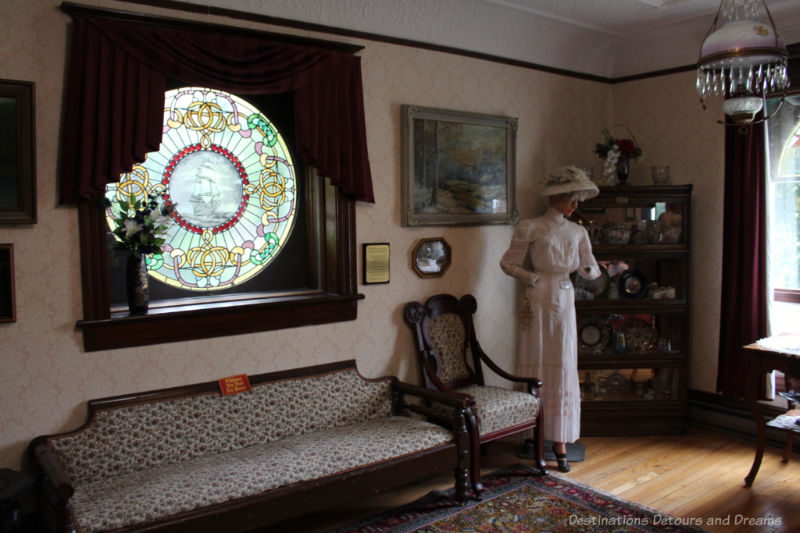
The interior featured fine period woodwork and luxurious materials, including stained-glass and etched-glass windows, pressed tin ceilings, hardwood floors, and wallpaper with intricate designs.
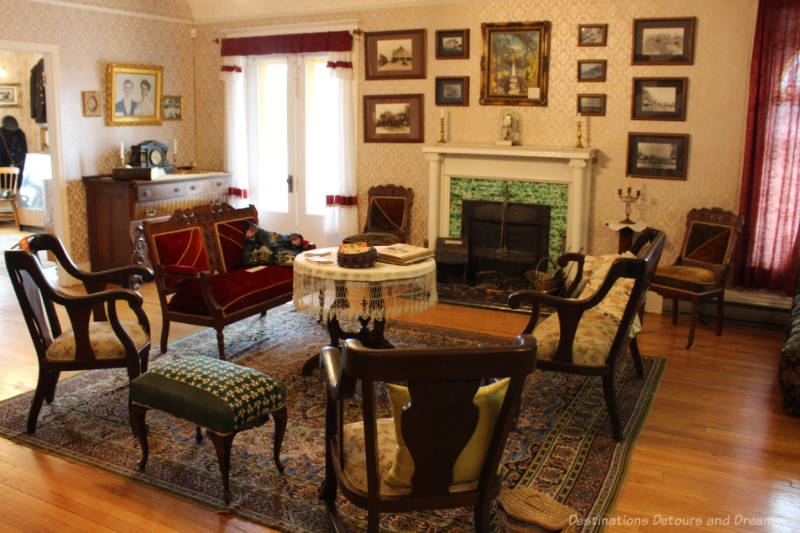
The rooms are large with windows letting in lots of light. The overall effect is one of both grandeur and comfort. The place felt welcoming to me. Throughout the rooms, photographs and other information tell stories about the Sowden family and the town.
Below are some photos from inside the house.
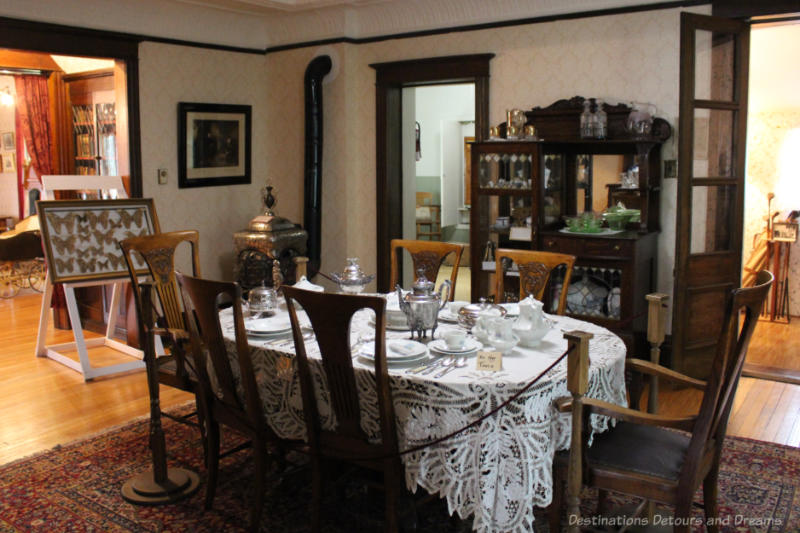
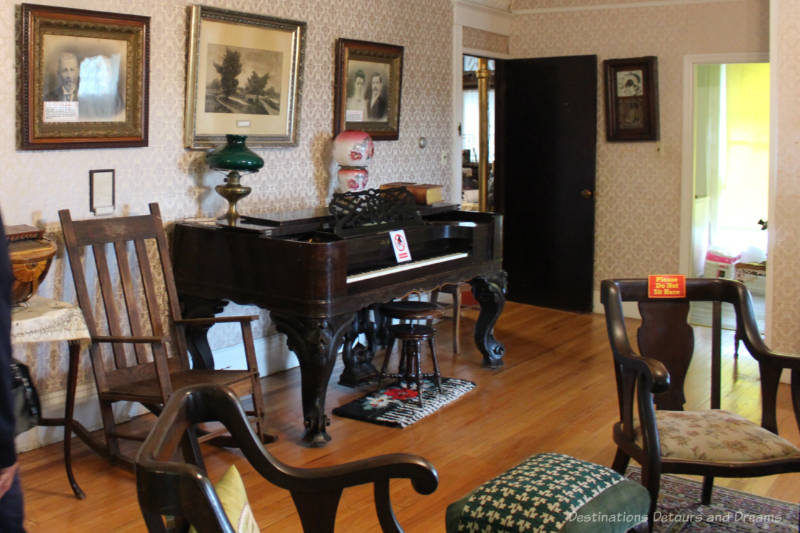
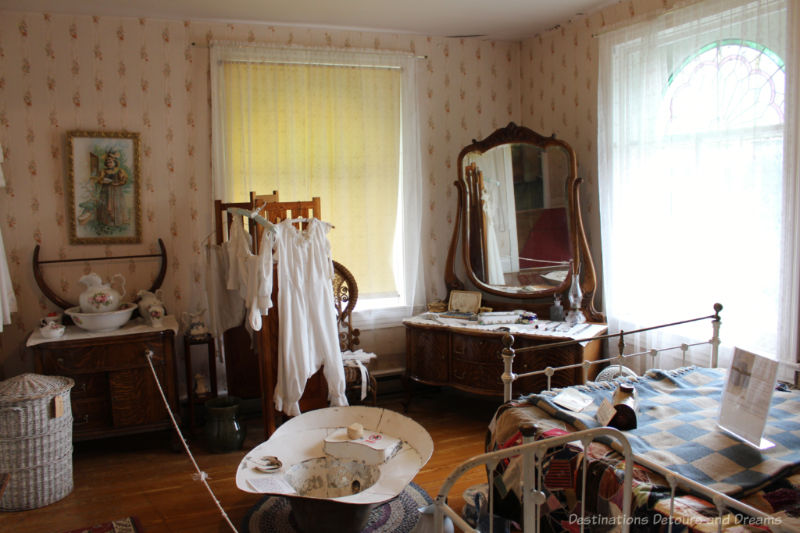
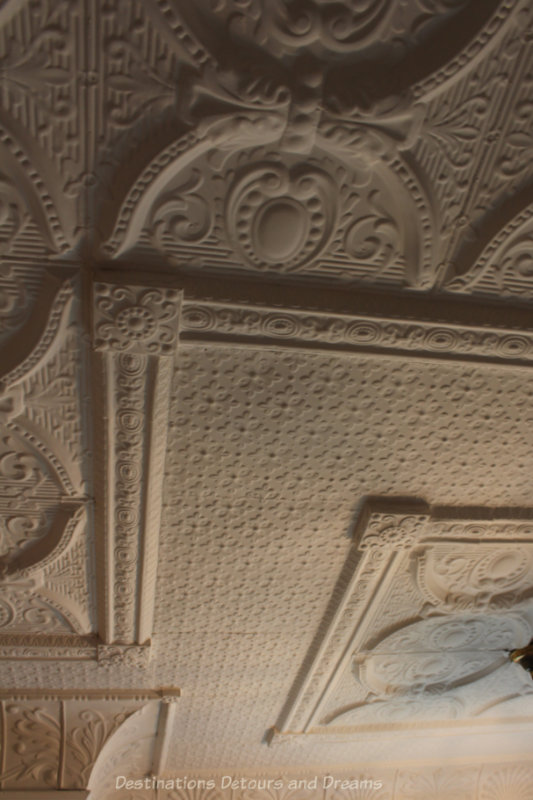
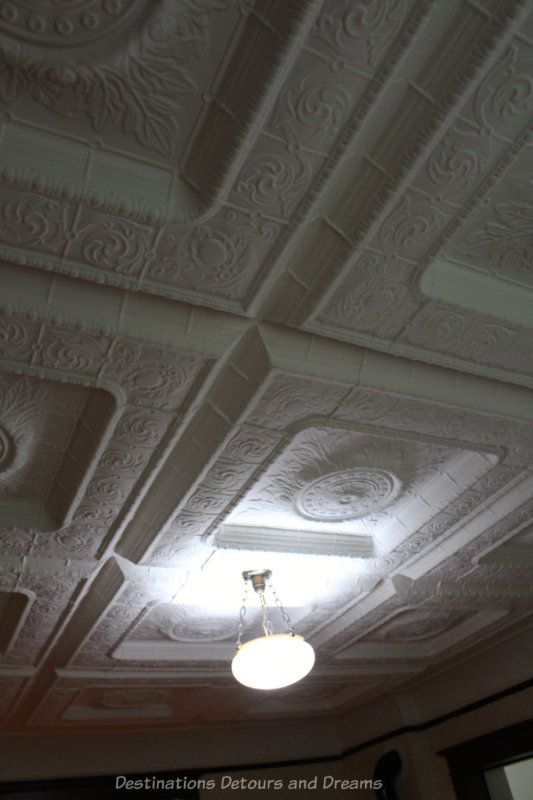
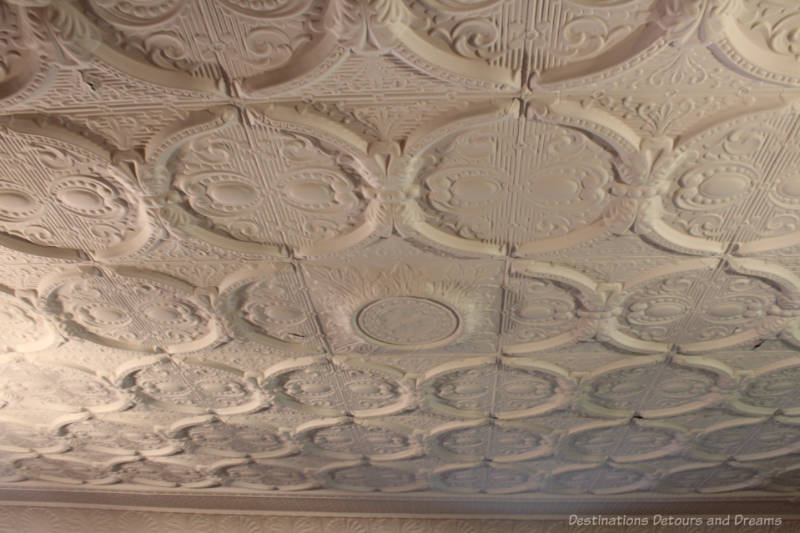
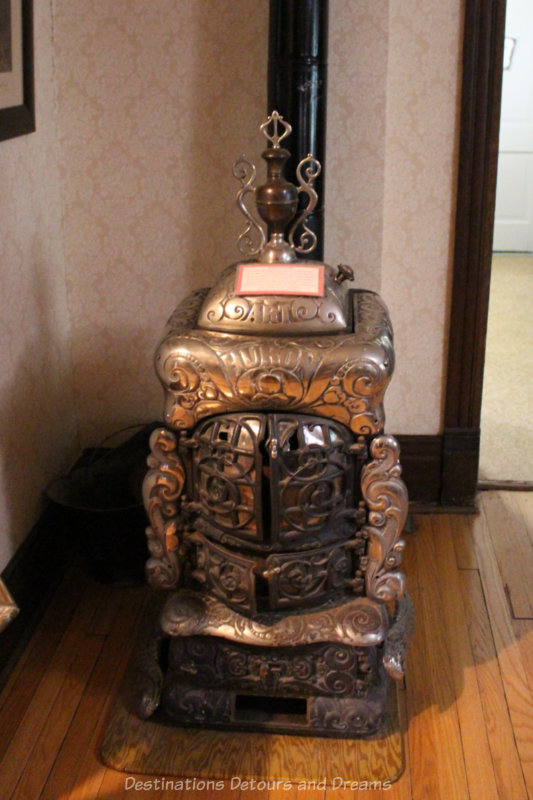
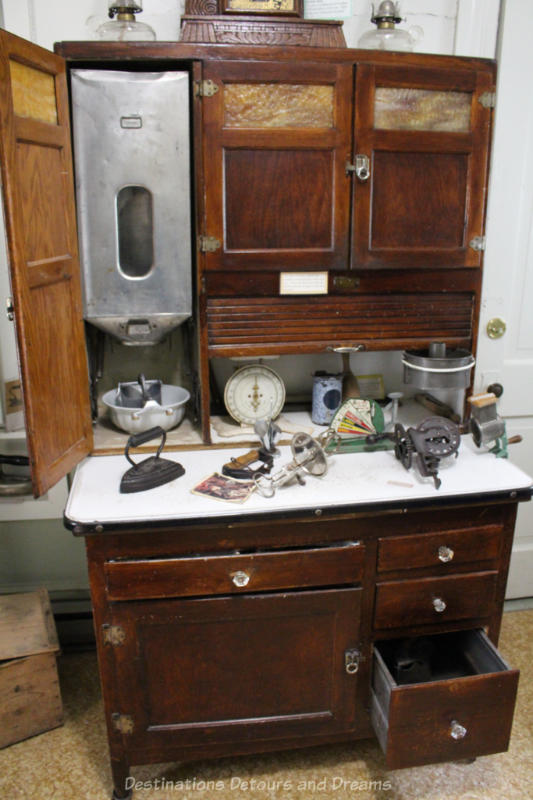
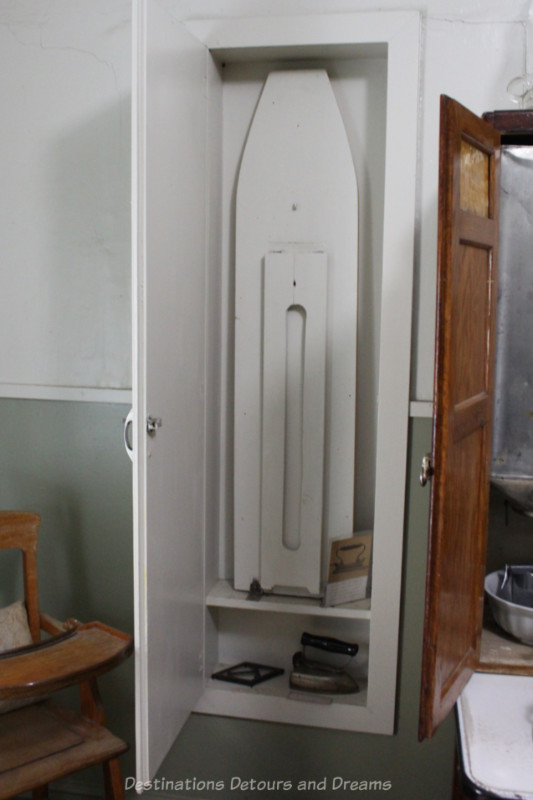
Obviously the early 1900s life portrayed in this house is one of wealth and privilege and not the day-to-day experience of many others of the time. As such, it contains many conveniences and luxuries as well as more common items from the time period. Printed signs accompany a number of items to explain to the modern visitor what they are.
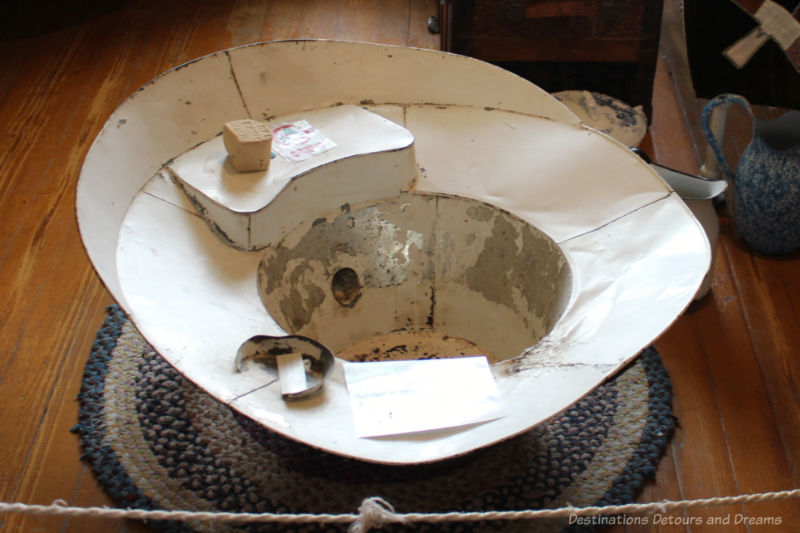
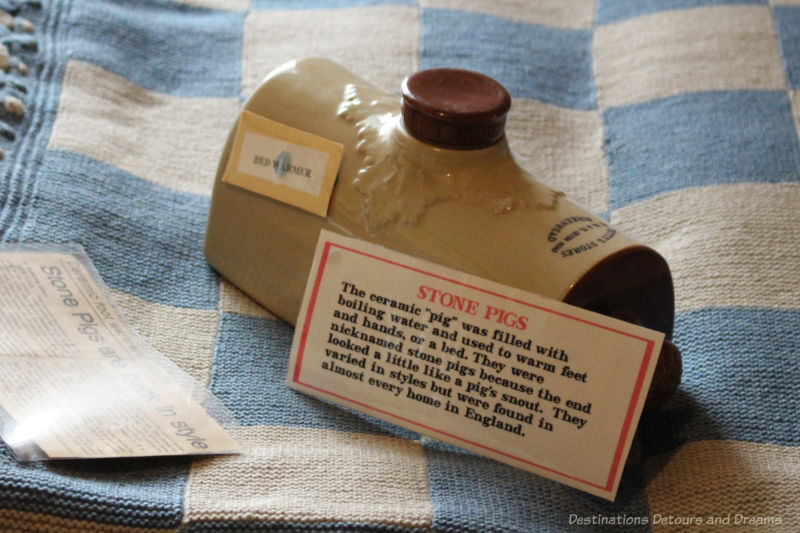
In one bedroom, there was a bath tub made of metal with a seat on a wide sloping collar on which the bather sat. Any splashed water drained back into the tub. In that same bedroom, there was a stone pig. Stone pigs were ceramic containers that were filled with boiling water and used to warm feet or hands in bed.
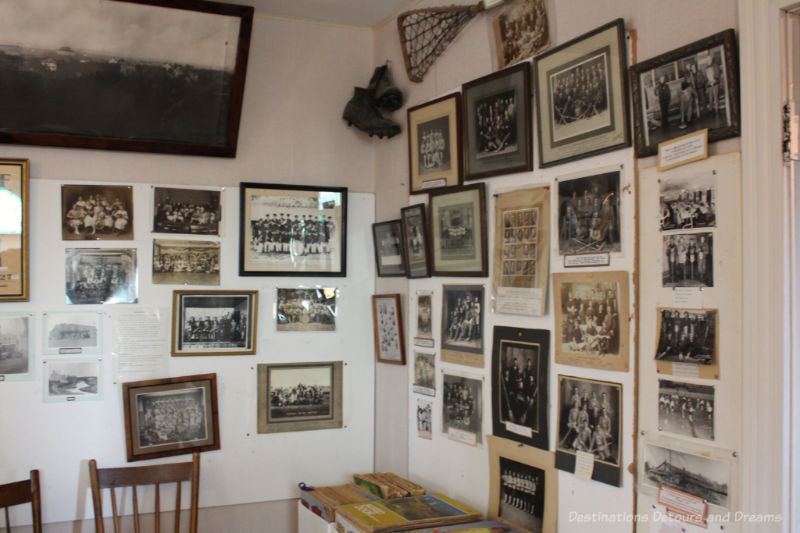
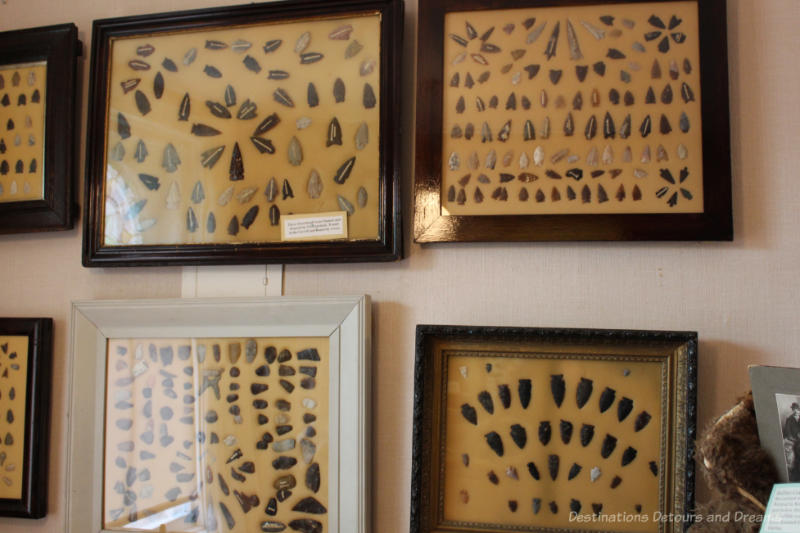
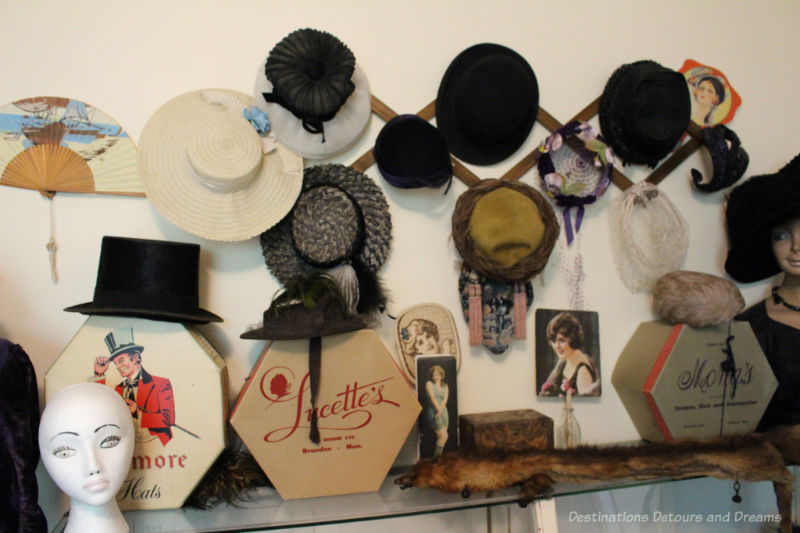
Other exhibits in the museum include historical pictures and documents, war memorabilia, Indigenous artifacts, and early medical and dental instruments.
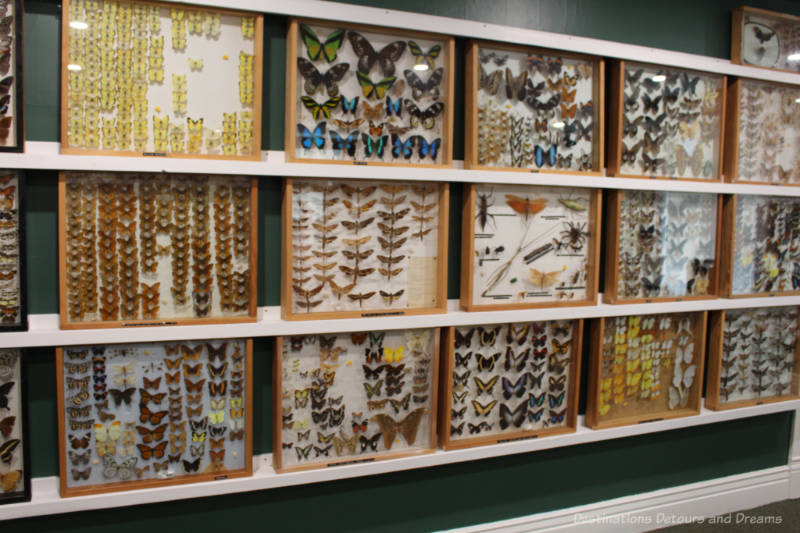
A rather surprising exhibit was the Natural History Room which showcased a collection of over 5,000 butterfly specimens.
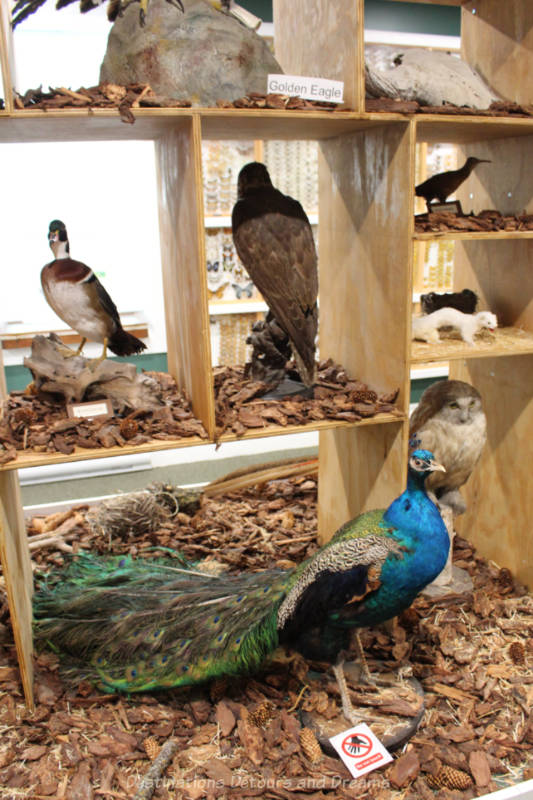
There were also a few taxidermy birds on display, including Souris’ iconic peacock. Peacocks can be seen roaming freely in town. According to information on the Souris-Glenwood Municipality website, the first pair of peacocks were introduced to the bird sanctuary at Victoria Park in 1984. Since then, the population has fluctuated and been managed by the Victoria Parks Board and extra care from local man, Jim Ludlam.
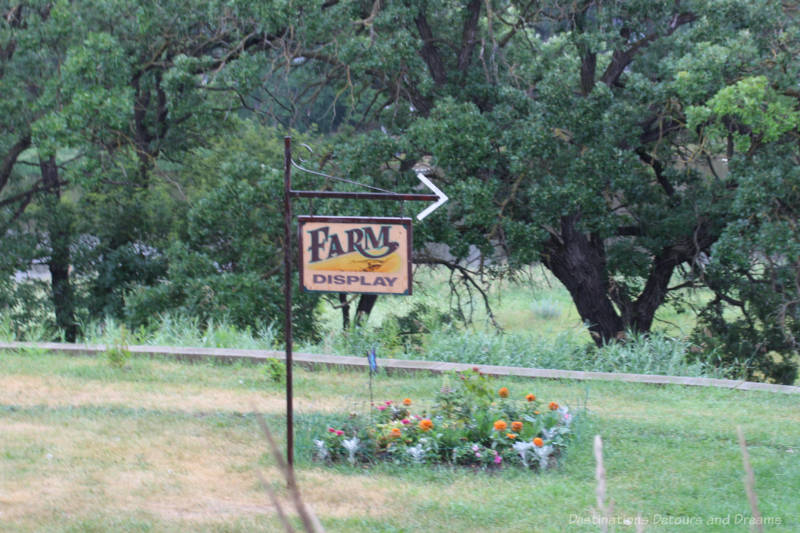
The museum grounds also contain separate displays of agricultural tools and equipment that I did not see. Given the heavy rain on the day I visited and the fact it was already late in the afternoon, I skipped that section.
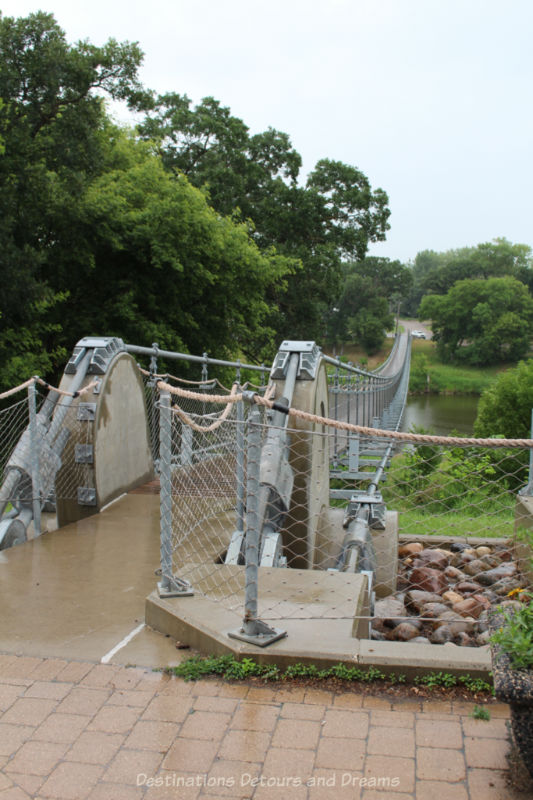
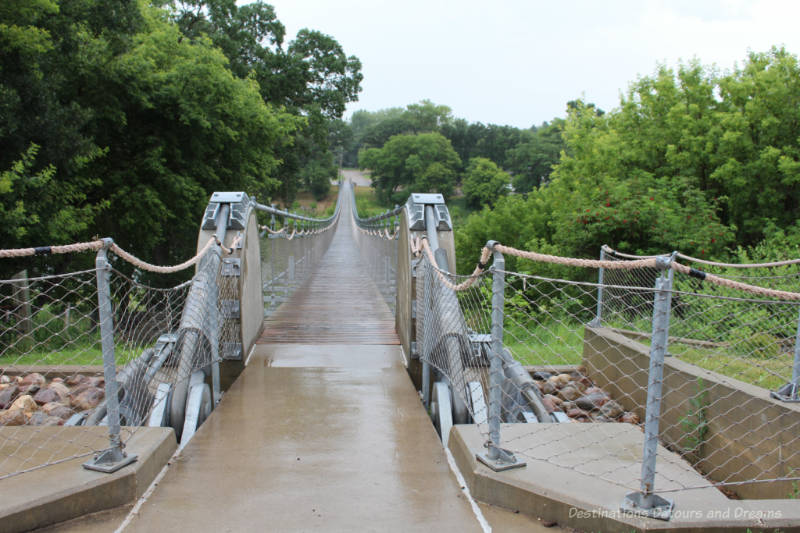
The Hillcrest Museum building overlooks the Souris River and is next to one of Souris’ main tourist attractions, the Souris Suspension Bridge. The first version of the pedestrian “swinging bridge” was built in 1904 by Squire Sowden to give him easier access to his land on the other side of the river. It was reinforced in 1907, 1961, and 1974. It was completely rebuilt after the floods of 1976 and 2011. The latest version measures 184 metres (605 feet) tip to tip, which earns it the title of the longest swinging pedestrian bridge in Canada.
Hillcrest Museum is open to the public only during the summer months. Check its website for hours.
Never miss a story. Sign up for Destinations Detours and Dreams free monthly e-newsletter and receive behind-the-scenes information and sneak peeks ahead.
PIN FOR LATER


That metal bathtub caught my eye. Don’t think I’d enjoy that, especially on a cold night.