

Iconic Manitoba Foods In Winnipeg
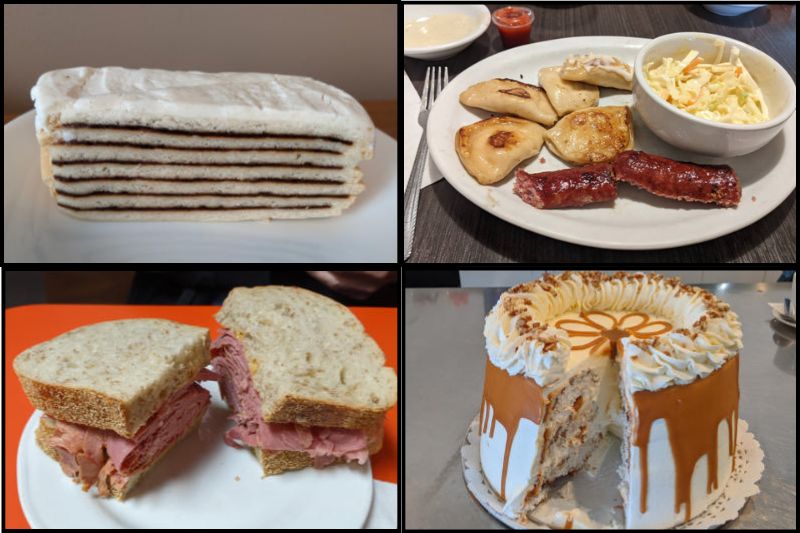
Iconic local specialties and other foods associated with Winnipeg, Manitoba, Canada
Winnipeg, Manitoba, Canada, my home city, is considered a foodie city with a wealth of excellent restaurants and chefs using local ingredients to create culinary delights. Winnipeg is also a diverse city. You’ll find cuisines from around the world. Visitors and locals have an abundance of choice for delicious dining.
But what about foods that might be considered uniquely Manitoban or emblematic of the city? Here is my take on iconic Manitoban foods, items you may want to try on your next visit to Winnipeg. The list includes uniquely Manitoban items as well as foods that, although not unique to the area, have become part of the Winnipeg culture.
Savoury Manitoba Foods
Farmer Sausage
Farmer sausage (or farmers sausage) comes from the culinary tradition of the Manitoba Mennonite community. I have not found anything quite like it outside of Manitoba. It was one of the first meals my husband and I would have when we returned to Manitoba after spending winters in Arizona.
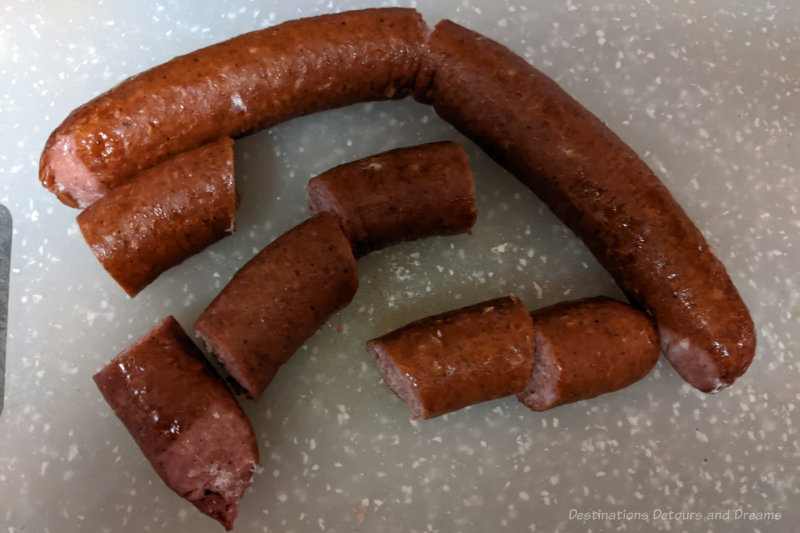
The mild uncooked sausage is made with ground pork and spices. There are no fillers. It is cold smoked. It can be cooked by roasting, grilling, or boiling. Pioneer Meat, Winkler Meats, and Winnipeg Old Country Sausage supply stores throughout the province with farmer’s sausage, but most independent butchers also make their own. Manitobans develop strong attachments to a particular brand. With such simple ingredients it is hard to imagine a great deal of variation, but spices and degree of smoking create subtle differences. Some makers double smoke the sausage.
When you find farmer sausage on restaurant menus in Winnipeg, it is most often on the breakfast menu or served accompanying perogies (more about those later in the post).
Winnipeg Style Rye Bread
Another food item we looked forward to when returning to Manitoba after months in Arizona was Winnipeg-style rye bread, a staple in Manitoba restaurants and households. Crusty on the outside, light and fluffy on the inside, Winnipeg-style rye bread is lighter in colour and flavour than other rye breads. It is not sour tasting. There are no caraway seeds. Although it contains rye flour and rye flakes, white flour is the primary ingredient. Toasting enhances its slightly nutty flavour. A few years ago I wrote an article about Winnipeg-style rye bread for NUVO.
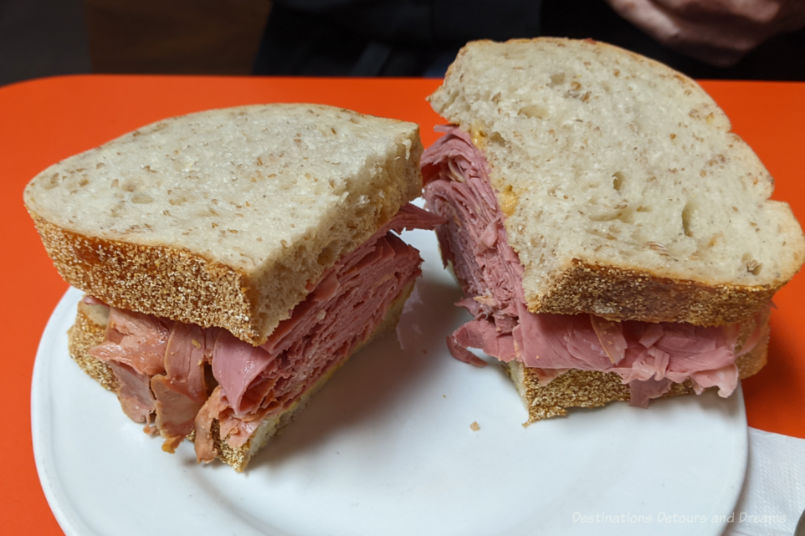
Many Manitoba bakeries, including Gunn’s Bakery, make Winnipeg-style rye bread, but the two most closely associated with this type of bread were KUB Bakery and City Bread. Unfortunately, KUB Bakery closed at the end of 2022, but City Bread still operates. You’ll find Winnipeg-style rye bread in grocery stores throughout the city.
When Winnipeg restaurants offer a choice of white, brown (whole wheat), or rye for your breakfast toast or your sandwich, the rye option will most likely be Winnipeg-style rye bread.
Honey Dill Sauce
Honey dill sauce is a Manitoba favourite dipping sauce for chicken fingers. According to the legend, it was developed by the owner of Mitzi’s, a downtown Winnipeg restaurant known for its chicken fingers, when he was trying to recreate a sauce he’d liked while eating out. Although he didn’t think the taste matched that of the sauce he was trying to recreate, his wife added it to the menu. It became a hit. It is hard to find the sauce outside of Manitoba.
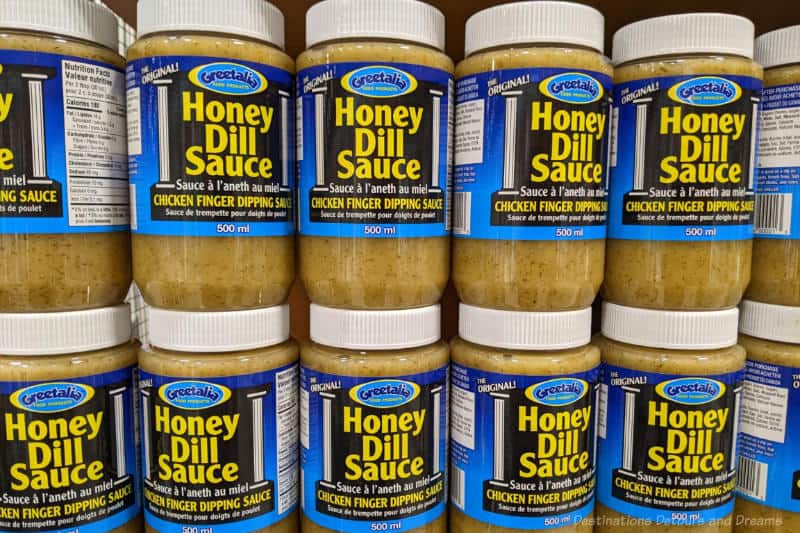
Mitzi’s closed it doors in April 2024, but there are many other restaurants in Winnipeg serving honey dill sauce with their chicken fingers.
Pickerel (Walleye)
Pickerel, a white fish with a sweet, mild taste and a flaky texture, is Manitoba’s official fish. It is known as walleye in other parts of the world. I don’t know how or why it came to be known as pickerel in Manitoba.
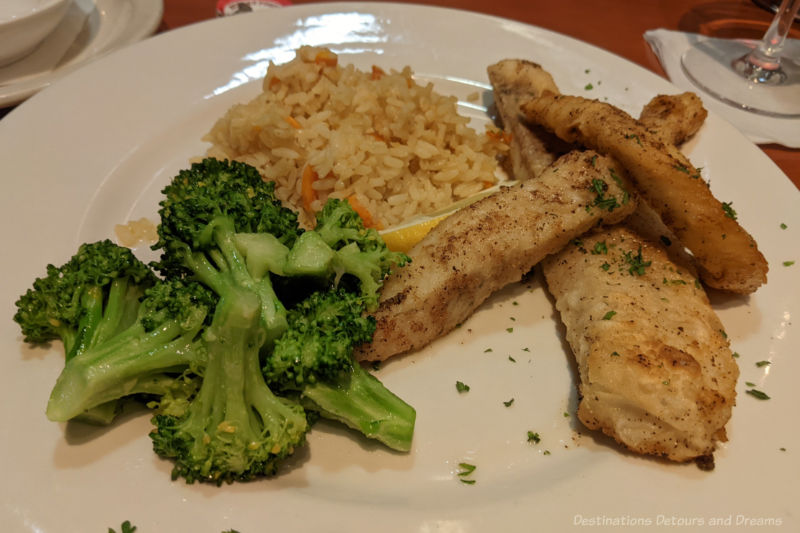
You’ll find pickerel on the menu of numerous restaurants throughout the city, in traditional fish and chips dishes, seasoned and pan-fried, in tacos, or in a pickerel sandwich.
Pickerel cheeks are considered a delicacy. The boneless coin-shaped pieces are usually pan-fried. They have a mild taste and have been compared to scallops, although they do have a subtly different taste than scallops and a meatier texture. While pickerel fillets are common on Winnipeg menus, pickerel cheeks are harder to find. They do show up on the appetizer menu at Fusion Grill and Toukies Lounge at Club Regent Casino.
Goldeye
Goldeye is a very small fish that is served smoked. The fish are marinated in brine before being dried slightly and smoked over a wood fire. Goldeye is often served on crackers with cream cheese. It is a slightly oily fish with a definite fishy flavour.
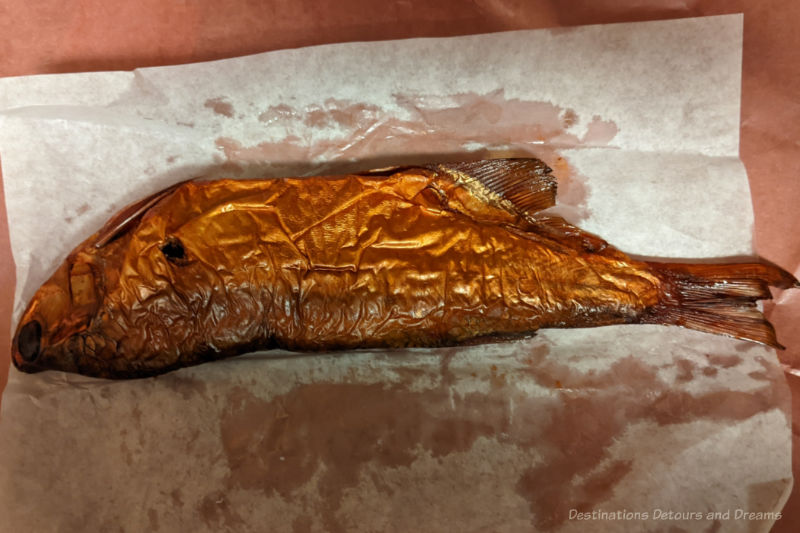
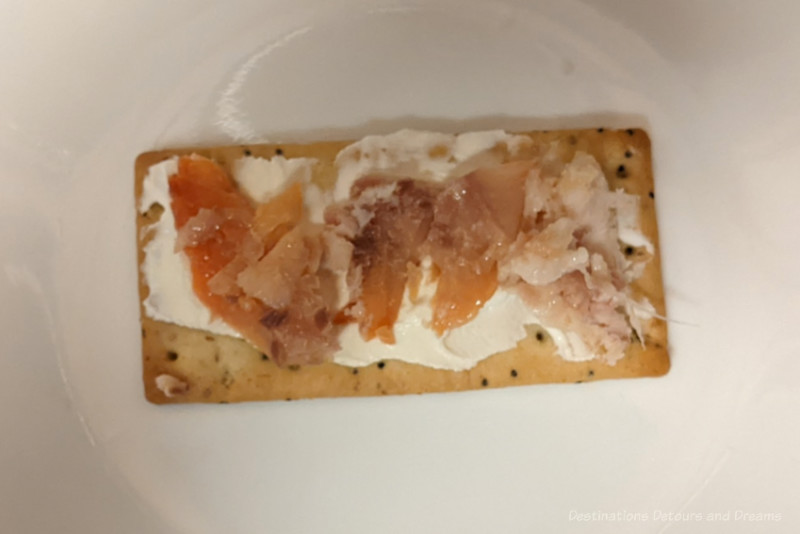
Note that the fish has given its name to Winnipeg’s minor-league baseball team the Winnipeg Goldeyes
Unlike pickerel, which can be found on many Winnipeg menus, goldeye is not common. 529 Wellington has smoked goldeye with spicy cocktail sauce on its appetizer menu. Bistro on Notre Dame serves smoked goldeye fritters with one of its salads. You can make your own smoked goldeye snack by buying crackers and cream cheese at a grocery store and picking up smoked goldeye at a fish shop, such as the fish counter at Fergie’s Fish ‘n Chips in The Forks Market or Gimli Fish Market.
The Nip
Salisbury House is a local Winnipeg diner chain. It got its start in 1931 when Ralph Martin Erwin opened a lunch counter serving the latest craze from the USA: the hamburger. He called his version of the hamburger a Nip. It is served with grilled onions.
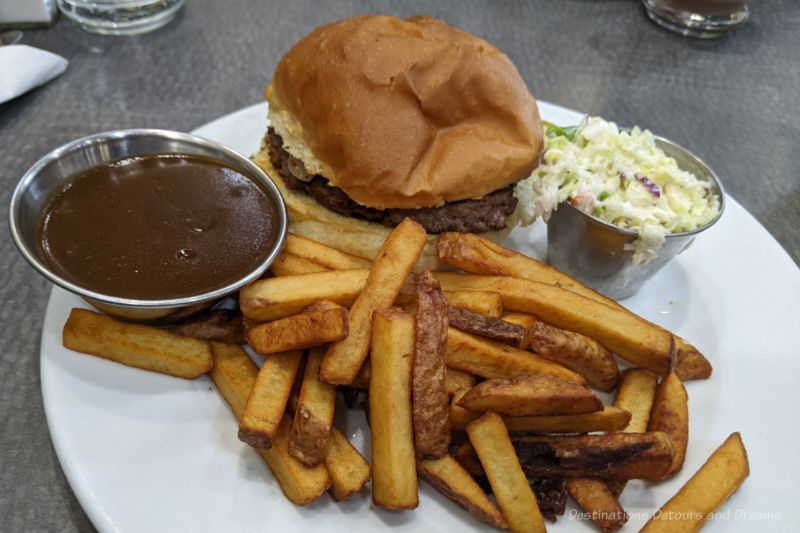
Salisbury House opened many other locations over the years, in Winnipeg and beyond. Today, there are locations only within Winnipeg.
TIP: There is Tribute to Manitoba Music Museum in the lobby of the Pembina location.
Fat Boy Burger
The Fat Boy (or Fatboy) has been a Winnipeg staple for decades. It is a cheeseburger topped with mayonnaise, mustard, onions, lettuce, tomatoes, pickles, and a generous ladle of meat chili sauce. The chili sauce is not the type of spicy chili with beans but is closer to a pasta-type meat sauce.
A 2019 CBC story traced the origin of the Fat Boy to Gus Scouras, a Greek immigrant who opened a number of burger joints with his brothers George and John, although Scouras did not come up with the name. In the late 1950s the Scouras began serving a burger slathered with chili sauce at their restaurant Junior’s. They called it Lotta Burger. When they opened another location called Big Boy, the burger was listed on the menu as Big Boy Burger.
A number of employees who worked at the Scouras’ restaurants went on to open their own burger joints. They took the hamburger patty and meat sauce combo with them. In the CBC story, Scouras guesses that Mike Lambos, who bought the Dairi-Wip Drive-In on Marion Street in 1959, may have been the first to use the term Fat Boy.
Some of the places in Winnipeg where you’ll find Fatboys on the menu are Junior’s Restaurant three locations, Georges Burgers and Subs six Winnipeg locations, Mrs. Mike’s on Tache Avenue, Super Boys Restaurant (where it is called a super boy), Dairi Wip Drive-In, Vj’s Drive Inn at 170 Main Street (where it is listed as V.J.s Special), The White Top Drive-In, The Nook Diner at 43 Sherbrook Street, and the A and V Drive-In located in the Fort Rouge Curling Club.
Perogies
Perogies are not unique to southern Manitoba, but they are common here because of Eastern European settlement that started in the latter 1800s. Often spelled pierogi (pierogies plural), the most common spelling in Manitoba (and much of Canada I believe) is perogy (plural perogies). Other spelling variations include pirogi, pyrogy, pyrohy.
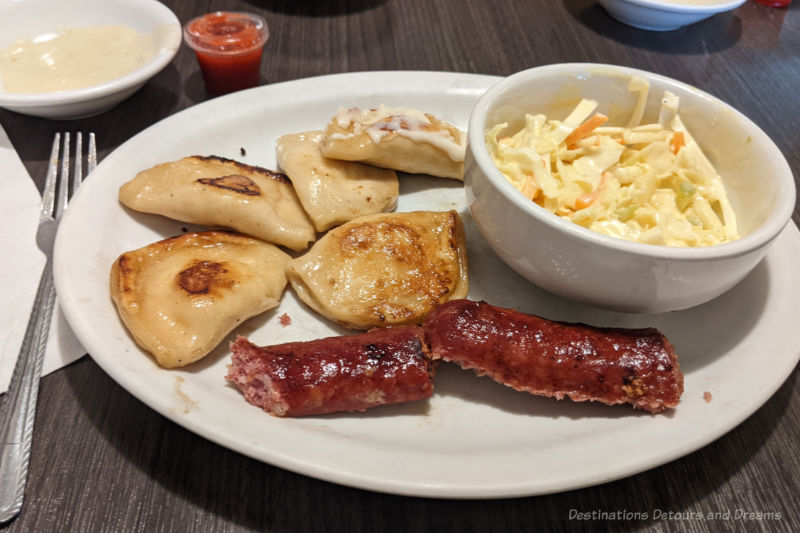
Perogies are filled dumplings served boiled or fried in butter with onions. One of the most common fillings is a potato and cheese mixture. Other common traditional fillings include cottage cheese or sauerkraut, but you may find perogies with a variety of other fillings including meat, spinach and feta, blueberries, or a combination of cheeses.
Perogies usually come with sour cream on the side, but the Mennonite version, called vareniki (alternate spellings vereniki, wareneki, varenyki), is served with a white cream gravy called Schmaundt Fat.
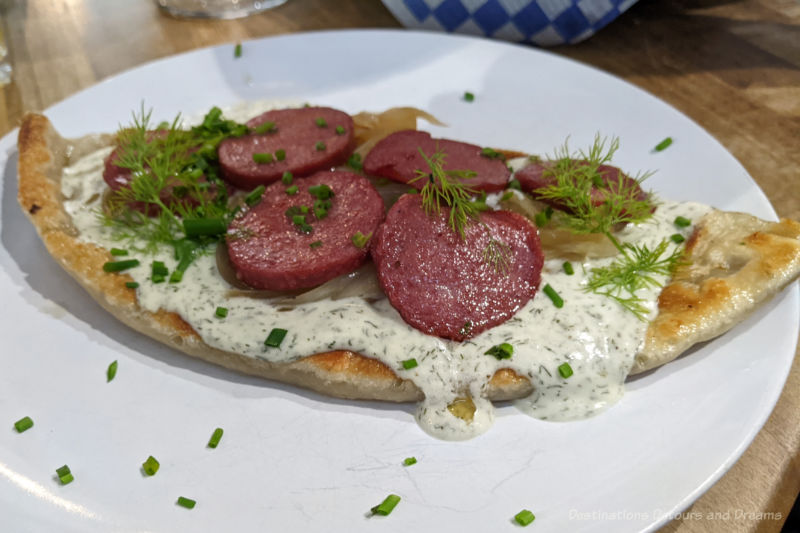
Perogies offered in delis or restaurants in Winnipeg are usually served with sour cream and often accompanied with farmer sausage or kubasa (both of which I talk about in other sections of this post). You can find cream gravy offered at The Don Restaurant.
Kubasa (European garlic sausage)
Kubasa is an Eastern European smoked garlic-flavoured sausage made of pork or pork and beef. The majority of kubasa is fully cooked and smoked before being sold. It can be eaten cold and is frequently served sliced alongside pieces of cheese. It is also commonly heated up.
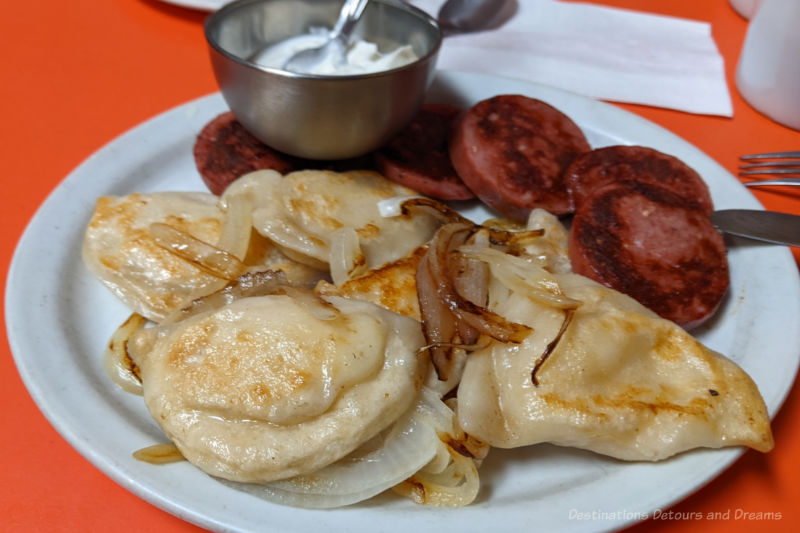
There are some variations in the sausage depending on who makes it and there are variations in spelling: kielbasa, kovbasa, kolbasa, kobassa. The variations stem from the different names used in different Eastern European countries. Kubasa seems to be most common in Winnipeg. You’ll sometimes see it shortened to Kuby and show up on menus under that name.
Bison
Bison meat is a very lean meat, low in fat and rich in nutrients. The taste is similar to beef with a more delicate flavour. Some say it is slightly sweeter. Some also describe it as having an earthy flavour. Cuts include roasts, steaks, stewing cubes, sausage, and ground meat.
Millions of bison, North America’s largest land animal, once roamed the continent. They provided Indigenous peoples with food, clothing, shelter, fuel, utensils, and more. European settlement led to their near extinction. The Canadian Bison Association says historical accounts suggest less than 1,000 bison were left in 1899. Efforts of ranchers and conservationists in Canada and the United States prevented the complete loss of the species. Herds were reintroduced into parks and protected areas. Ranchers kept small herds. Bison meat became more readily available in the 1990s. Popularity has grown since then, but it remains a specialty food item.
Bison farms and ranches across the Canadian western provinces, Ontario, and Quebec raise bison for meat for domestic consumption and for export.
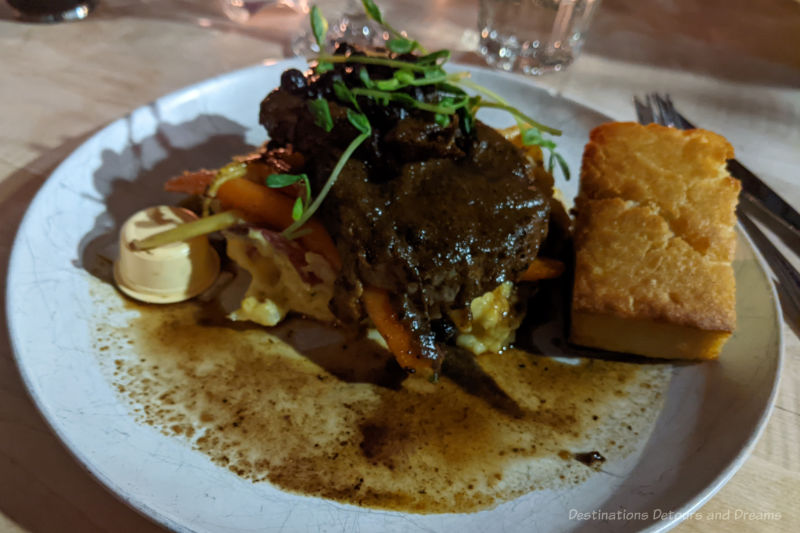
You’ll find bison on the menu in several Winnipeg restaurants. Two where it features prominently in a number of dishes are Feast Café | Bistro, which serves modern dishes rooted in Indigenous and Métis cuisine, and Bistro on Notre Dame, a restaurant serving fusion food grounded in Red River Métis culture.
Note: The bison is on the Manitoba flag and two life-sized bison statues sit on either side of the Grand Staircase at the Manitoba Legislative Building.
Tourtière
Tourtière is a French-Canadian meat pie. It is made with spiced ground meat, which may be pork or a mixture of pork, beef, and/or veal.
Tourtière is not unique to Manitoba. It originates from Quebec. I encourage you to eat tourtiére when you visit Quebec. It is on my Winnipeg list of foods because it is a favourite here. Winnipeg is home to the largest Francophone community west of the Great Lakes. Tourtière is often part of Christmas or New Year’s feasts.
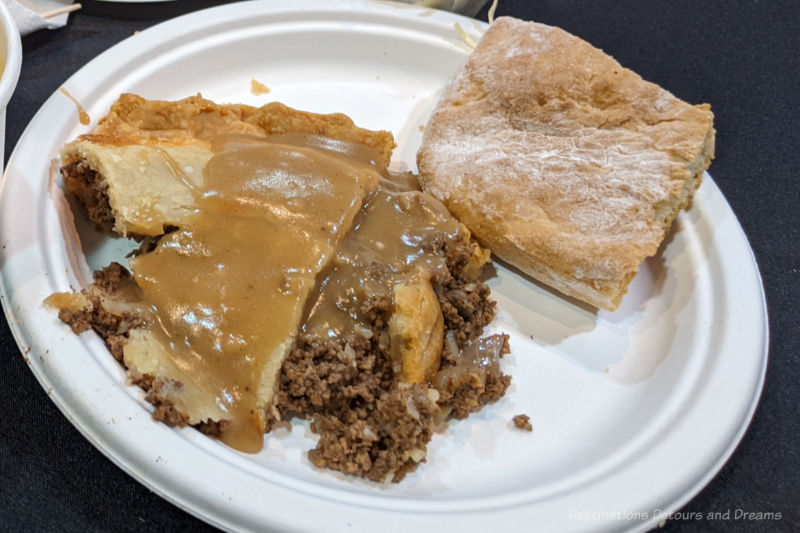
Tourtière is on the menu at Resto Gare, Stella’s, Peasant Cookery, Prairie Ink, and Bistro on Notre Dame.
A Note on Poutine
Poutine is a dish of French fries and fresh cheese curds covered with gravy. Although sometimes considered Canada’s national dish, it has only been around since the 1950s. It originated in Quebec and has since spread across Canada. As its popularity grew, so did the variations on it made with the addition of other ingredients, such as pulled pork or butter chicken. It is found all across Canada and therefore not unique to Manitoba. I mention it here, however, because in some restaurants you may find additions based on the Manitoba foods I have listed in this post. For example, Tavern United serves perogy poutine and poutine with shredded bison is on the lunch menu at Feast Café | Bistro.
Sweet Manitoba Food
Shmoo Torte
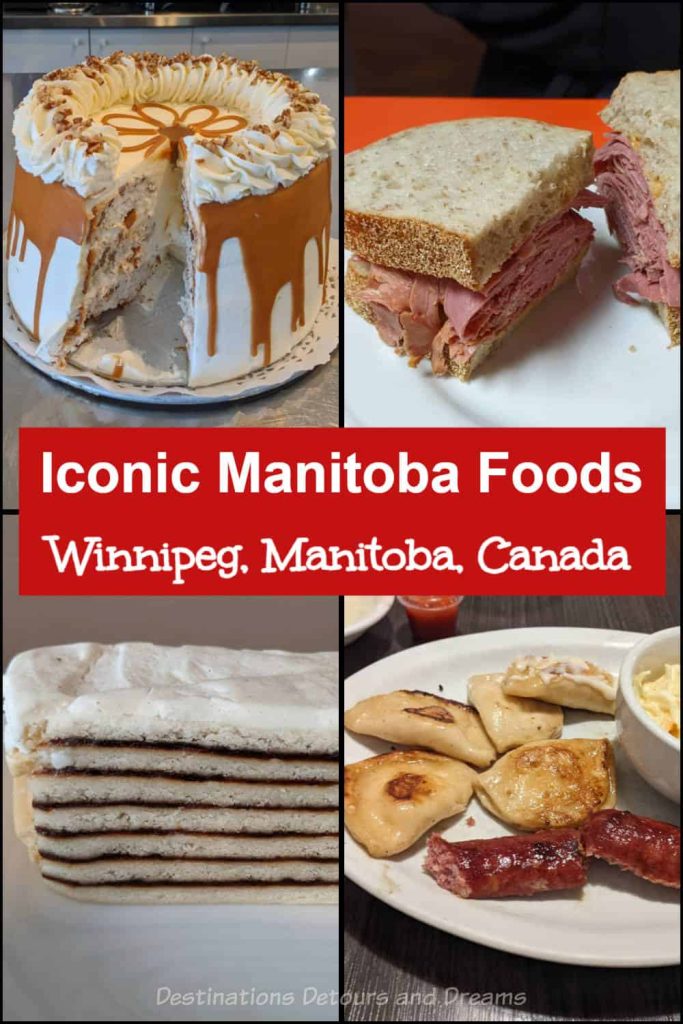
Shmoo Torte (or Schmoo Torte) features layers of pecan-flavoured angel food cake filled with whipped cream and served with a buttery caramel sauce. It is light and rich at the same time.
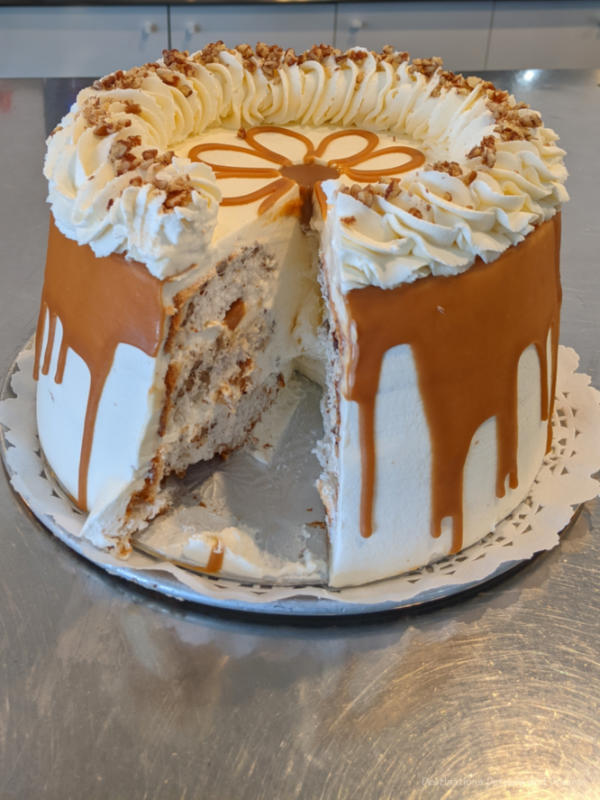
The torte was created in 1948 by Dora Zaslavsky for her son Murray’s bar mitzvah. Murray wanted a special cake, something that wouldn’t be found at everyone else’s bar mitzvah. It soon became a bar mitzvah standard and an overall Winnipeg favourite.
You can enjoy a slice of Shmoo Torte at Baked Expectations or buy slices or an entire cake to take home. It is on the dessert menu at Kristina’s on Corydon, and Grace Café. You can buy the cakes to take home at a number of bakeries including DeNardi, Goodies Bakes Shop, Gunn’s Bakery, and Pastry Castle.
Vinaterta
Vinarterta is a celebration cake comprised of multiple alternate layers of cardamon-flavoured biscuit and prune filling. Sometimes it will be topped with buttercream icing. It is served in rectangular slices.
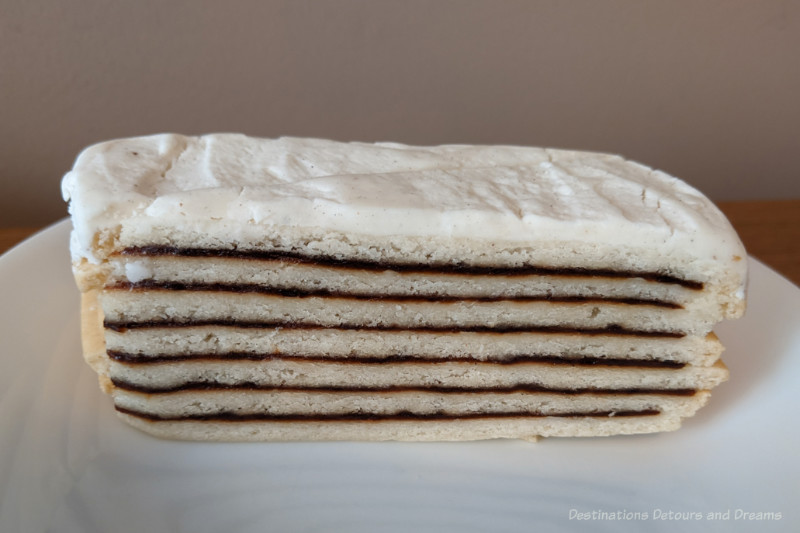
The cake originated in nineteenth century Iceland. Icelandic settlers in Manitoba brought the recipe with them. In 1875, the Canadian government granted Icelandic immigrants a reserve region along the west shore of Lake Winnipeg in Manitoba. The immigrants established New Iceland, which had its own constitution and system of government until 1887.
These days you’re unlikely to find the cake in Iceland. It, however, remains popular in North American Icelandic communities. In Manitoba, it is often viewed as the quintessential traditional Icelandic food and is especially popular at Christmastime.
Although you’re unlikely to find vinarterta on any restaurant dessert menu, there are a few places you can pick up vinarterta to take home. The Butter Tart Lady is a good choice. ((You may also want to pick up some butter tarts, a favourite Canadian pastry.) You may find Kyle’s Icelandic Vinaterta at the St. Norbert’s Farmers Market in summer months. A few other bakeries prepare the dessert seasonally for Christmas. If you visit a Christmas craft market in the city, chances are good you’ll find a table selling vinarterta.
Note: You can explore Manitoba’s Icelandic roots more deeply by visiting the town of Gimli. Located approximately an hour north of Winnipeg, it was the heart of New Iceland. Gimli continues to celebrate its Icelandic heritage. Is is known as the place with the largest concentration of Icelanders outside of Iceland.
Jeanne’s Cake
Jeanne’s Bakery was established in 1936. Jeanne’s Cake is an iconic Winnipeg tradition with a shortbread cookie base. It is topped with Jeanne’s signature icing and Belgian chocolate shavings.
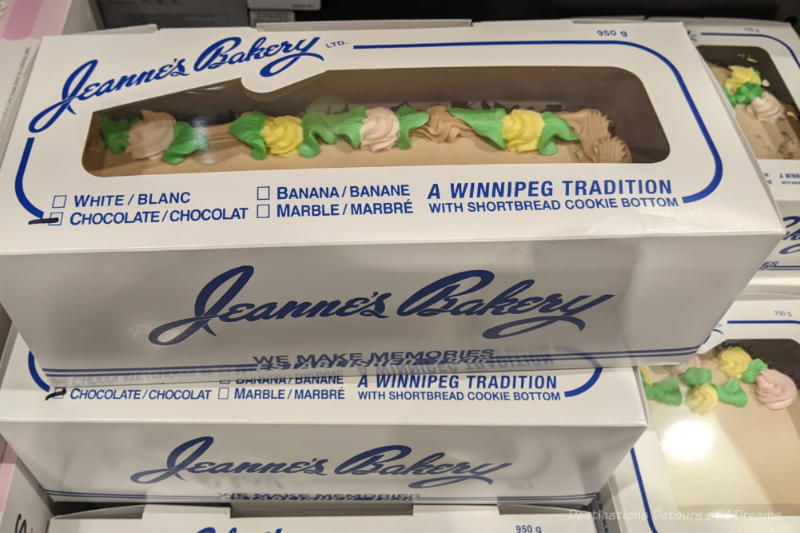
In my experience, Winnipeggers either love or hate the cake. I am not a fan, but I have family members for whom a birthday isn’t a birthday without Jeanne’s cake. Many former Winnipeggers visiting the city make it a point to get a Jeanne’s cake. You will sometimes see one carrying a Jeanne’s cake box onto the airplane when they leave.
I have not seen the cake offered in restaurants, but you can order a cake to take home from Jeanne’s Bakery, which is located on Notre Dame Avenue. Note that cakes need to be ordered two days in advance. Jeanne’s cakes are also available on the shelf in a number of grocery stores throughout the city. Check the Agent list on Jeanne’s Bakery website.
Imperial Cookie
Imperial cookies are not unique to Winnipeg, but they are especially popular here. Sometimes called Empire Cookies (or Biscuits), the sandwich cookies feature two shortbread-like cookies with a layer of jam between them and a white icing on top.
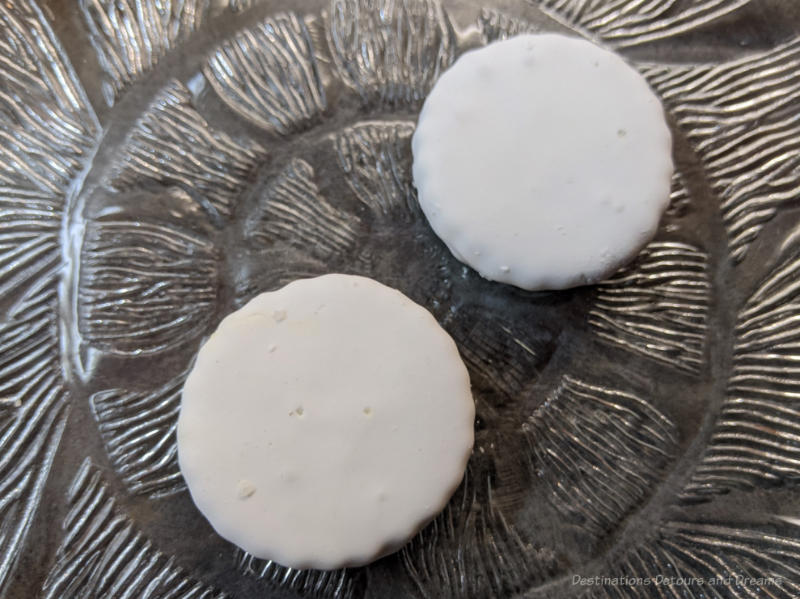
Many Winnipeg bakeries offer Imperial cookies. High Tea Bakery, which makes two different sizes of Imperial cookies, served 3,000 of their cookies to a garden party hosted by the Lieutenant-Governor during a visit by Queen Elizabeth II in 2010.
Goog
Located at the foot of the historic Elmwood Bridge, the Bridge Drive-In (or BDI as it is commonly known) offers soft-serve ice cream, sundaes, sodas, shakes, and some crazy ice cream concoctions, such as “The Goog Special.” It is a blueberry “upside down” shake, topped with sliced banana, layered with a hot fudge sundae, and topped with whipped cream, cherries, and optionally peanuts.
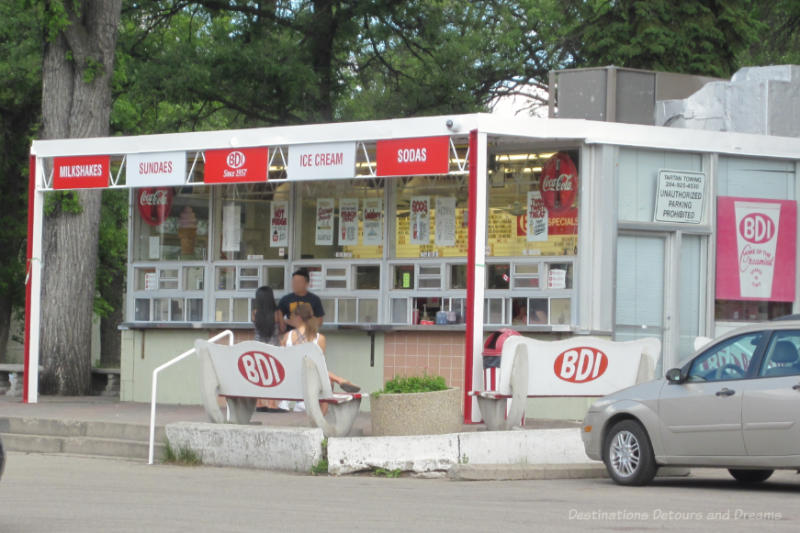
The BDI has been an iconic Winnipeg institution for over 60 years. Its opening each year marks the unofficial start of spring. Taking a stroll across the Elm Park Bridge while eating your ice cream is part of the experience. The steel truss bridge was constructed between 1912 and 1913 to provide vehicular access to a new development. It closed to vehicular traffic in 1972 and is now open to pedestrians and cyclists.
Another iconic Winnipeg seasonal ice cream store is Sargent Sundae, located on Portage Avenue across from Assiniboine Park.
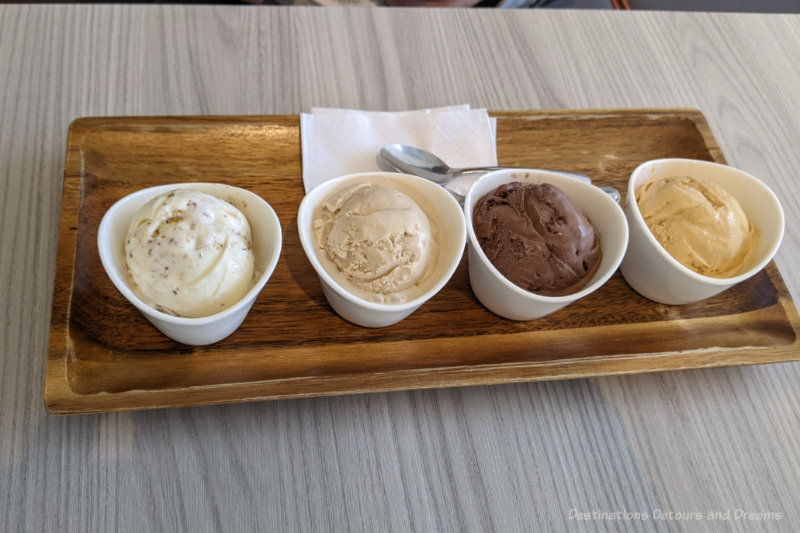
Chaeban Ice Cream, a newer addition to Winnipeg’s ice cream scene, is open year-round. It actually opened on a 2017 winter day by a Syrian refugee family as a way to give thanks to the community for their support and to provide employment for family members. Their salted caramel and chocolate ice creams have won national awards as has their take on a traditional Syrian recipe featuring orange blossom water, toasted pistachios and cashews, ricotta cheese, and orchid root powder.
Russian Mints
Family-owned Mordens’ of Winnipeg has been handcrafting fine chocolates and confections for decades. Their signature Russian Mints won top prize for Best Chocolate Piece at the 1984 World Fair in New Orleans.
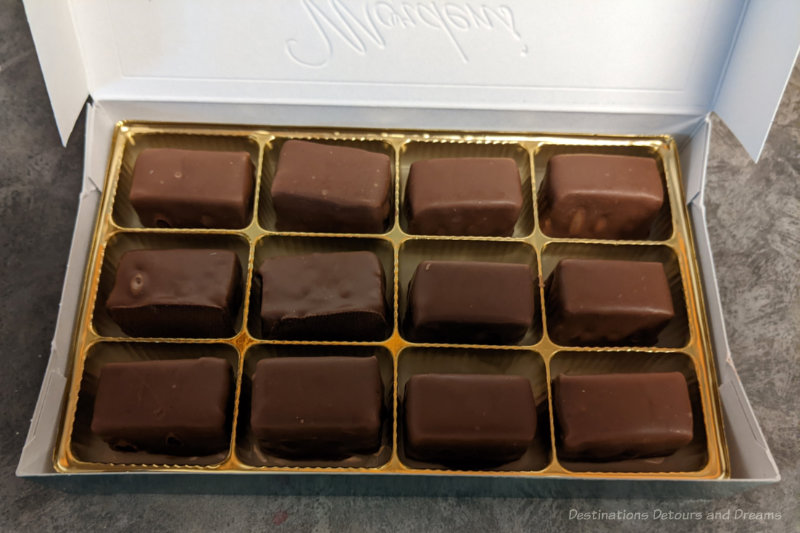
Blake and Shirley Morden founded the store in 1959. They were the first candy manufacturer to produce chocolate-covered jujubes and chocolate-covered ginger. Today the store remains owned and run by Morden family members. They produce over 70 varieties of chocolates, confections, and nuts.
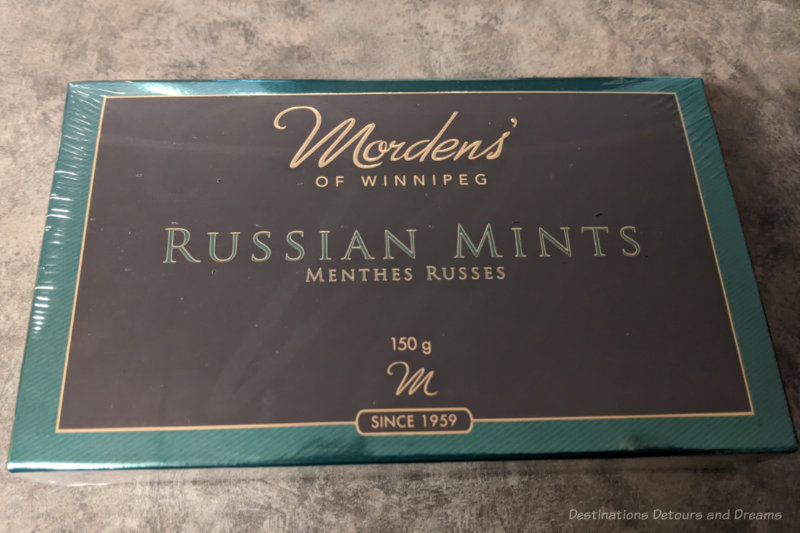
You can find Russian Mints and other boxes of Morden treats at gift stores throughout the city. To find a complete collection of their offerings as well individual chocolates to create your own custom box, visit their store attached to their manufacturing site on Sargent Avenue.
Note: Opening in 2007, Chocolatier Constance Popp’s history in Winnipeg is not as long as Mordens’, but it has also become a Winnipeg institution. They make over 100 products. They make a chocolate bar with nine iconic Winnipeg buildings forming a design on its front. They have chocolate offerings in shapes of the Golden Boy statue atop the Manitoba Legislative Building, the Canadian Museum for Human Rights, a Manitoba map, and a bison.
Note: A number of the places mentioned in this post are featured in my book 111 Places in Winnipeg That You Must Not Miss. The chapters in the book contain more information about them. Specifically, the ones mentioned in this post are: Tribute to Manitoba Museum, James Avenue Pumphouse, Feast Café | Bistro, Baked Expectations, Elm Park Bridge, Chaeban Ice Cream, and Chocolatier Constance Popp.
PIN IT
I think I’d head home with a couple loaves of that rye bread. But I’ve got my eye on the Fat Boy burger as well.