

Seasonally-Open Manitoba Small-Town Museums
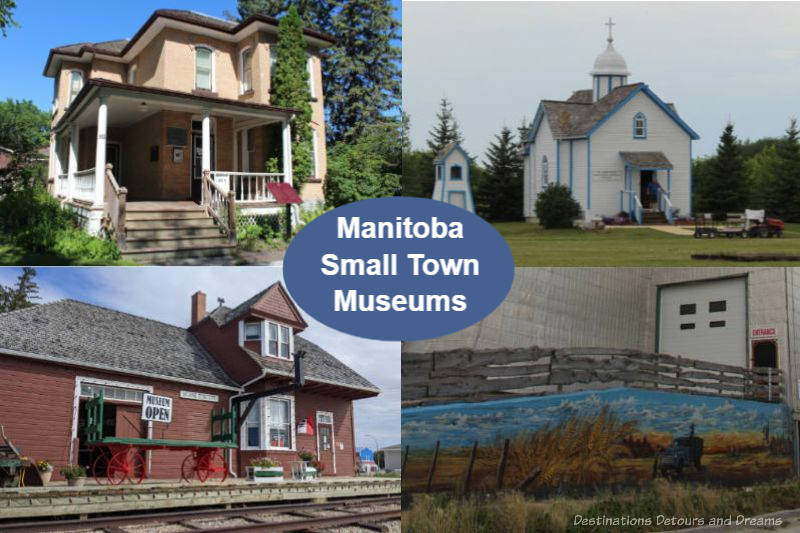
A round-up of small-town museums in Manitoba, Canada that are open only in summer months
Summer for many in Canada and the U.S. involves road trips. Those trips often go past or through a number of small towns. In those small towns, you may find museums worth taking the time to stop and visit. Many are open only during the summer months.
Small-town museums can be a mixed bag. Often run and curated by volunteers, they can sometimes contain a jumble of items of interest mostly to local residents. More often than not, however, I have discovered well-laid-out displays and surprising gems. The passion of the volunteers leads to a fascinating portrayal of the area’s personality and history. Exhibits frequently appeal to a broad audience, not just locals, and contain spellbinding stories about unusual people.
This post highlights a number of small-town museums to be found in my home province of Manitoba, Canada. It includes only museums I have personally visited, and, therefore is not a comprehensive list, but, as I created this post, I was surprised to discover how many were on the list. I have made a point of trying to visit more small-town museums each year. Because I live in Winnipeg, a large majority of the ones I feature are within easy distance of that city. I have written separate posts on a number of these, but not all of them.
The museums are listed in alphabetic order of the name of the community in which they are located. The list includes museums open only during the summer and that I have personally visited. (For a larger listing of museums in Manitoba, see the Association of Manitoba Museums.)
Museums that are open year-round are not on this list, but be aware there are a few of these outside of Winnipeg that are also well worth visiting, for example the New Iceland Heritage Museum in Gimli and the Winnipeg River Museum in St-Georges.
Other than Winnipeg, Manitoba’s capital and largest city, there are 9 other cities in the province. I’ve visited a couple of seasonally-open museums in these cities that are worth mentioning as well: the Marine Museum of Manitoba in Selkirk and the Pembina Threshermen’s Museum in Winkler (actually between Winkler and Morden).
- Arborg: Arborg and District Multicultural Heritage Village
- Cooks Creek: Cooks Creek Heritage Museum
- Inglis: Inglis Grain Elevators National Historic Site
- Manitou: Nellie's Homes
- Miami: Miami Railway Station Museum
- Morris: Morris & District Centennial Museum
- Neepewa: Margaret Laurence Home
- Neubergthal Heritage Foundation
- Plum Coulee: Plum Coulee Elevator Museum
- Souris: Hillcrest Museum
- St. Claude: The Manitoba Dairy Museum (Musée Latier Manitoba)
- St. Joseph: Saint-Joseph Museum
- St. Pierre Jolys: Musée St-Pierre-Jolys
- Wawanesa: Sipiweske Museum
Arborg: Arborg and District Multicultural Heritage Village
The Arborg and District Multicultural Heritage Village showcases the agricultural heritage of the area. A number of historical buildings have been moved to the site and restored to create a village that brings that history to life.
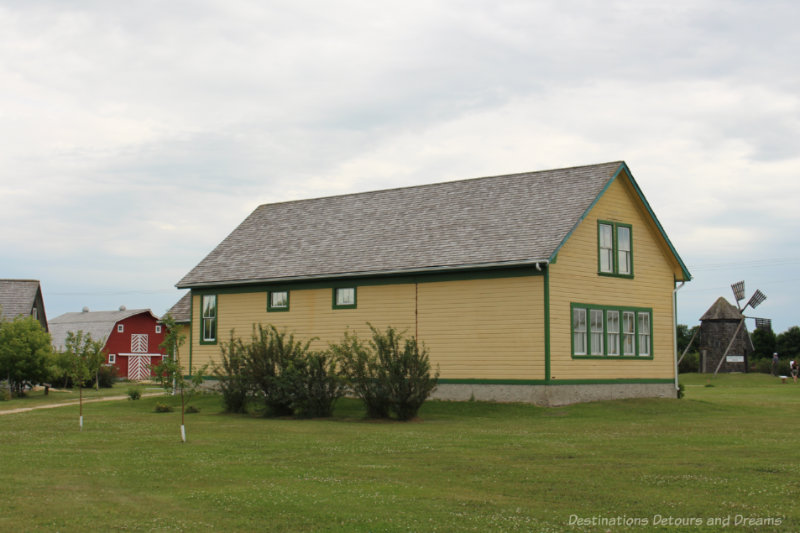
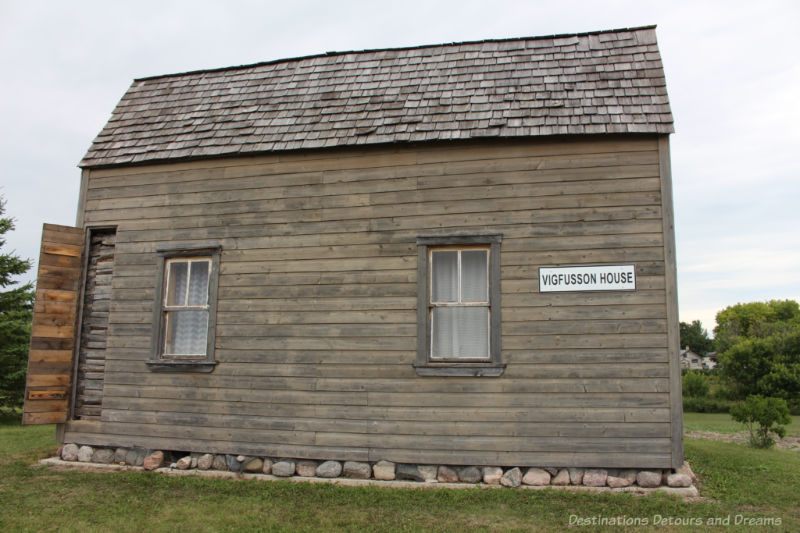
Arborg settlers were primarily of Icelandic and Polish-Ukrainian origin. Buildings include a store, a one-room school, a church, a grist mill, and a number of residences, including a log cabin, a house that illustrates techniques Ukrainians settlers used to build their houses, and a house portraying the life of an Icelandic settler family. There is a barn, an outdoor bake oven, pieces of farm machinery, and more. Read about my visit in the post Rural Manitoba History at a Multicultural Heritage Village.
Cooks Creek: Cooks Creek Heritage Museum
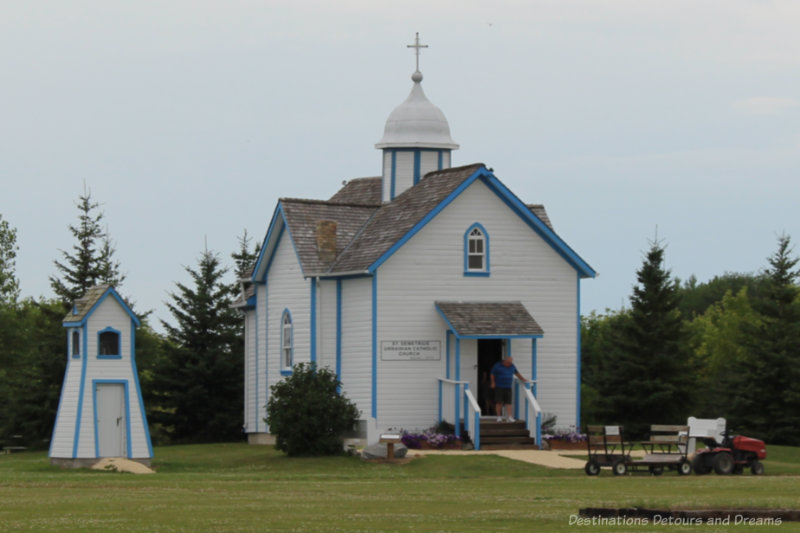
Dedicated to Manitoba pioneers from Eastern Slavic countries, Cooks Creek Heritage Museum in contains costumes, folk art, religious artifacts, furniture, and tools used in everyday life.
The main museum building was once the rectory for the neighbouring St. Michael’s Roman Catholic Church. Inside you’ll find many beautiful artifacts reflecting Slavic culture and details about pioneer life. The museum was started by Alois Krivanek, a Czechoslovakian-born priest who came to Cooks Creek in 1964. He spent decades collecting artifacts and became known as the “junk priest.”
See my post Cooks Creek Heritage Museum: Manitoba Slavic Pioneer History.
Inglis: Inglis Grain Elevators National Historic Site
Wooden grain elevators once dotted the Canadian prairies. Introduced in the 1880s, they provided an efficient method of grain handling, but technology advances and consolidation beginning in the latter part of the twentieth century led to these “prairie giants” disappearing from the landscape.
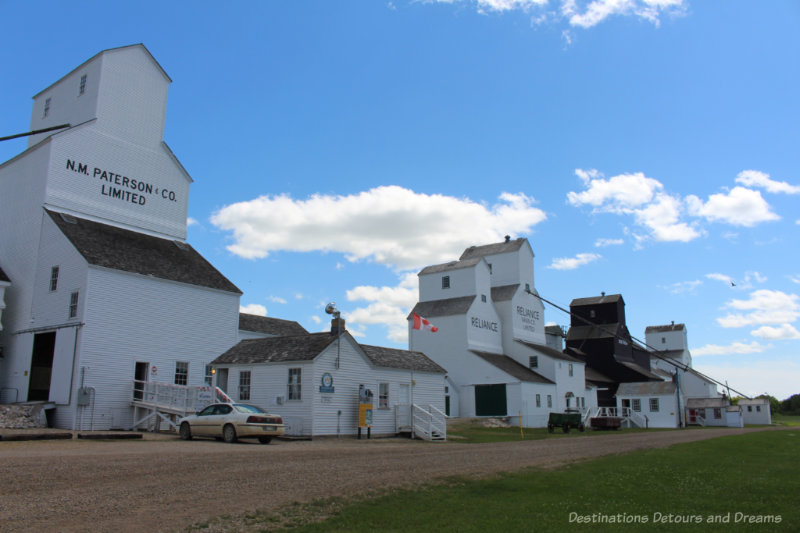
A row of five standard-plan grain elevators built between 1922 and 1941 stand in Inglis, Manitoba at the Inglis Grain Elevators National Historic Site. The impressive buildings stand as tribute to Manitoba’s golden age of elevators and a remembrance of their importance to agriculture and prairie life. The interior of two of the elevators are open for touring, either on your own or by guided tour, and offer a chance to learn more about their operation.
See my post Historic Grain Elevators in Inglis Manitoba.
Manitou: Nellie’s Homes
Nellie McClung (1875–1951) was a suffragist, reformer, legislator, and author. She played an instrumental role in Manitoba women getting the right to vote and was one of the Famous Five, a group of five women who challenged a court ruling that women could not be appointed to the Canadian Senate because they were not “qualified persons.” The outcome of the case recognized women as persons and opened the way for them to participate in Canadian politics.
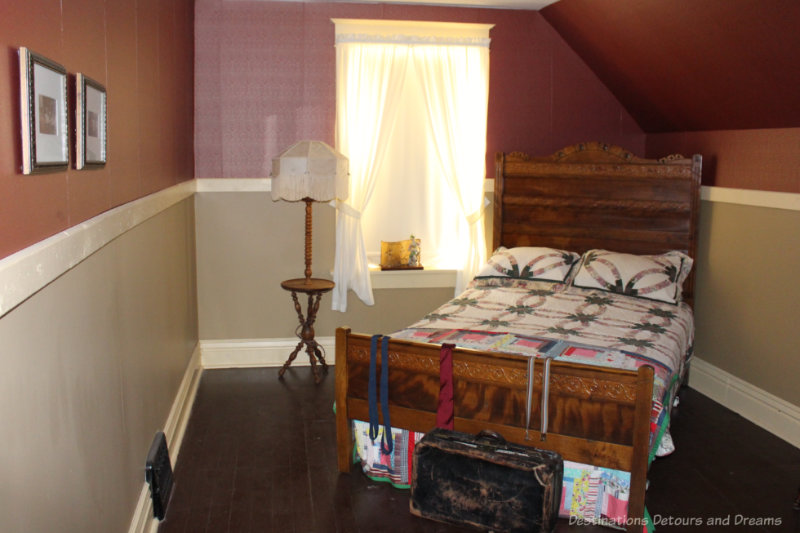
It was in Manitou, Manitoba that Nellie McClung started her writing career and began her lifelong devotion to improving the political and social well-being of women. Two of the houses she lived in there are part of Nellie’s Homes at the Nellie McClung Heritage Site. They have been restored and decorated to represent Nellie’s time and life in them.
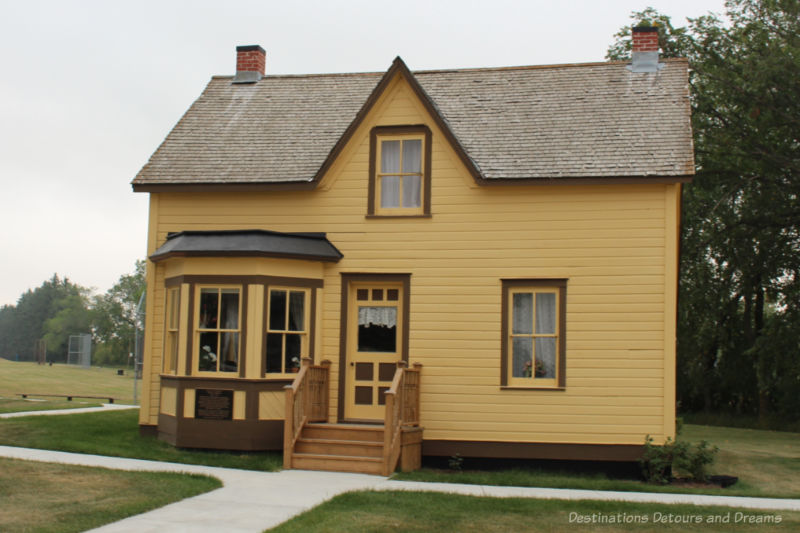
The first house is that of the family McClung boarded with when she first came to Manitou in 1890 to teach.
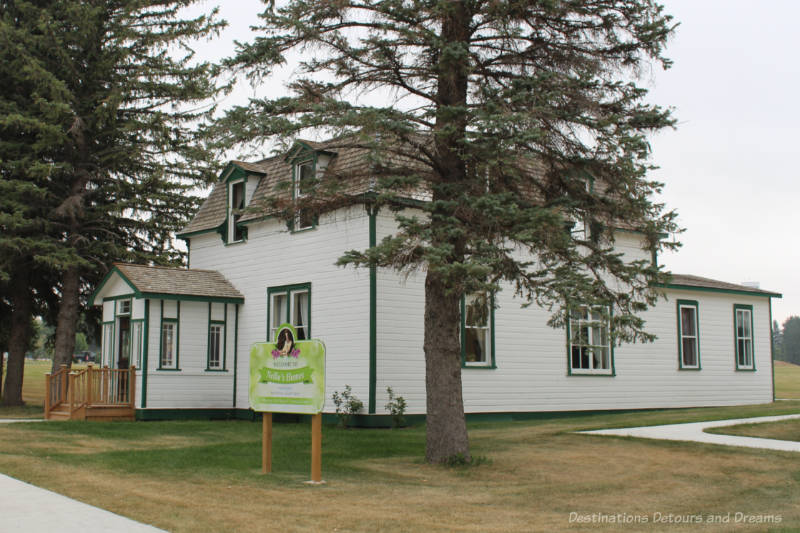
In 1896, she married pharmacist Robert Wesley McClung and they lived above the pharmacy for a few years before purchasing the second house on display in 1899. It was here that Nellie wrote the first of her sixteen books and where four of her five children were born.
The detail that has gone into recreating these homes makes it easy to imagine Nellie in them and get a sense for her life. Read more in my post Nellie McClung Heritage Site in Manitoba, Manitoba.
Miami: Miami Railway Station Museum
Housed in a former railway station, the Miami Railway Station Museum contains artifacts and information about railway history and the station manager’s life. The well-laid-out museum paints a vivid picture of that life.
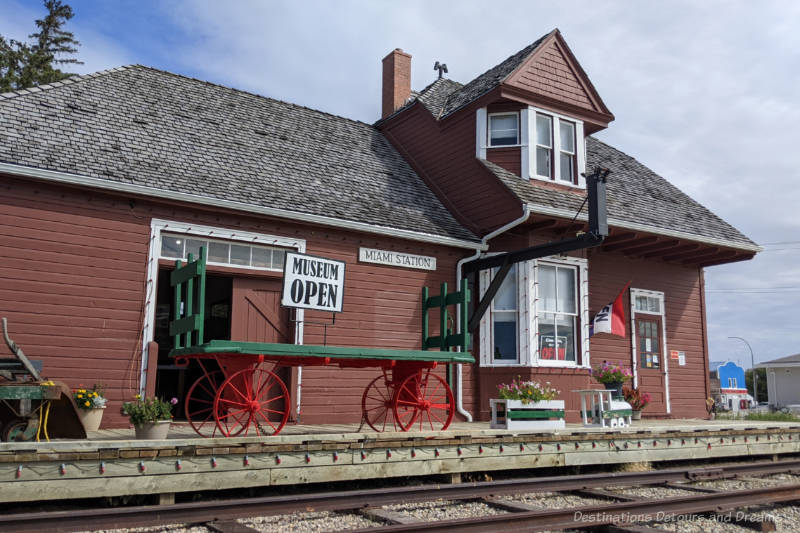
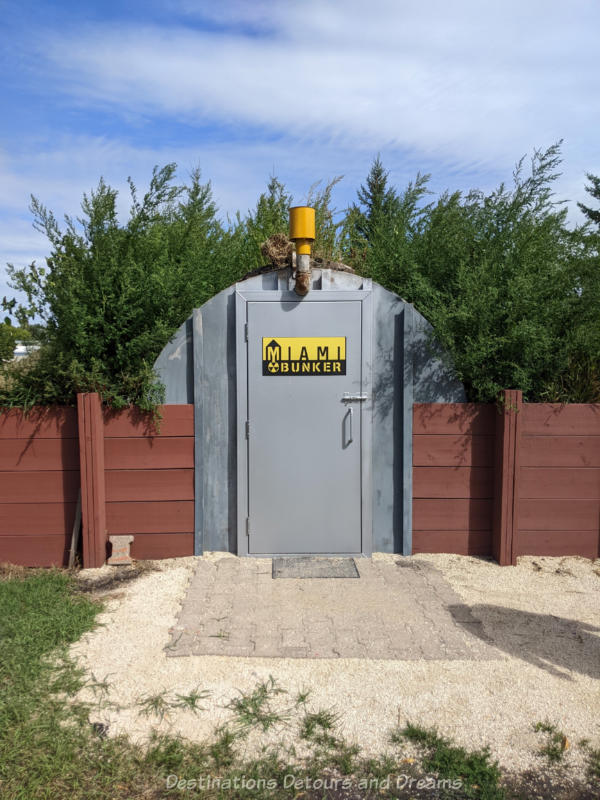
On the grounds, you’ll also find a 1914 caboose, a train shed with tools and equipment, and, somewhat surprisingly, an original Cold War bunker, part of a network of fallout reporting stations launched by the government but never implemented. There had been a bunker on the site, but it was exhumed after the Cold War. The bunker on display was salvaged from Moose Lake, Manitoba.
Note that there is another museum in Miami. Located in a former church, it contains exhibits about the history of the municipality as well as information about a unique species of mosasaur that lived in ancient seas in the area.
Read more at Manitoba Railway History And Fallout Bunker At Miami Railway Station Museum.
Morris: Morris & District Centennial Museum
The Morris & District Centennial Museum contains a variety of artifacts, photographs, and articles detailing the history of the area and its inhabitants. The museum is particularly interesting to me because I grew up in the town of Morris, but for those of you who may not be as interested in seeing my uncle’s curling sweater, reading an article about my brother, or finding my name in an old school register, there are exhibits of historical items and life of more general interest. Below are a few photos to illustrate some of the things you’ll find in the museum.
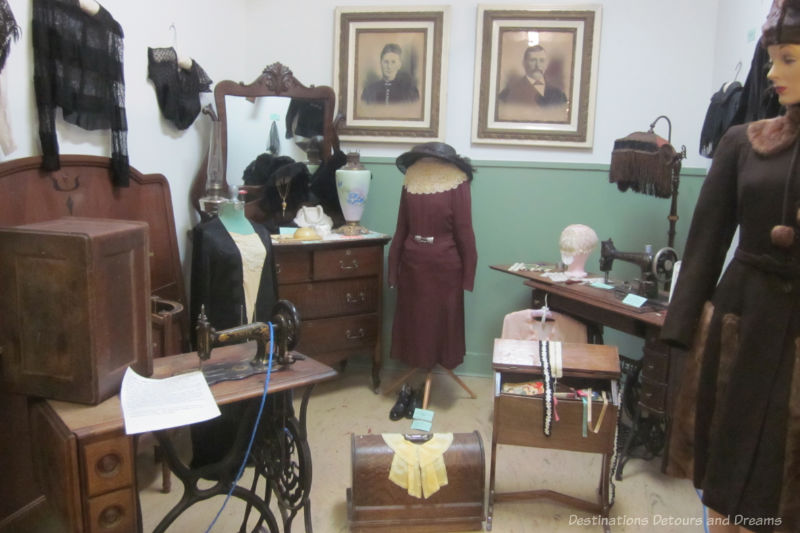
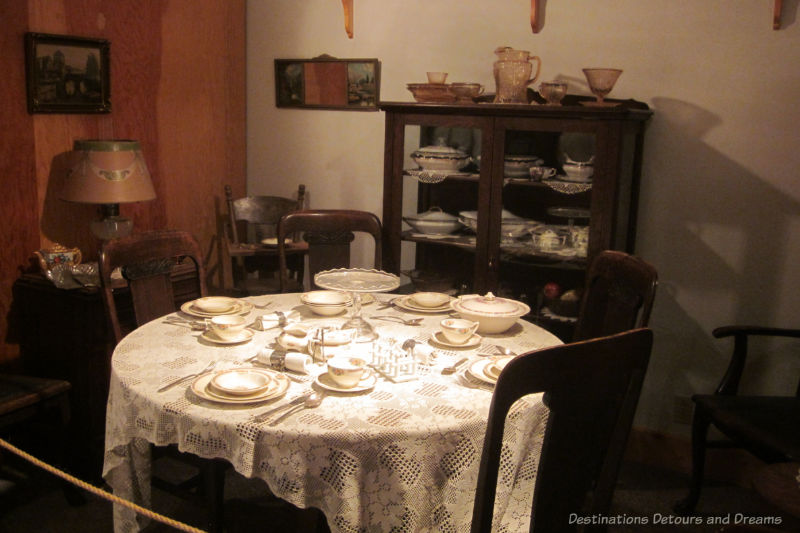
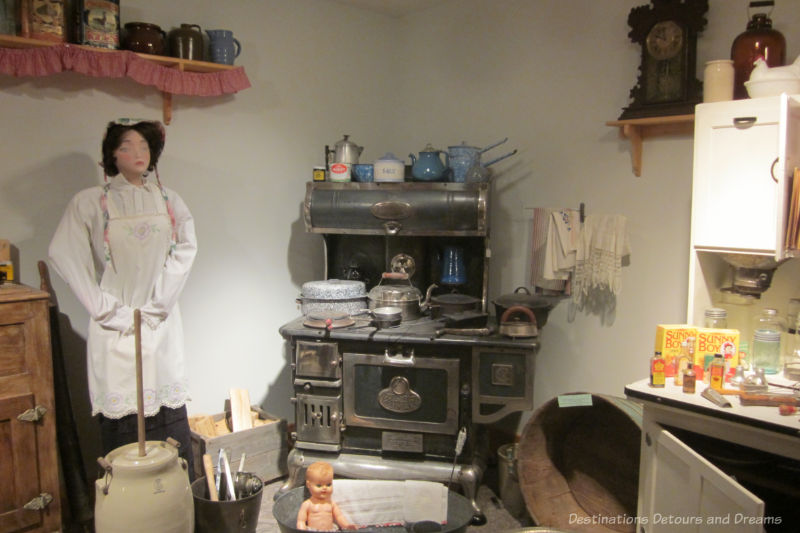
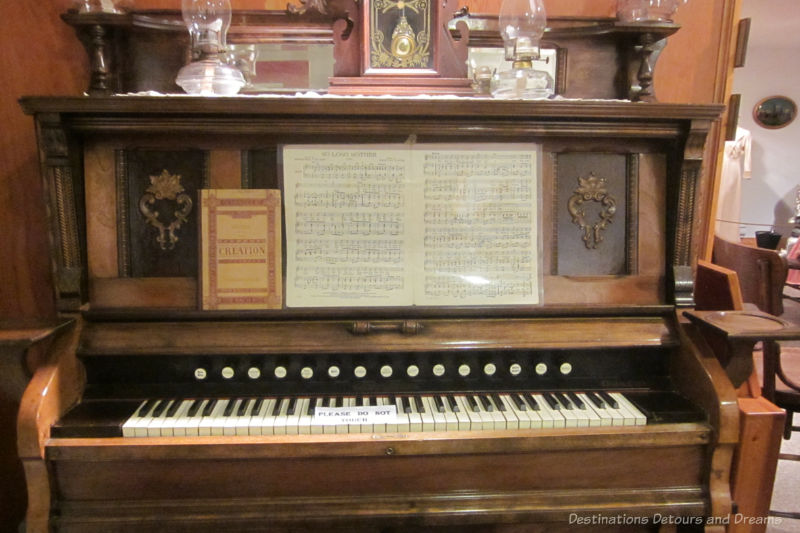
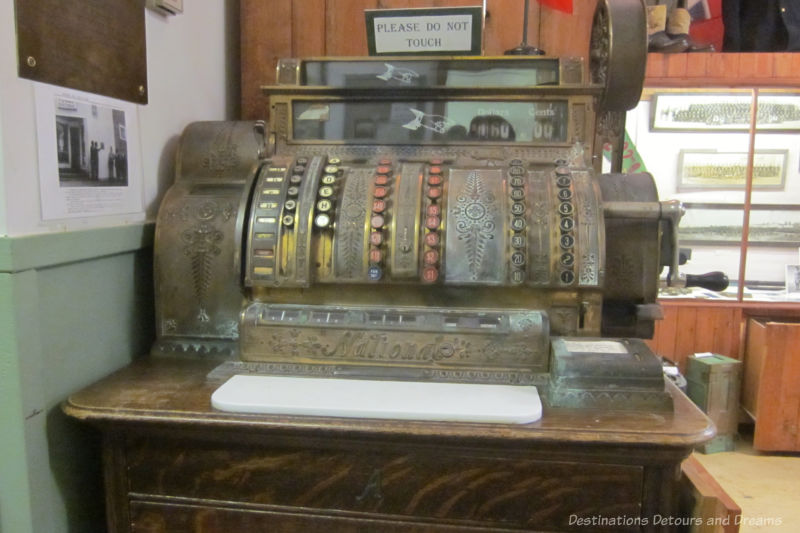
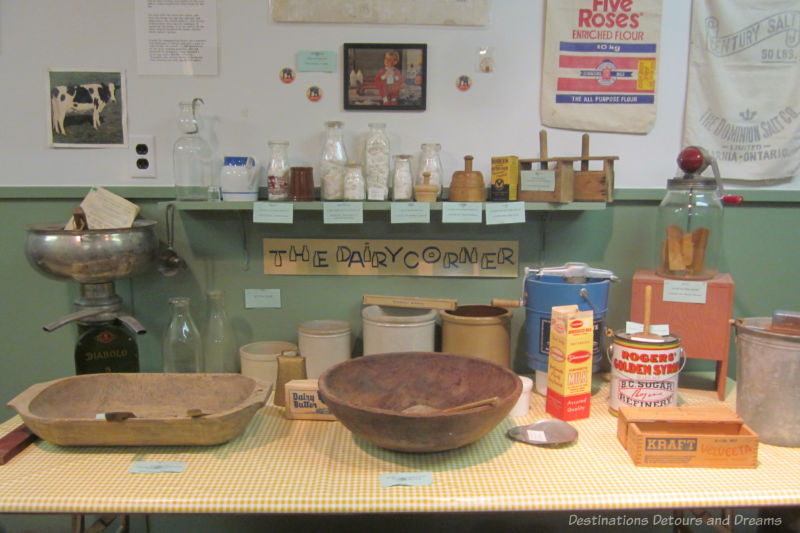
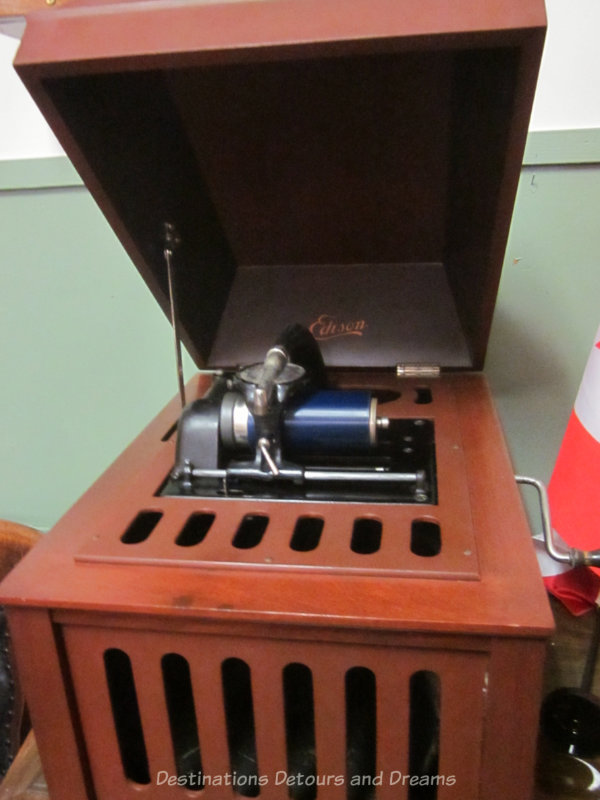
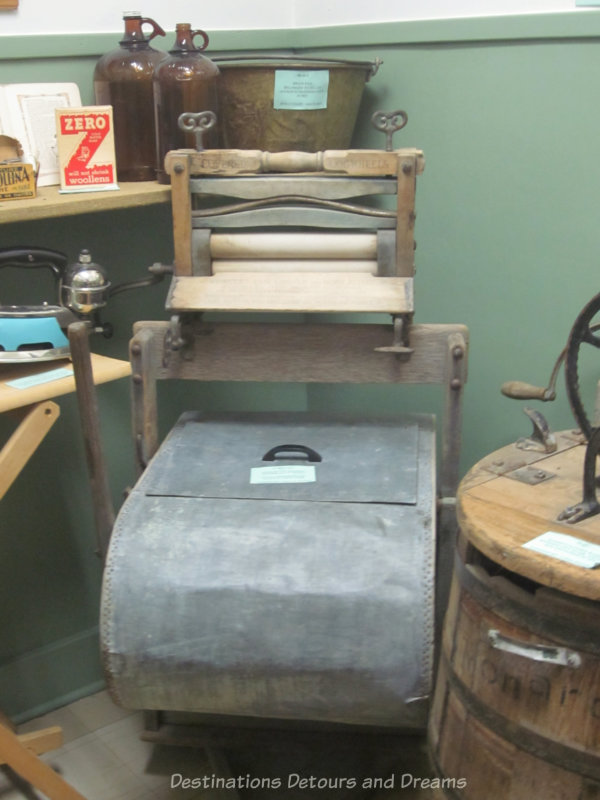
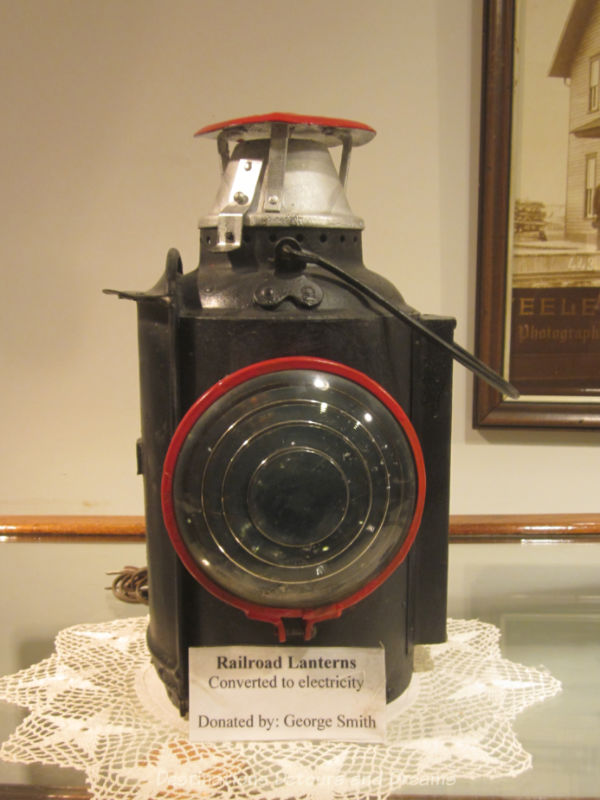
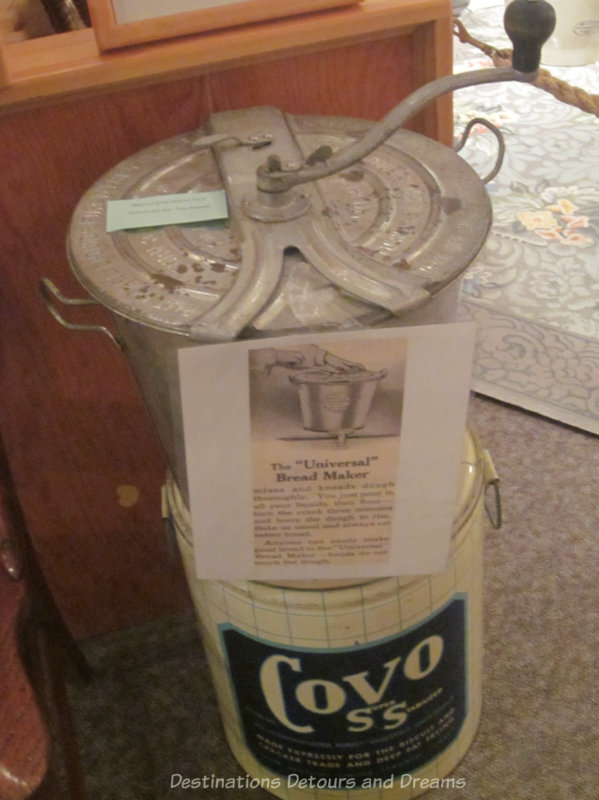
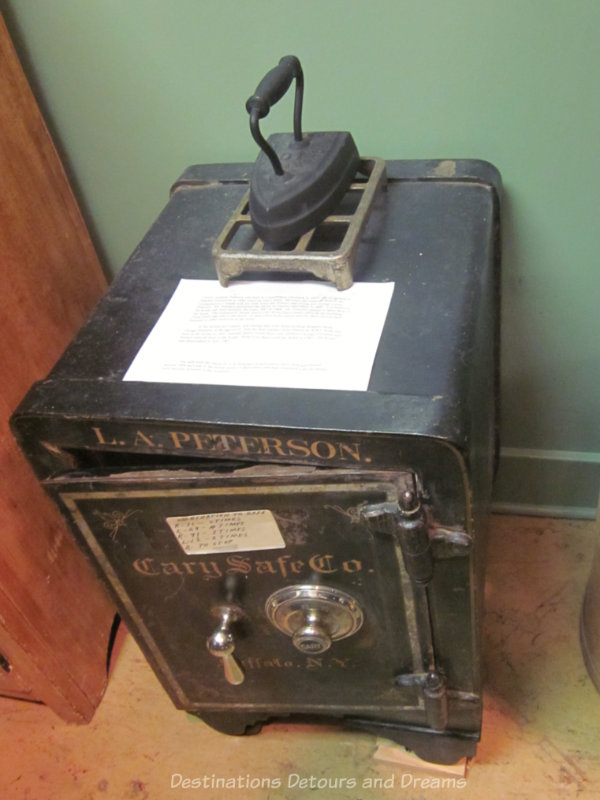
The story of the safe pictured in the above photo is a good example of the fascinating and sometimes quirky stories to be found in small museums. The safe, made by the Garry Safe Company of Buffalo, New York in 1894, belonged to Lauritz Andreas Peterson who opened a tailor shop in Morris when he immigrated to Manitoba in the same year. It was passed down through generations before arriving, still sealed, at the museum. The combination was clearly printed on the front door, but no one could manage to open it even after many attempts. Finally, a summer student got it open and found a large sum of money inside. The museum returned the money to the family who had donated the safe to the museum. They donated part of the money back to the museum.
Neepewa: Margaret Laurence Home
Author Margaret Laurence (1926–1987) published 5 novels, 3 short story collections, 4 children’s books, and 5 non-fiction books. She received honorary degrees from many universities and was made a Companion of the Order of Canada in 1971.
Laurence was born and raised in Neepewa, Manitoba. Although she lived her adult life in other parts of the world (England, Africa, British Columbia, and Ontario), her writing was primarily inspired by her prairie roots. Neepewa was the basis for her fictional town Manawaka. After her death, as per her request, her children brought her ashes to Neepewa and interred them in a cemetery there.
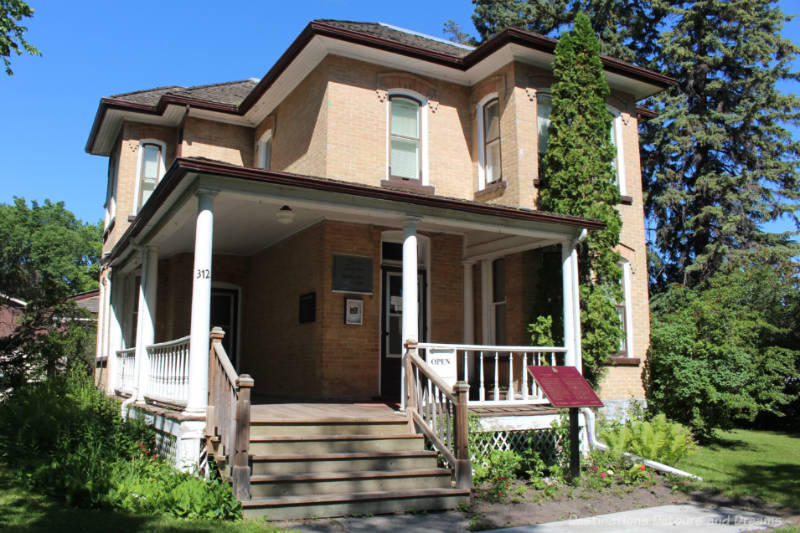
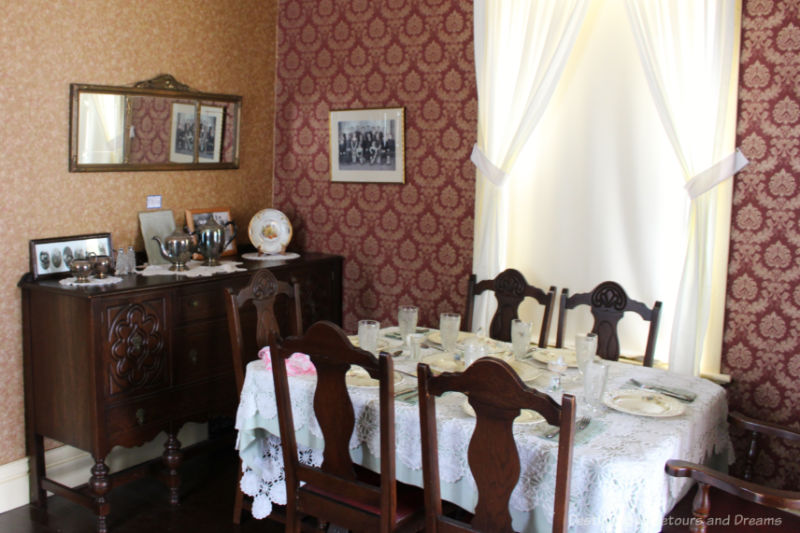
Laurence’s grandfather’s house, in which she lived from 1935 to 1944, is now a museum dedicated to her: the Margaret Laurence Home. The house was originally built around 1894 and features beautiful woodwork and wooden floors. The rooms, furnished in the manner they would have been used, contain information about Margaret Laurence and many items belonging to her and her family. Those items include her typewriter, doctoral robes, awards, a two-handled teapot she used while living in England, her mother’s silver teapot, a lace tablecloth, armchairs made by her maternal grandfather, a stained-glass window from her paternal grandparents’ home, and more.
Neubergthal Heritage Foundation
In Neubergthal, an entire village becomes a museum. The village, which is a National Historic Site, is one of the best-preserved Mennonite street villages in the world. Settled in the late 1870s by a group of Mennonite families who had emigrated from Russia, its single street illustrates a distinctive form of Mennonite settlements with long, narrow farmyards and housebarns along a village street. Housebarns were buildings with family living quarters at one end and attached barns for cows and horses at the other.
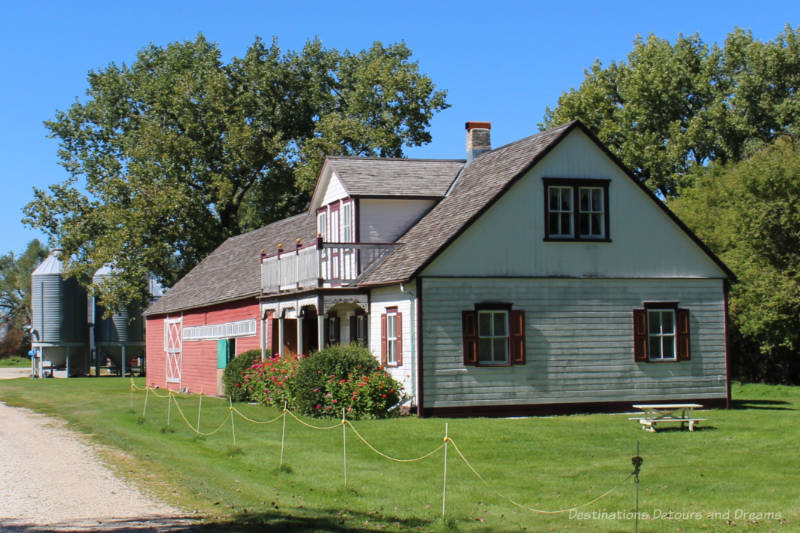
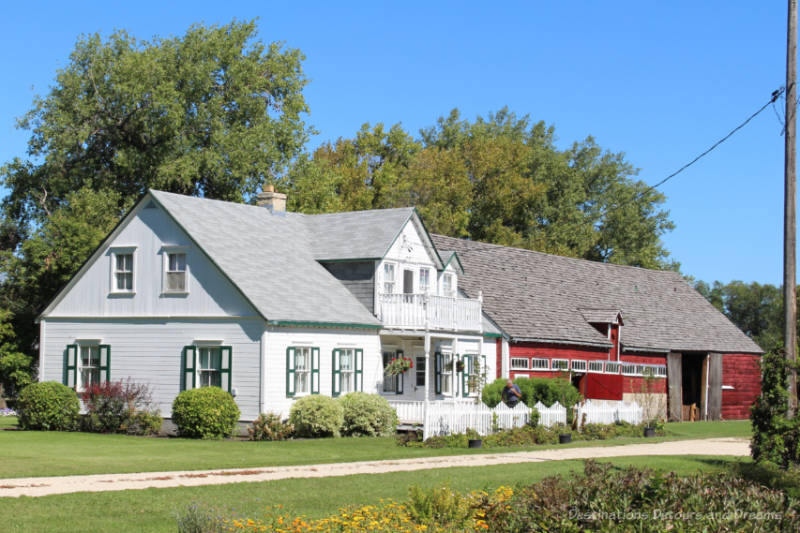
The Neubergthal Heritage Foundation facilitates tours. You can talk a leisurely self-guided tour through the village or go on a guided tour. Set up as a typical Mennonite nineteenth-century home, complete with painted wood floors and brick oven, the Friesen Housebarn also operates as an interpretive centre. A couple of other house barns and a school are part of the Heritage Foundation. The privately-owned Herdsman House functions as an artist residence and guest house.
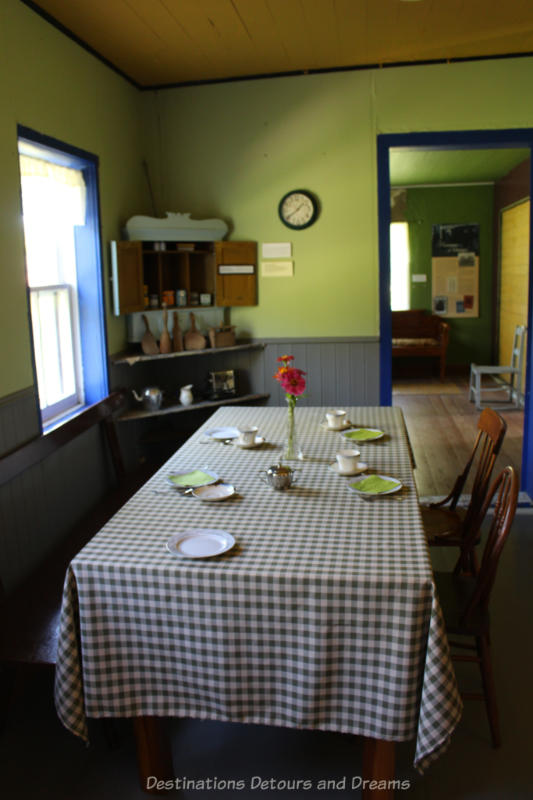
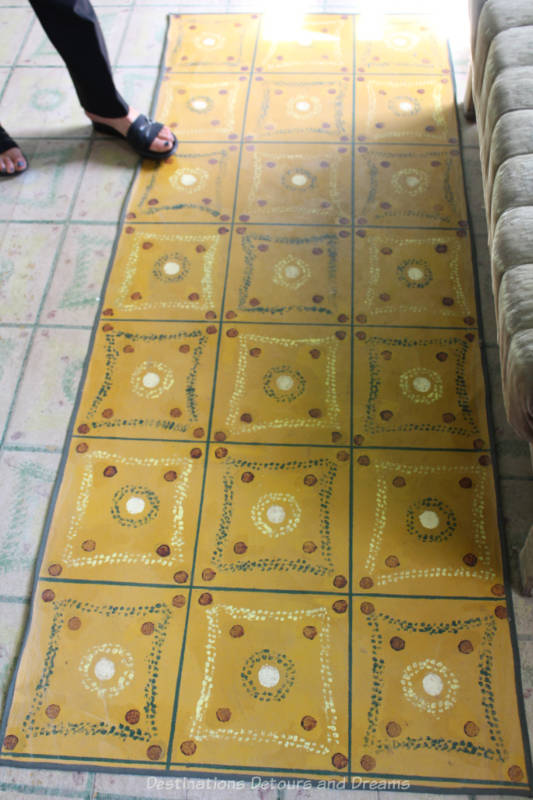
Read about my visit in my post Manitoba Mennonite Street Village.
Plum Coulee: Plum Coulee Elevator Museum
The Plum Coulee Elevator Museum is, in many ways, a typical small-town museum with historical information of particular interest to locals and displays relating to the early Jewish, Ukrainian, German, and Mennonite pioneers. However, the housing of the museum is unique.
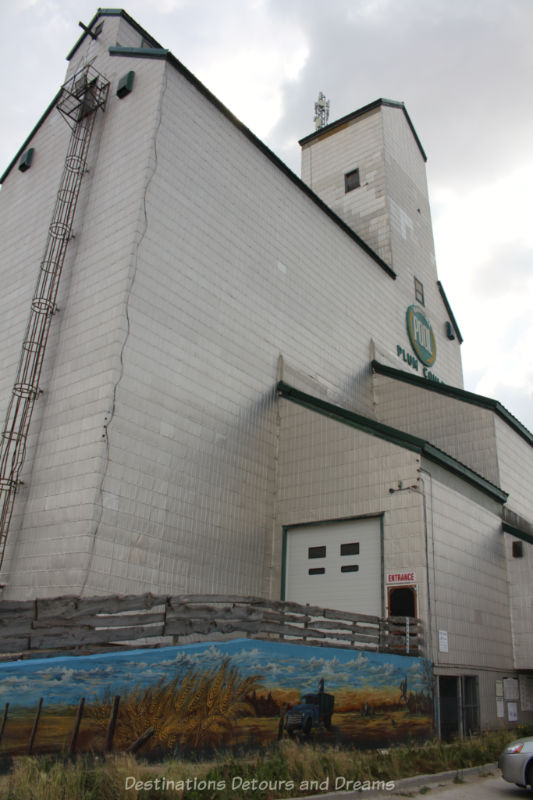
The museum is located inside a former wooden grain elevator. Grain storage bins have been cleverly transformed into display areas. At one end of the museum, the building itself becomes the exhibit with displays and information showcasing the operation of a traditional elevator. I found this to be the highlight of the museum.
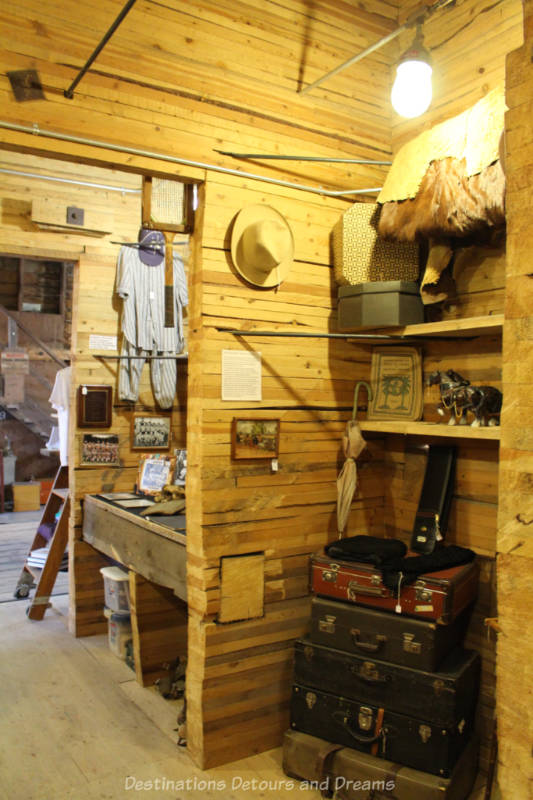
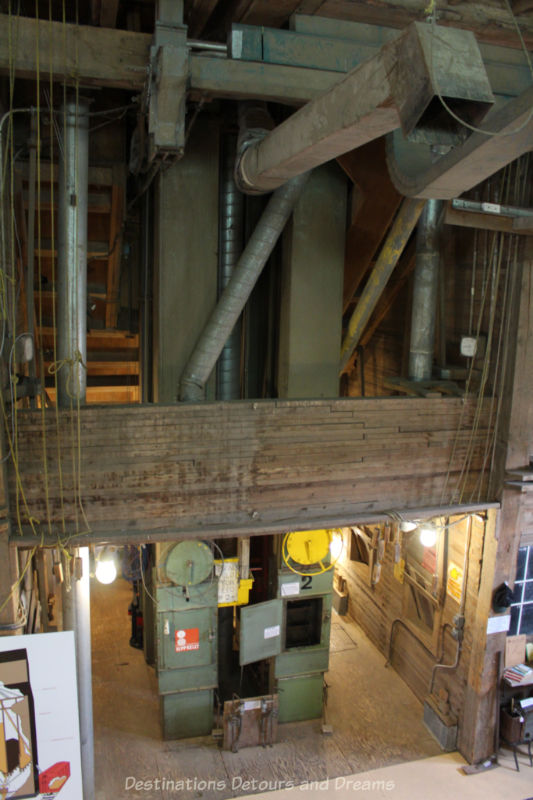
Read more in my post A Grain Elevator Museum in Southern Manitoba.
Souris: Hillcrest Museum
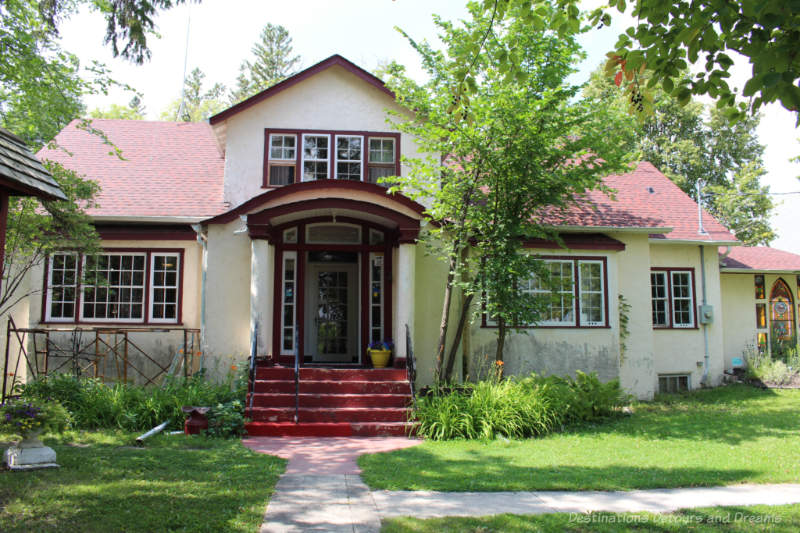
A grand house build in 1910 for a prominent Souris family is now a house museum with period furnishings and décor showcasing early twentieth century life and Souris history.
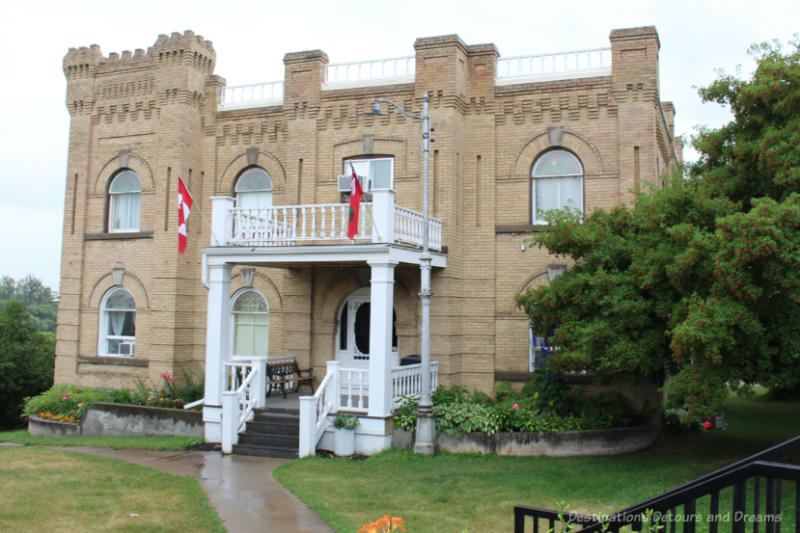
Hillcrest Museum contains fine period woodwork, stained-glass and etched-glass windows, decorative pressed tin ceilings, traditional wallpaper with intricate designs, beautiful furniture, and interesting items highlighting life in another time period.
The spacious house feels both grand and welcoming. It was fun to imagine living in the place while touring it. Read more in my post Hillcrest Museum: A Castle On The Prairie.
St. Claude: The Manitoba Dairy Museum (Musée Latier Manitoba)
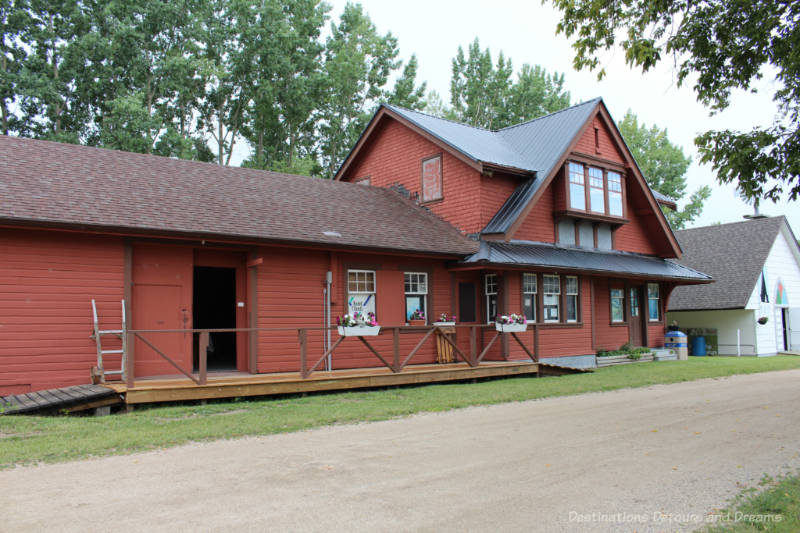
Displays in the Manitoba Dairy Museum (Musée Latier Manitoba) highlight dairy production and the evolution of the industry in Manitoba. Exhibits in the Dairy Museum Building are well-laid out, include a variety of historical production equipment, and are accompanied by easy-to-read poster boards of information. I was surprised by how interesting I found the information about the history of dairy production and the people behind it.
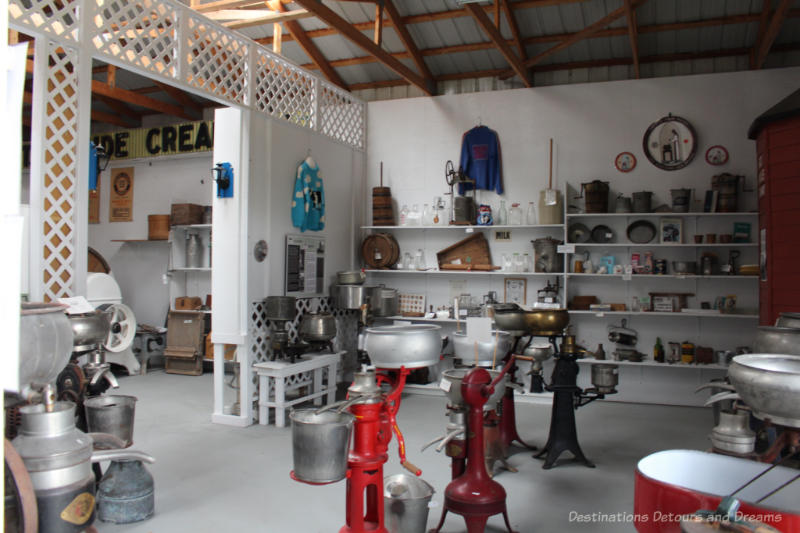
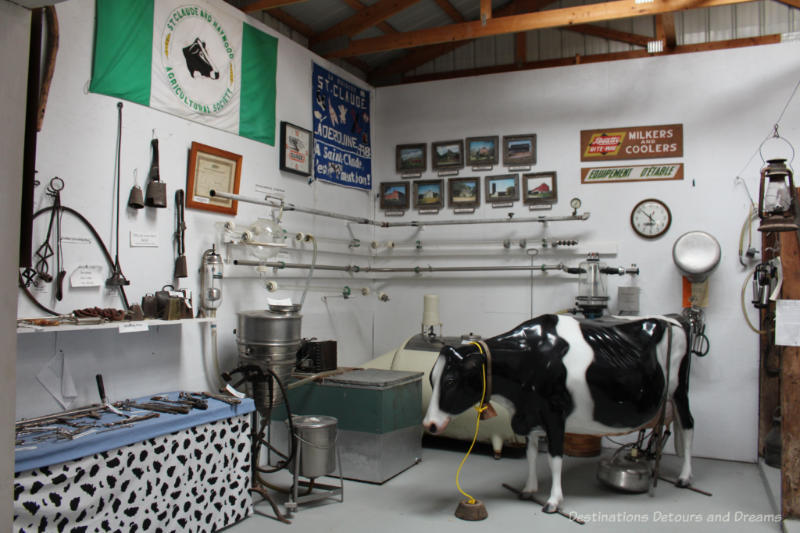
But there is more to the museum than dairy. Other exhibits showcase pioneer life, religious artifacts, and history of the area of St. Claude.
Read more in my post Manitoba Dairy Museum.
St. Joseph: Saint-Joseph Museum
The Saint-Joseph Museum features an historical village, agricultural buildings, a tourism centre, and a campground. When I first visited the museum, I was blown away by how much was at this museum in what is a relatively small community. The museum consists of 19 acres, more than 45,000 artifacts, and 20 buildings.
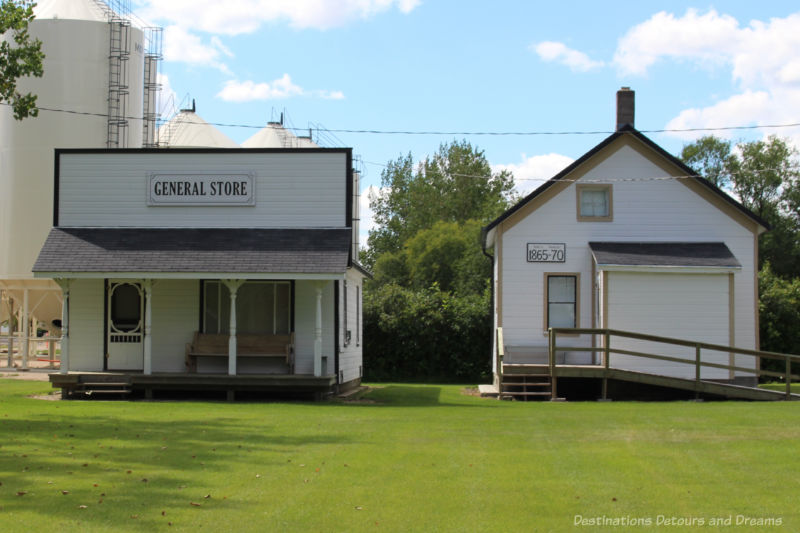
The museum preserves and presents the history of the colonization and agricultural development of the municipality from 1880 to modern day with emphasis on the period from 1880 to 1930.
In the heritage village you’ll find a one-room schoolhouse, a log house built in the 1860s, a 1938 church heated by a wood-burning stove, a general store in its original 1940s state, butcher shop and post office. Agricultural buildings include a dairy warehouse with artifacts related to the dairy industry. There is information about Manitoba’s sugar beet industry, exhibits of tractors and other farm machinery, and leatherworking and woodworking shops. There is a collection of rare as well as more common cameras, from 1850 daguerreotypes to 1970 Polaroids.
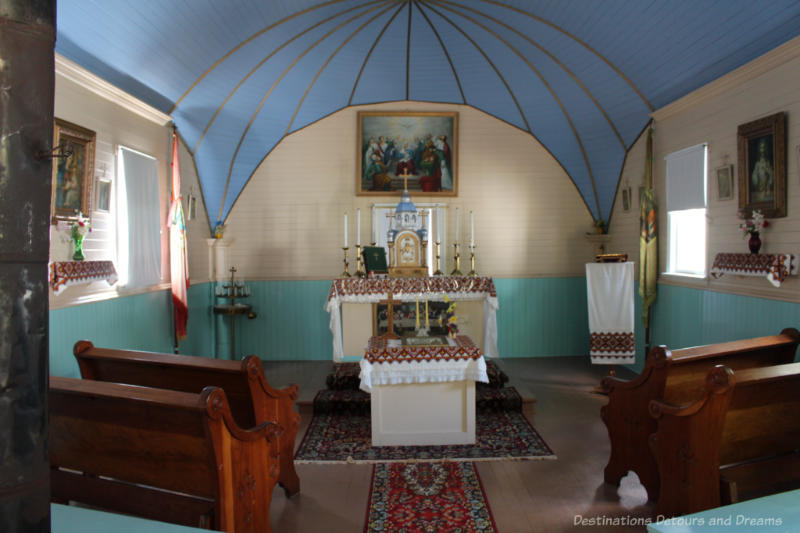
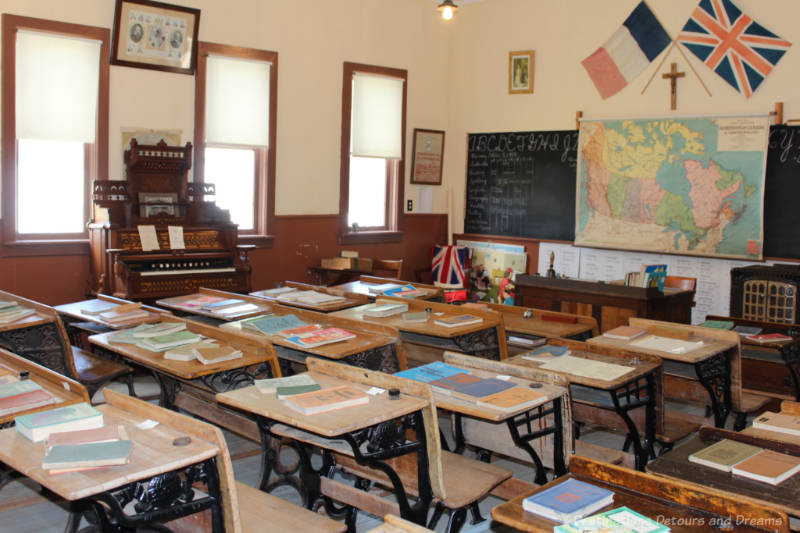
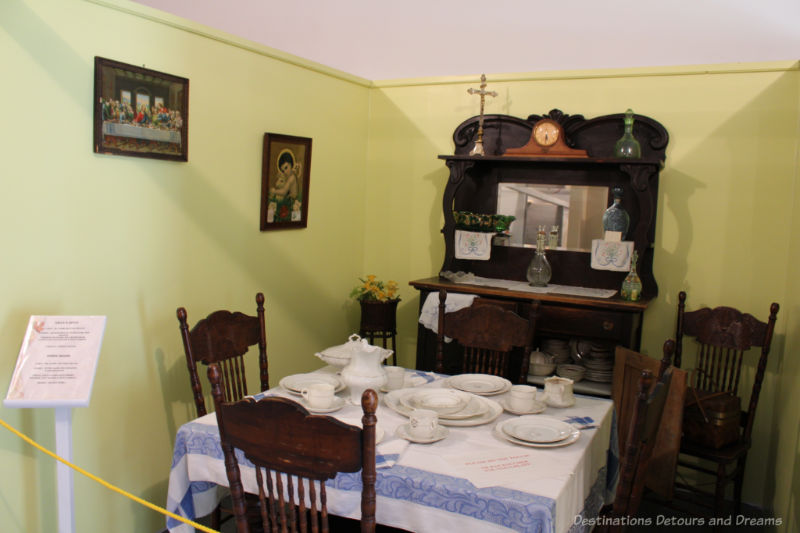
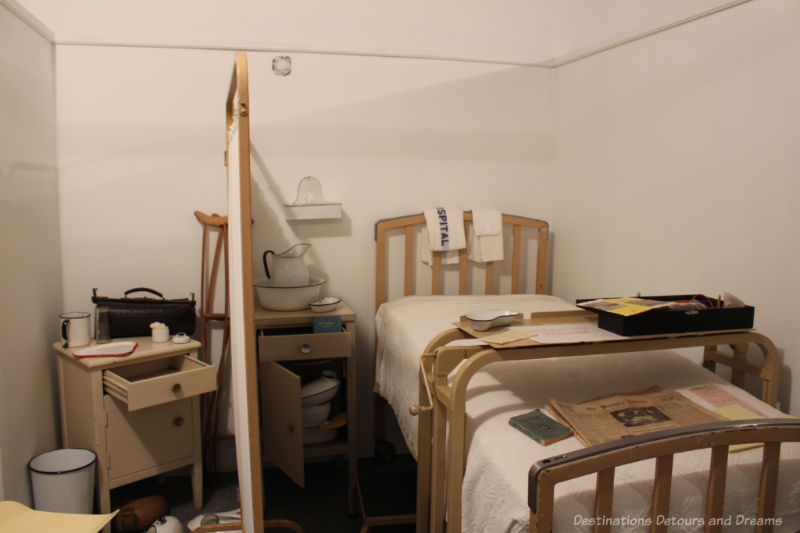
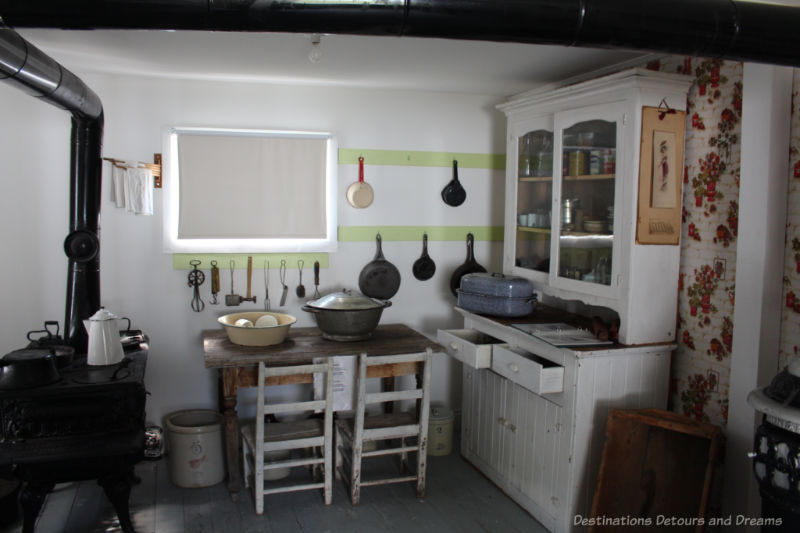
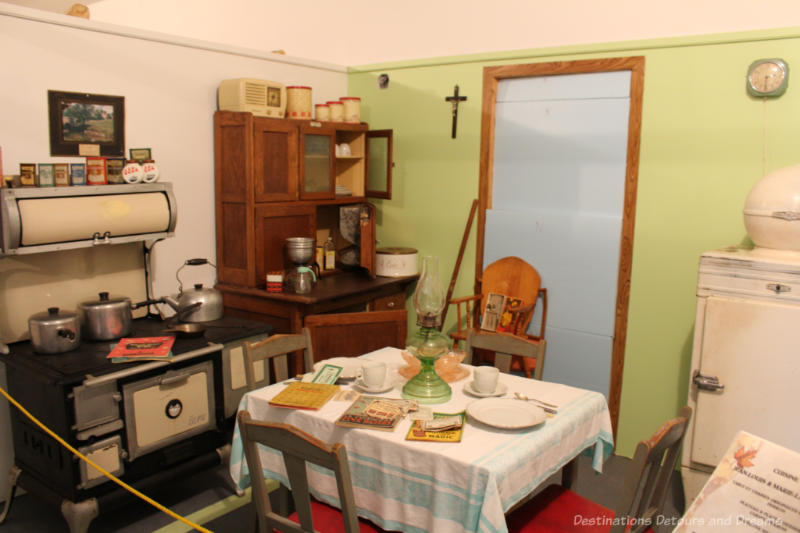
The twenty rooms of the Perron Pavilion each focus on different themes that include sports, health, music, religious artifact, Eaton’s department store, and more.
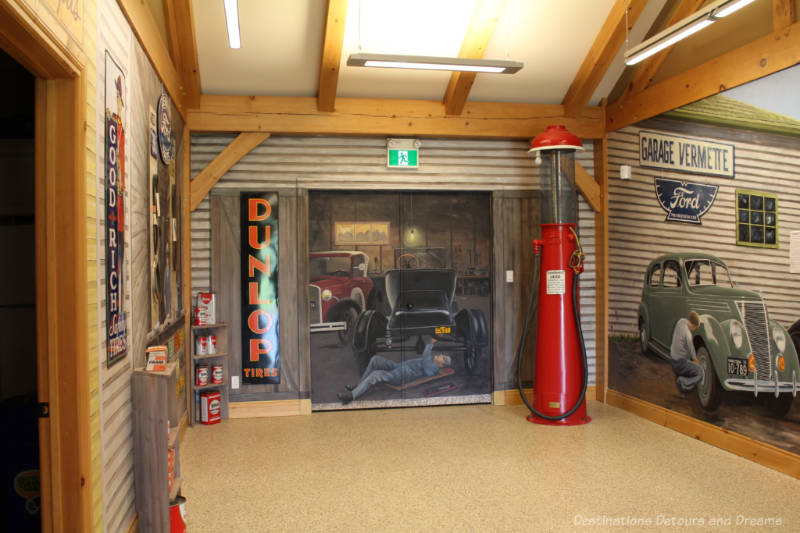
The Parent Tourism Centre, a timber-frame structure decorated with murals by Manitoba artist Hubert Théroux is open year-round and introduces highlights of the museum’s collections. The rest of the museum can be toured during the summer months.
St. Pierre Jolys: Musée St-Pierre-Jolys
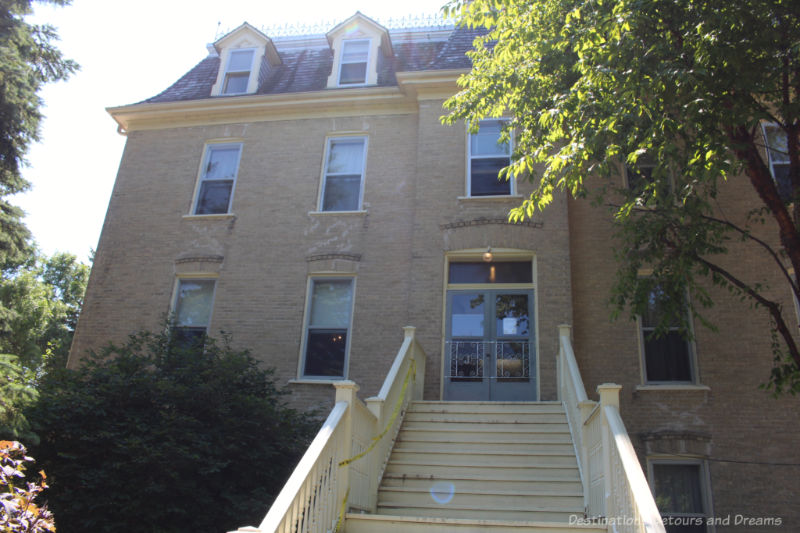
Musée St-Pierre-Jolys is housed in a 1900 building that was once a teaching convent owned by the Sisters of the Holy Names of Jesus and Mary. Today, inside the building you’ll find a traditional classroom, a parlour which served as a reception area for guests, a chapel, Mother Superior’s small bedroom, and photos and artefacts from the community.
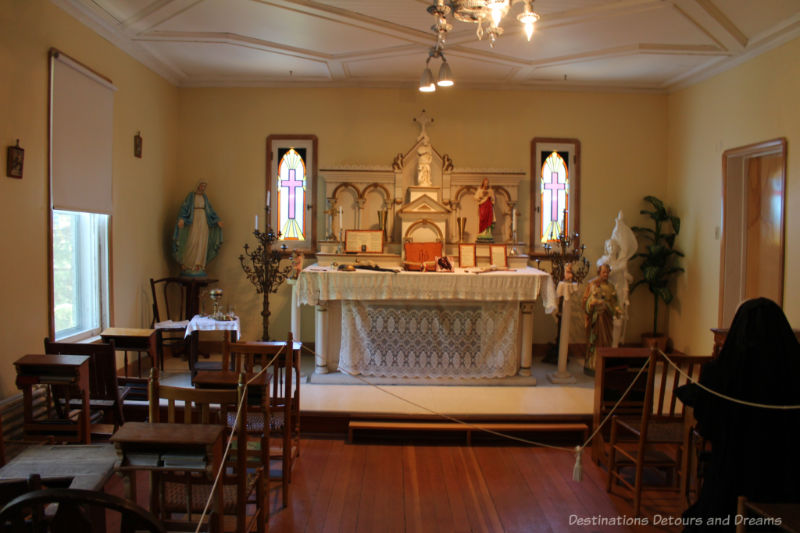
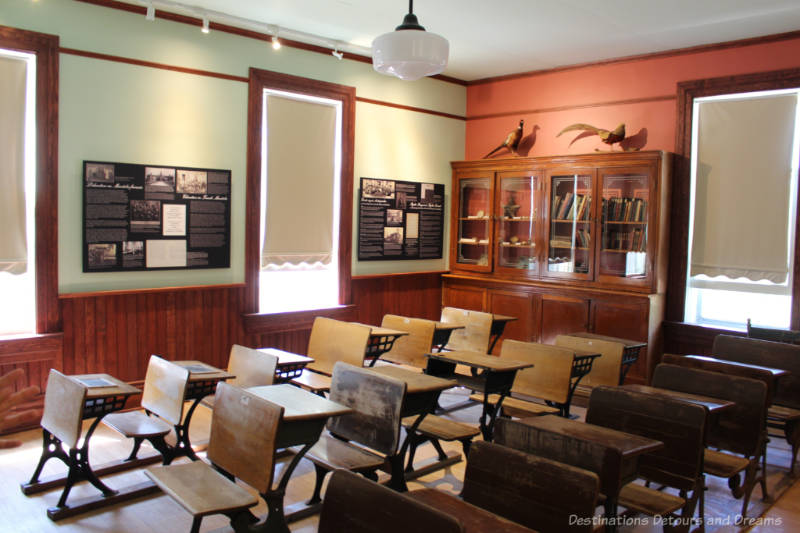
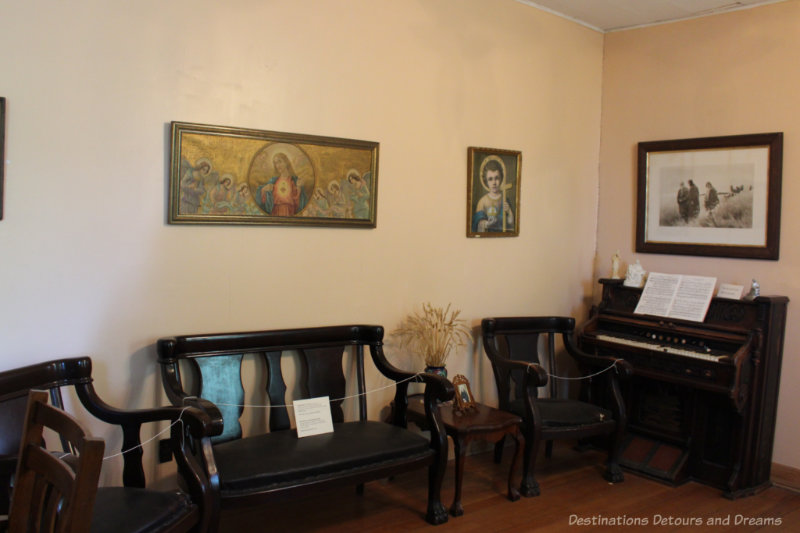
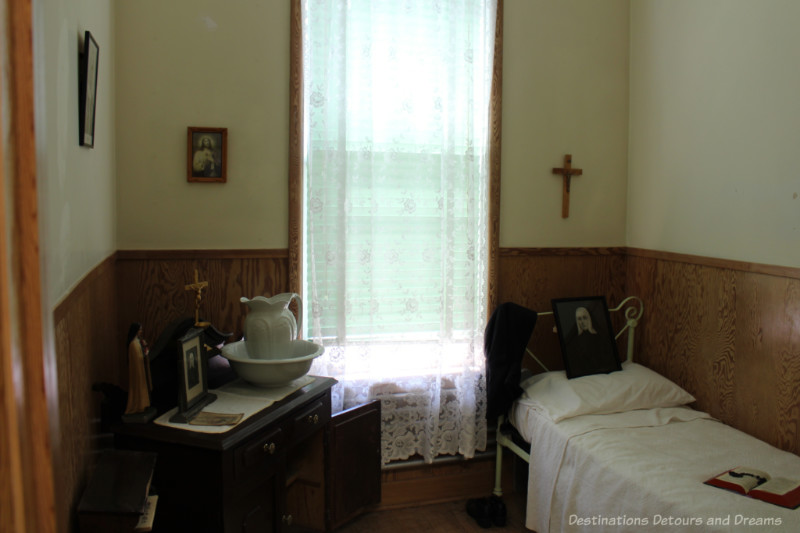
Behind the main building, on the museum grounds, you’ll find Goulet House, a typical Red River style house built of hand-cut logs dating from the late 1800s. Moïse Goulet was a freighter who transported merchandise by Red River oxcart from St. Paul, Minnesota to Fort Garry, Manitoba. His house was a “resting place” for the freighters. The interior is decorated to reflect what it might have looked like at that time.
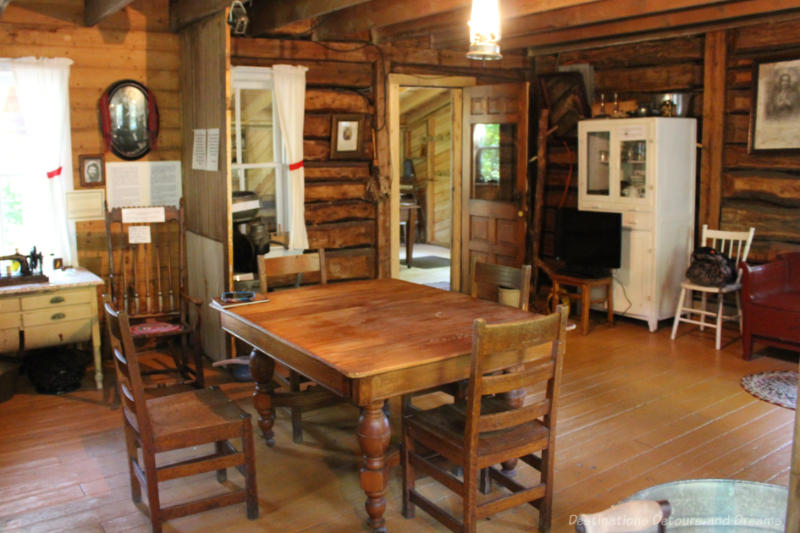
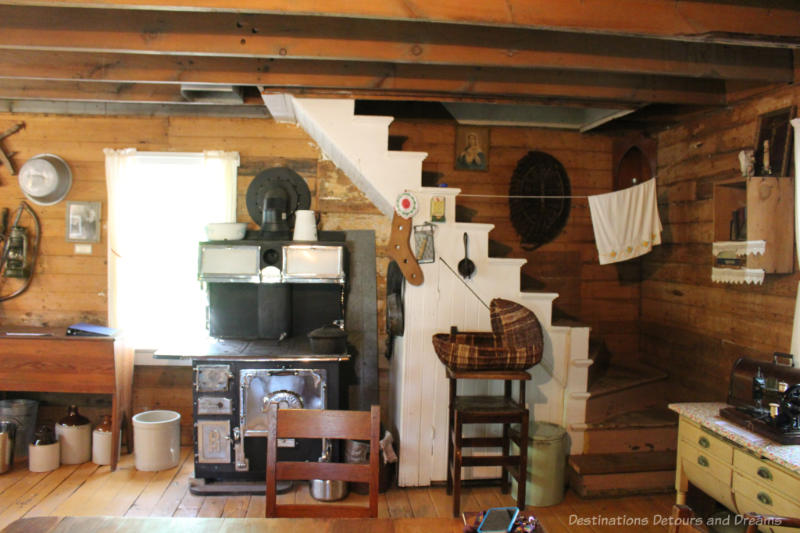
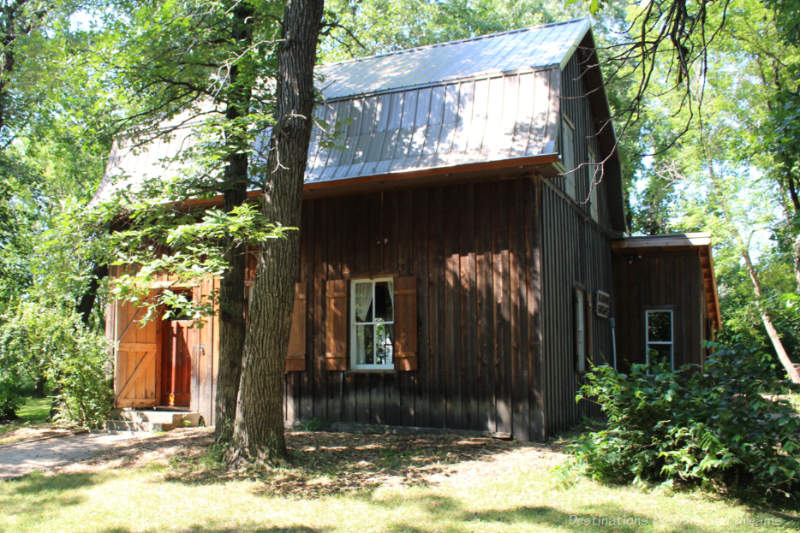
Also on the grounds is the Sugar Shack hall, an event venue that can be rented.
Every April, the museum hosts an annual Sugaring Off Festival, when the maple trees on the grounds are tapped for syrup.
Wawanesa: Sipiweske Museum
Sipiweske Museum in the centre of the village of Wawanesa contains displays highlighting the history of the area. Historical exhibits include Indigenous artifacts and displays about pioneer life. One exhibit focuses on the history of Wawanesa Insurance, a company started in the village in 1896 that has grown to become one of Canada’s largest property and casualty insurers. Its head office remains in Wawanesa. The museum itself is housed in the insurance company’s original 1901 office.
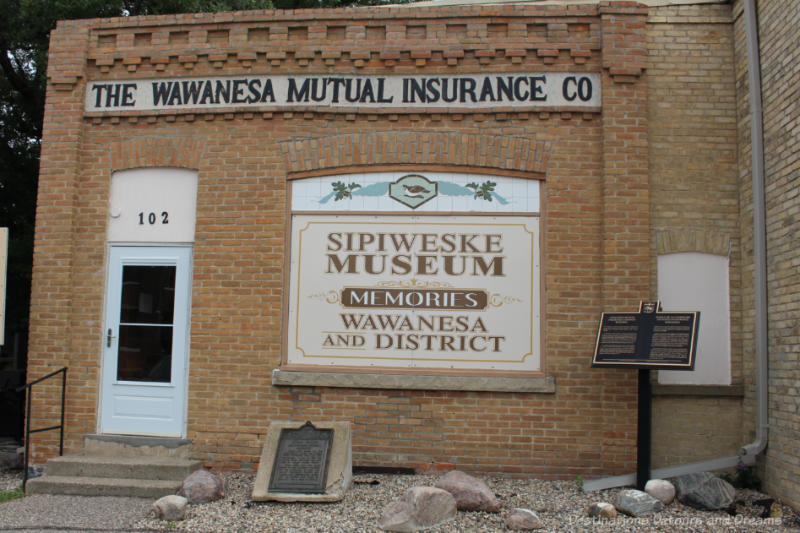
The parts of the museum I found the most interesting were two rooms dedicated to notable one-time residents of the area. One room contains artifacts and information about Nellie McClung, a suffragist, reformer, legislator, and author. The one features the Criddles and the Vanes, prominent families of one of the most unusual and eccentric pioneers in the area. Read more about the museum and the Criddle/Vane story in my post Sipiweske Museum In Wawanesa, Manitoba.
Never miss a story. Sign up for Destinations Detours and Dreams free monthly e-newsletter and receive behind-the-scenes information and sneak peeks ahead.
PIN IT
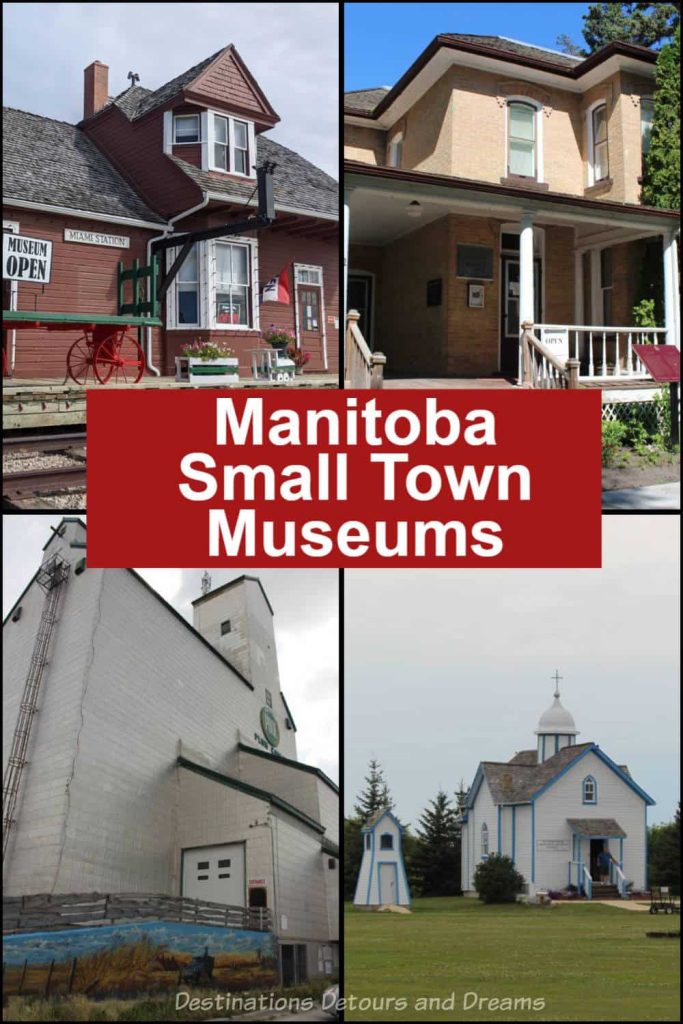
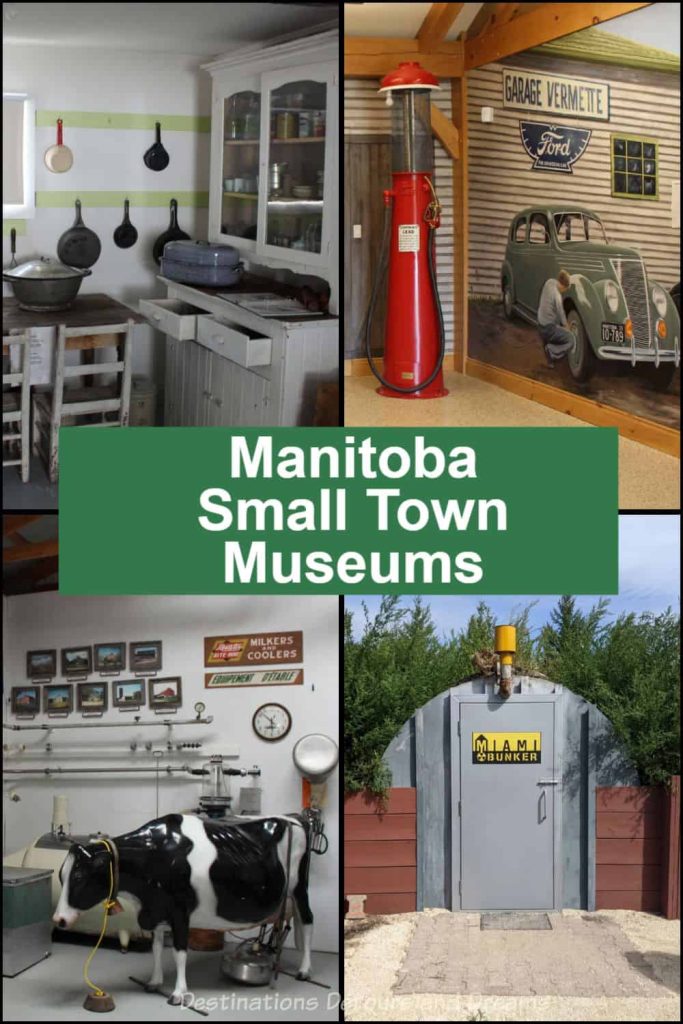
So much history in this group of museums. Collectively they seem to pull together a lifestyle history of the area. It compelling to look at them as a group rather than individually.